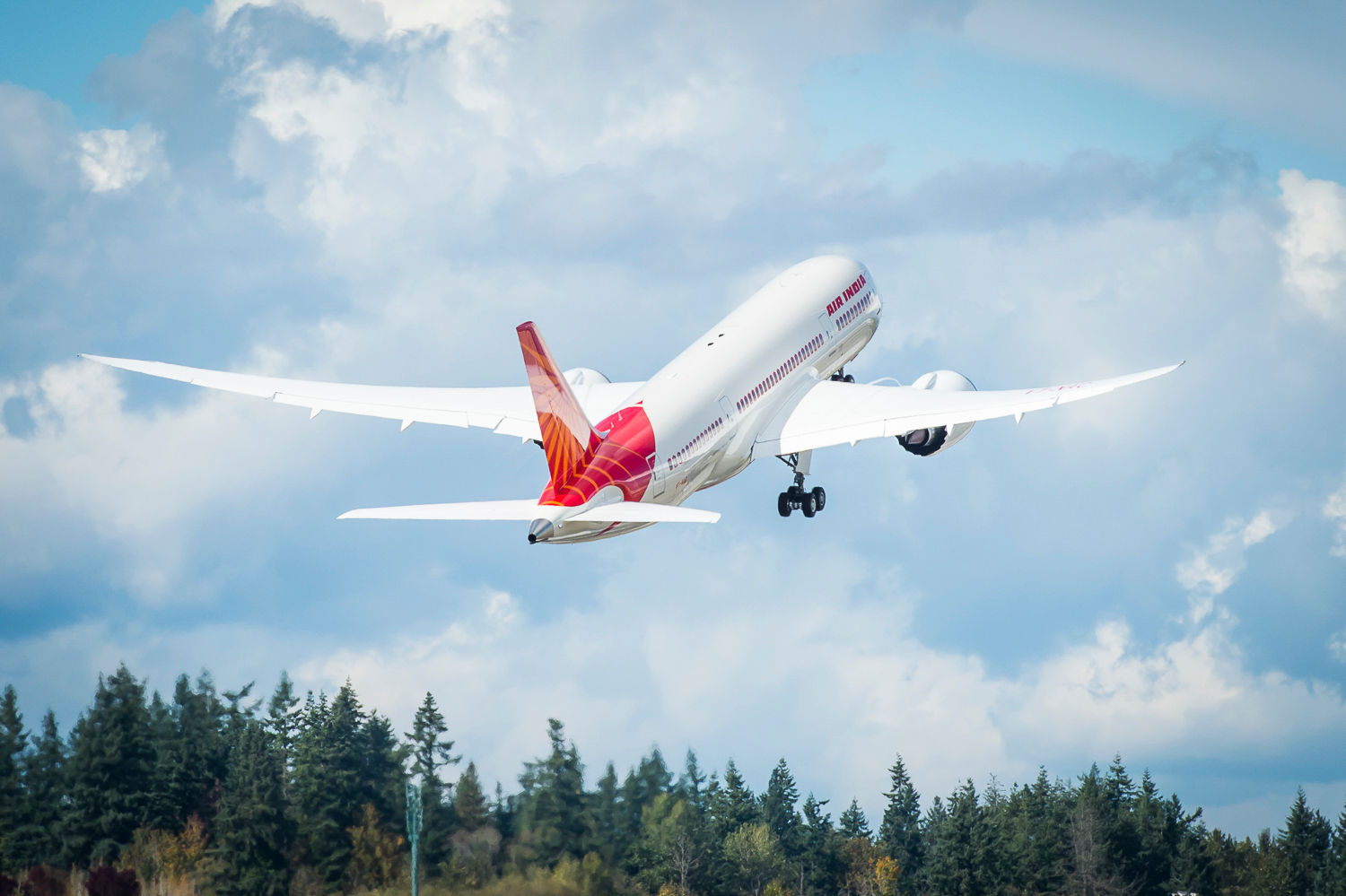
 Air India and other Asian air carriers are adjusting capacity, routes and frequency in response to oil pressures Source: Air India
Amid elevated oil prices triggered by the current conflict in the Middle East, several Asian carriers are reconfiguring routes, capacity plans and jet fuel needs and costs. They're also monitoring the competitive landscape and spying some opportunities.
Air India on May 13 announced more adjustments to its network schedule between June and August, reducing several flights globally and suspending some services. "These changes are aimed at improving network stability and reducing last-minute inconvenience to passengers," according to the carrier.
For North America, Air India temporarily will suspend its Delhi-Chicago, Delhi-Newark and Mumbai-New York JFK routes. To counter some of those cuts, the carrier will increase service on its Mumbai-Newark route to seven times weekly from three times weekly. Delhi-New York JFK will remain at seven times weekly. Delhi-San Francisco will operate seven times weekly, down from 10; Delhi-Toronto will operate five times weekly, down from 10, though increase to seven times weekly from August; and Delhi-Vancouver, Canada, will operate five times weekly, down from seven.
Air India is not suspending any European service, but it is reducing weekly frequencies between Delhi and six cities: Paris will drop to seven-times-weekly flights from 14, while each Copenhagen, Vienna, Zurich and Rome will lose one flight per week and operate three times weekly. Delhi-Milan will operate four times weekly, down from five.
Flights between Delhi and each Sydney and Melbourne will operate four times weekly, down from seven.
For Asia, Air India temporarily will suspend service on four routes: between Delhi and Shanghai, Chennai and Singapore, Mumbai and Dhaka, and Delhi and Malé. The carrier also will reduce service on routes between Delhi and each Singapore, Bangkok, Kuala Lumpur, Ho Chi Minh City, Hanoi, Kathmandu, Dhaka and Colombo, as well as between Mumbai and each Singapore, Bangkok and Colombo.
Meanwhile, Singapore Airlines, which owns 25.1 percent of Air India, on May 14 in its annual report disclosed that the Air India Group reported a record loss of up to $2.8 billion "at current exchange rates," according to Reuters. Singapore Airlines also reported a 57 percent decline year over year in annual net profit for the financial year ended March 31, citing its share of full-year losses from Air India as one contributing factor.
Still, on May 4, the two carriers added one domestic and 20 international destinations to their codeshare arrangements, according to Singapore Airlines, bringing their codeshare points to 82 destinations across 27 countries and territories.
Singapore Airlines also noted that the effect of the Middle East conflict was only partially reflected in the net fuel cost for March 2026, and that the full impact of higher jet fuel prices "is expected to feed through in FY2026/27."
Despite that, Singapore Airlines on May 8 announced an upcoming expanded network for Europe. The carrier on Oct. 26 will launch service between Singapore and Madrid via Barcelona, operating five-times-weekly. Once the Singapore-Barcelona-Madrid service is launched, the airline's Singapore-Milan-Barcelona service will be canceled.
The carrier also beginning in July will progressively add frequencies between Singapore and each Milan, Munich, London Gatwick and Manchester, England.
Qantas also has been making changes. In April, it said it has hedged approximately 90 percent of its second-half 2026 exposure in crude oil, but still was exposed to movements in jet refining margins, which have resulted in higher estimated fuel costs for the period. To mitigate the impact of the Middle East conflict and higher oil prices, Qantas has made international network changes and capacity adjustments and increased fares.
The carrier in announced a cut in domestic capacity for the current quarter of about 5 percentage points from prior plans. It also has redeployed capacity from the U.S. and its domestic network to increase flights to Paris and Rome. On May 1, it extended the previously announced schedule changes across its international and domestic network through September. But demand for Europe remains strong. As a result, Qantas also extended its additional Perth-Rome flights through the end of October, though flights to Paris will revert to three times weekly in August and continue to operate from Sydney through Singapore.
In addition, Cathay Pacific scheduled 19 percent more flights year over year from India to Hong Kong between March and May, according to Reuters, which reported that Cathay's CEO Ronald Lam said "many Indian passengers who had previously connected through the Middle East now were flying to the U.S. via its Hong Kong hub."
But the Hong Kong-based carrier is not immune to current headwinds. It has cut about 2 percent of capacity between May 16 and June 30, affecting mostly regional flights "and a small number of Australia, South Asia and South Africa flights," Cathay announced in April. Further, the carrier continues to suspend its flights to Dubai and Riyadh until June 30 "in view of the ongoing situation in the Middle East."