For SME Travel Policies, a Question of BalanceBy Maura KellerAs small and midsized enterprises continuing to expand globally, many of their travel policies are becoming more sophisticated and in some cases embedded... KEEP READING
Finding Fit: How SMEs Achieve the Right TMC PartnershipsBy Julie SickelThe SME travel market is evolving with increased focus on technology and service integration as program managers confront higher expectations but also diversifying choices.... KEEP READING
Business Travel News fielded the 2026 SME Travel Management survey from March 27-April 30, 2026 on the Credspark platform. BTN via email and through its newsletters solicited responses from BTN and BTN Europe readers as well as from members of BTN's Communities travel professional networks. A total of 134 qualified respondents answered the survey. Suppliers and consultants were disqualified. Buyers from organizations with more than $25 million in total 2025 travel and entertainment spending also were disqualified, as were respondents who did not disclose their organizations' travel spending.
BTN editors used the Credspark platform to collect and analyze results. In the charts in this report, not all figures add up to 100 due to rounding. BTN editors conducted interviews with travel managers, suppliers and third parties to accompany the survey.
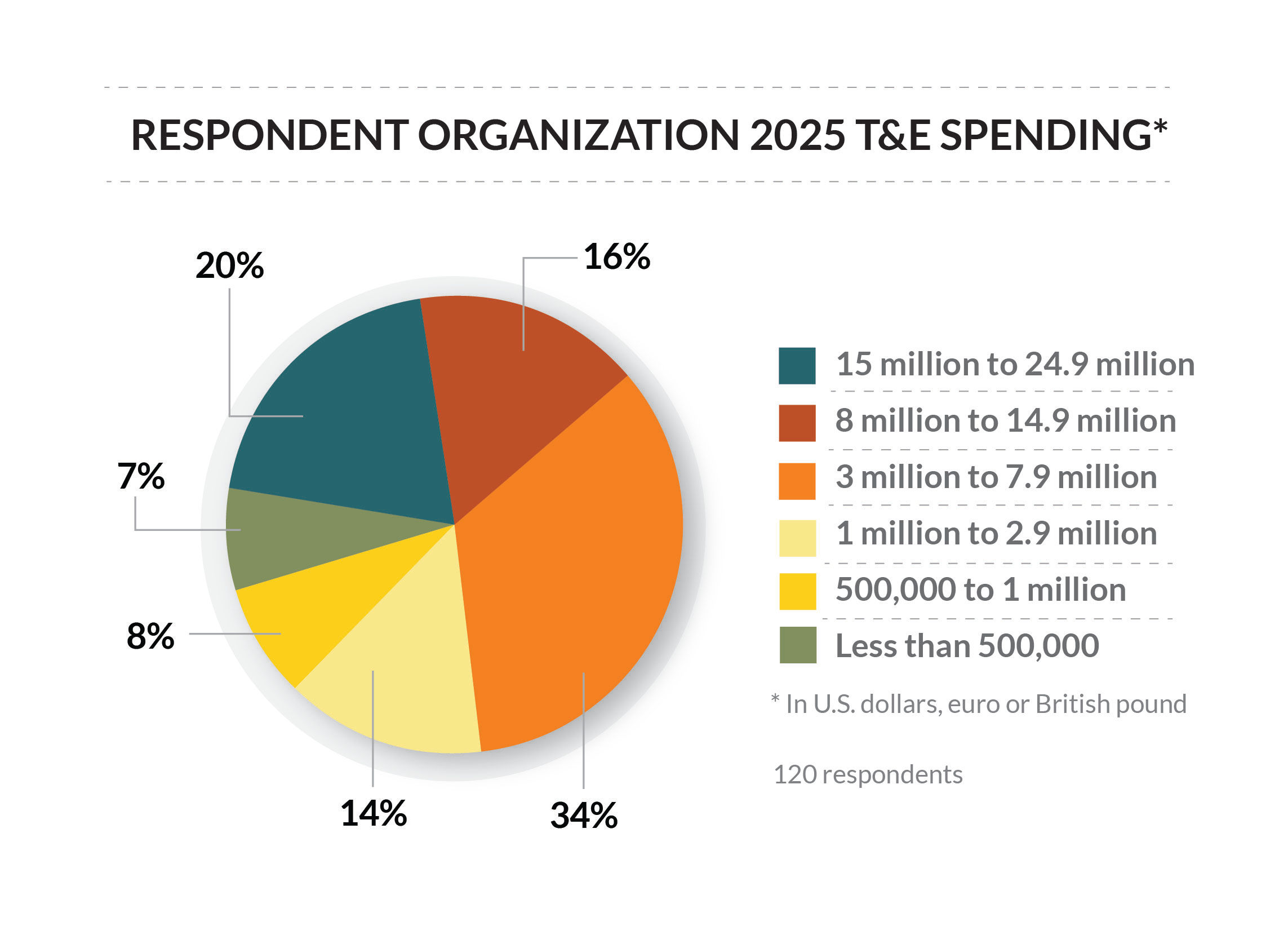
About 20 percent of qualified respondents hailed from organizations with at least $15 million in 2025 travel and entertainment spending. About 15 percent were from organizations with less than $1 million in 205 T&E spend.
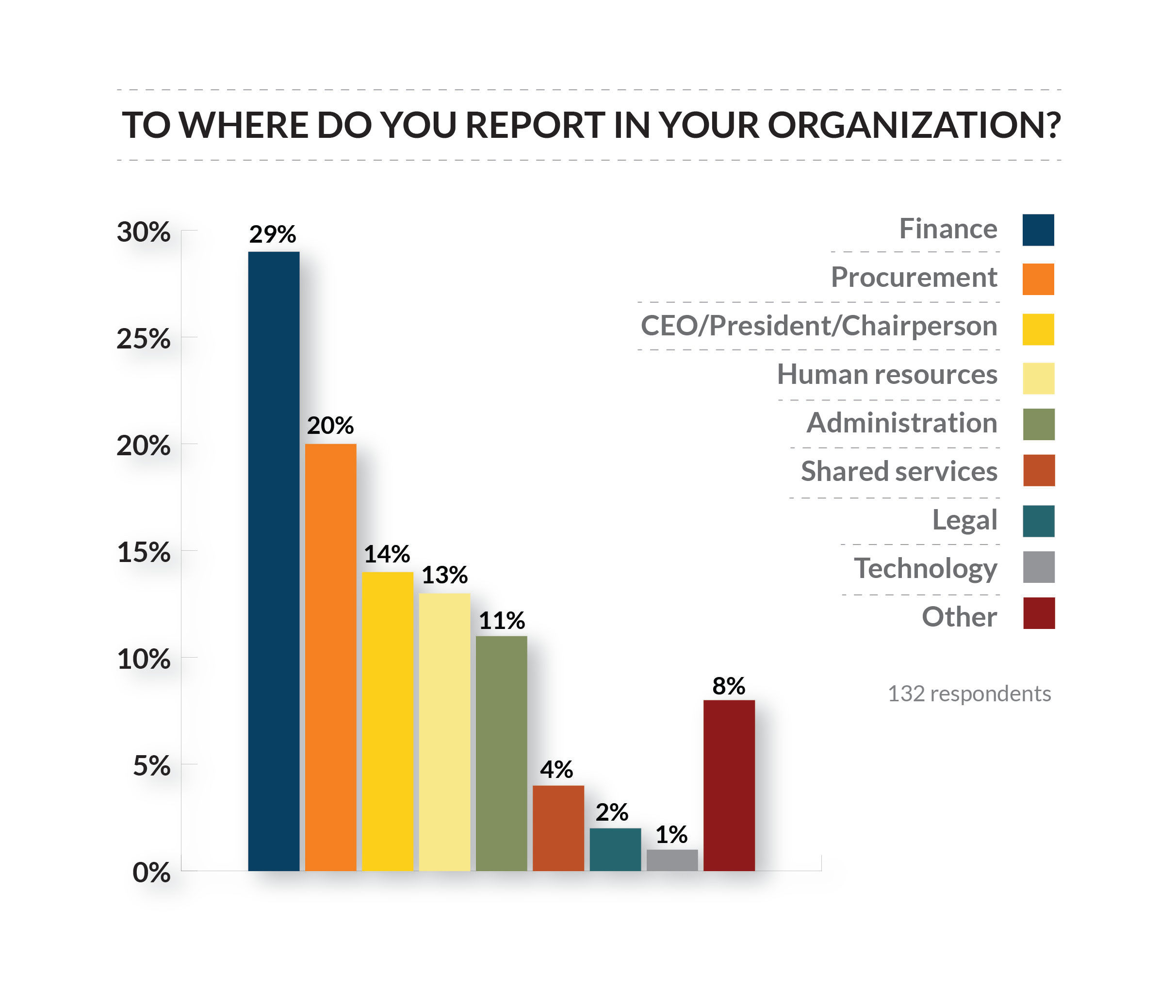
About three in 10 respondents indicated they report to their organization's finance department, the most common answer among respondents. About 20 percent indicated they report to procurement, and 14 percent said they report directly to their company's CEO, president or owner.
Of the qualified respondents, 92 percent said they had travel management responsibility for the United States, 56 percent had responsibility for Europe, 49 percent had responsibility for Canada, 45 percent had responsibility for the Asia-Pacific region, 35 percent had responsibility for Latin America (including Mexico and the Caribbean), 32 percent had responsibility for the Middle East and 23 percent had responsibility for Africa.