 Credit: AdobeStock
In the already crowded field of corporate travel industry
acronyms, MCP is one travel managers should learn quickly.
Model Context Protocol might not roll off the tongue easily,
but it stands to reshape corporate travel distribution, booking, payment and
more. First introduced by Anthropic in 2024, MCP has emerged as a standard from
which AI models can connect to external data sources and software.
Analogies abound in explaining what MCP means in industry
advancement. Serko VP of business development Johnny Thorsen said to think
about the early days of the Internet, when HTTP was developed as the protocol
for moving data around. Even as it evolved to support richer data—from text
only, to photos, to videos and streaming—it was still supported by that same
protocol. Similarly, MCP acts as a protocol from a piece of software to talk to
a legacy system, rather than "everyone inventing their own ways to do
this," Thorsen said.
PredictX CEO Keesup Choe said to think of it like the
evolution of music distribution from downloads to streaming. Downloads were
encoded in the Advanced Audio Coding format, and they could only be listened to
on devices capable of decoding that format. On a streaming platform, a listener
need only say they want to listen to Taylor Swift and start hearing the music
without thinking about encoding or file formats.
Travlr ID CEO and founder Gee Mann said to think of it as a
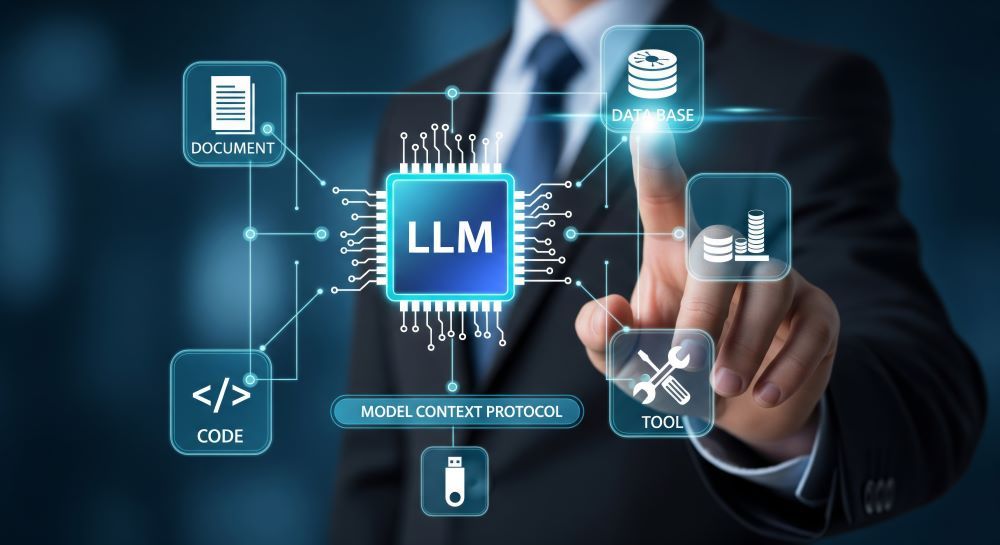
"USB port" that can talk to different channels.
While MCP will have much broader implications outside of
travel, the travel industry—and specifically corporate travel—is one of the
ripest industries for agentic disruption, given that "it's already rules
and regulations and processes," said Martijn van der Voort, director of
consultancy AstraNomad and former CWT director of product delivery technology.
A single travel booking, for example, triggers transactions across multiple
systems—airline inventory, ticket issuers, payment authorization, settlement
and disruption management—and those processes have traditionally needed human
navigation or robotic automation across the systems.
Agentic AI introduces a new model, he said.
"Instead of humans moving through step by step, these
authorized AI agents interact directly with the infrastructure," van der
Voort said. "That's probably why travel becomes one of the earliest sectors
where agentic transactions will occur at scale."
A Gateway to Agentic
Most of the AI announcements targeting the travel industry
today—chatbots, assistants, conversational booking tools that let travelers
book through platforms like Slack or Teams—fall more on the
"assistive" AI side rather than the agentic AI side, van der Voort said.
"At the moment, the conversation is still around
interfaces," he said. "They're very useful improvements, but it's
definitely not structural shift."
What MCP provides is
an "accessibility layer" for AI agents, Oversee co-founder and chief
technology Ami Goldenberg said. Just like APIs were able to move travel from offline
sources to web and mobile, suppliers could, for example, develop their own MCP
that can interact with an AI assistant, he said.
As Mann explained it, with an API, a user could query a
system to retrieve their passport information. With Large Language Models, the
queries can become less direct, where a person could ask what information is
missing for their travel documentation and MCP could both scan for issues and
retrieve what is needed. When agent-to-agent is enabled, the work can be done
without human interaction.
Because any type of information can be moved through the
protocol, it opens up broader capabilities that can be built off MCP servers,
Thorsen said. For example, if someone wanted to search for flights to a
destination based only on what flights had seat 12A available, they could
theoretically do so, he said.
"A supplier can finally evolve without having to follow
some industry standard that moves at a snail's pace," Thorsen said.
"You can move at your own pace in the digital world, instead of forcing
everyone to do the same."
Leapfrogging NDC?
With the mention of "snail's pace," New
Distribution Capability might be the first thing that comes to mind. Developed
more than a decade ago to enable airlines to be able to modernize how they sell
their products, adoption
is still lagging, especially in corporate channels, amid the complexity of
building and maintaining the connections.
If an airline has an MCP server for its content, that means
AI agents can access it without having to adhere to whatever schema of NDC an
airline is following. An airline, meanwhile, via the server can control who has
access to specific content—for example, ensuring a corporate rate only goes to
approved travelers, Thorsen said.
"MCP will eliminate NDC," he said. It's going to
happen, not overnight, but every day it's going to become harder for an airline
to justify investing in NDC."
Still, NDC provides "some benefit in content
stability," said Steve Clagg, a travel technology consultant and former
procurement technical program manager for Microsoft. It can co-exist with MCP, which
would act as the plumbing need to reach the "faucet" of NDC.
"I would undermine any position that says MCP is going
to replace outright or diminish NDC," Clagg said. "It's a different
discussion to say whether NDC becomes superfluous in the long term, but in
terms of technologies, they're not in conflict."
Sabre senior director of product management Gonzalo Jorge
said NDC retains value in the normalization of airline content, which he said
shouldn't be the task of the MCP layer.
"NDC is super valuable in making sure that, from a
supplier perspective, we're putting forward how suppliers want to see their
content," he said. "With that premise that all the suppliers are
aligning on the same set of patterns, it makes life easier for everybody."
Wider Disruption
Last September, Sabre launched its own MCP server to connect
its APIs to AI agents, acting as a translator for travel technology language to
the agents. The goal is to make it easy for developers to work with Sabre's
marketplace and the multiple complex APIs, with a particular emphasis on
post-booking services, Jorge said.
"The more we can open up innovation for other players,
maybe a niche smaller company that is focused on solving a specific problem for
a specific market, the more we can help others," he said.
Sabre is banking on, as chief product and technology officer
Garry Wiseman put it in the company's most recent earnings call, its massive
data collection of "over 50 years of servicing workflows, travel policies
and compliance logic across 200-plus countries and thousands of
supplier-specific fare rules and partner network agreements." The question
will be whether AI players will be able to build around that independently.
Thorsten, for one, said he expects innovators to avoid
"hurdles" and "limitations" of content agreements with
legacy players.
"I think sometime this year we'll see the first
production-ready MCP framework emerge where there's a seller of traveler able
to connect directly to a supplier without touching any of the legacy infrastructure,"
Thorsen said. "That is the true sign of success."
The GDSs are not the only supplier category preparing for
MCP upheaval, Thorsen said. Travel management companies, for example, will
likely be touching fewer transactions but have the chance to reposition
themselves.
"The ones that think long-term will become technology
management companies, helping buyers manage this tech stack and optimize,"
Thorsen said. "As a TMC, you want to be part of the fully automated flow,
because you might generate less revenue, but you'll have a much higher
margin."
Corporate payment providers also face disruption, as MCP
could enable a "stablecoin wallet" payment model, in which a company
has a certain amount set aside in a digital wallet that makes instant payments
in an AI travel ecosystem, he said.
Building the Guardrails
While analysts are largely aligned that MCP will facilitate
a massive change in corporate travel infrastructure, it certainly won't happen
overnight. Just ask ChatGPT, which recently pulled back on plans to allow users
to purchase within ChatGPT and instead route the transactions to third parties
such as Booking.com for travel.
For now, Choe said most Generation 1 MCP servers are
"shallow wrappers around existing APIs." Some have security issues and flaws that can
be exploited by "prompt injection"—instructions either from a direct
user or an external source that lead AI to do something unauthorized and/or
harmful.
If MCP servers are not built properly, they also are
susceptible to "context rot," he said. That means that they require a
large amount of context to even connect with an AI agent, leaving less
capability to get results, which makes the results less reliable.
"The promise is good, but it's not like you can just
connect to an MCP server," Choe said. "It takes a lot of due
diligence."
Van der Voort said a "governance" layer—which is
where Murfee AI, for which he is a non-executive director, is focused—is
currently an "overlooked" portion of agentic travel offerings.
Agentic systems need to be able to recognize complex rules and stop
transactions when they run afoul of those rules—if a traveler is booking
outside of an accepted hotel rate cap, for example, or being able to look at an
aggregated trip that consists of several legs that might be out of policy even
if every leg examined individually is in policy, he said.
"[AI] agents introduce operational risk," van der
Voort said. "If machines act super quickly at scale, that could potentially
mean a single error could run through rapidly across a variety of systems."
Goldenberg said this area could also be an opportunity for
TMCs, building off the data they have on corporations and their travelers.
"The next layer is to have an MCP, or a bunch of MCPs,
that is provided by the TMC essentially," he said. "The
future-looking ones will understand there's a new challenge here."
Clagg said access is still in early days as well. How will
agents know what MCP servers to connect to? He compared it with early days of
the Internet, before search engines, when users had to find lists of servers.
With MCP, there "are a smattering of registries today" that will
evolve to improve discovery.
"That's where the benefit of this really rises, from
old traditional models of building applications that had to have custom
integration with API endpoints and get locked into those," Clagg said.
"This will abstract it out, where the client AI logic can go across
multiple endpoints without being custom integrated to one."