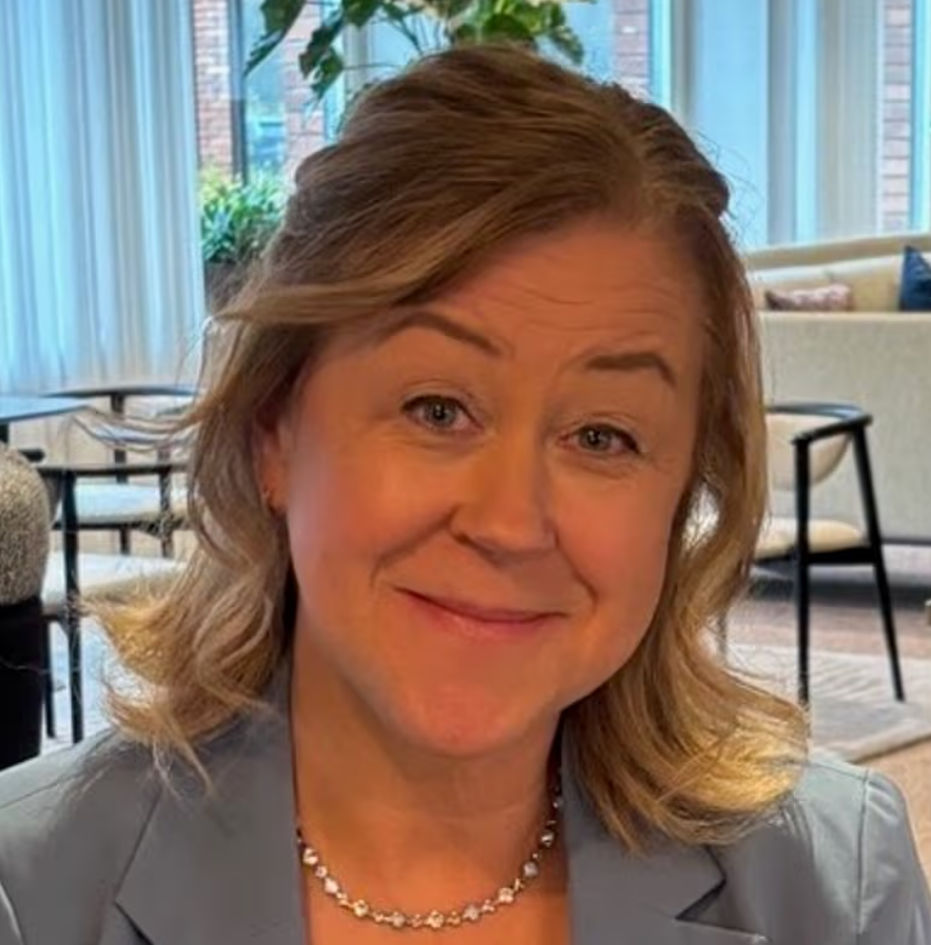
 Mia Andersson is Scania's head of global travel management
SCANIA: SNAPSHOT
- 58,000 employees
- 100 countries
- 17,000 travelers
TRAVEL PROGRAM GOALS
- Centralize
and standardize the travel program across 20+ markets to cover 85% of travel spend
- Establish
a global policy
- Improve
visibility of and control over spend and behavior
- Elevate
the travel function to a more strategic level
- Build
a future-proof program with the traveler at the center
When Scania embarked on an ambitious overhaul of its global
travel program, the Swedish commercial vehicle manufacturer was not simply
looking to update its technology stack or consolidate suppliers.
Instead, the company set out to answer a much bigger
question: What would a travel program look like if it were designed entirely
around the needs of travelers rather than the limitations of legacy systems?
What ensued was an 18-month transformation project that
replaced a fragmented, decentralized program with a travel ecosystem centered
upon the traveler profile—the foundation upon which everything else would sit.
For Mia Andersson, head of global travel management at
Scania, the traveler profile became the program's "holy grail."
"This was not just a tech replacement project,"
Andersson says. "We needed to centralize, yes, but we needed to make sure
that the traveler was at the center of every decision that we made. We weren't
interested in replacing one bad technology with a more modern one and then
moving on. This was a true business transformation."
The transformed program has been operational for 18 months. It has already delivered a 20 percent reduction
in travel spend and significantly improved traveler satisfaction and
productivity. More importantly, it has created a future-ready platform that
gives Scania ownership of its travel ecosystem and the flexibility to evolve as
its business and traveler needs change.
Laying a New Foundation
When Andersson joined Scania in 2022, she inherited a travel
program that reflected years of decentralized decision-making.
Travel was managed differently across markets, with only
‘travel guidelines’—no policy—visibility of spend was limited and traveler data
sat in multiple disconnected systems. There was no automated flow of
information between HR and travel systems, meaning traveler profiles frequently
became outdated. In some cases, traveler records remained active even after
employees had left the company.
The program lacked consistency, control and a clear
understanding of traveler needs.
Rather than immediately launching an RFP or selecting new
technology providers, Andersson began with an extensive listening exercise
involving travelers, bookers, stakeholders and senior leaders.
"We needed to understand what was working well today,
what wasn't working, what gaps we needed to close immediately and what would be
nice to have in the longer term. We wanted travelers and stakeholders to
actually feel the change," she said.
At the same time, Scania's leadership team challenged the travel
function to deliver significant savings. Andersson recognized that meeting
those expectations would require investment rather than cost-cutting alone.
"When I first presented to senior management, they
basically said, 'Can you save us this amount of money?'" she recalls.
"I said, 'Yes, I can do that, and I can actually deliver more if you're
interested.' But to do that I need investment in technology, and I need the
right resources to help us through the transformation."
Executive support followed, along with funding for new
technology and specialist expertise. A travel steering committee provided
governance, removed barriers and ensured business priorities remained aligned
with travel program objectives.
Finding the Grail
Andersson and her team worked closely with travel management
consultancy Festive Road to map the future travel ecosystem. In doing so, they realized
that the traditional model—where traveler profiles are embedded inside booking
tools, TMC systems or expense platforms—would ultimately limit Scania's
flexibility.
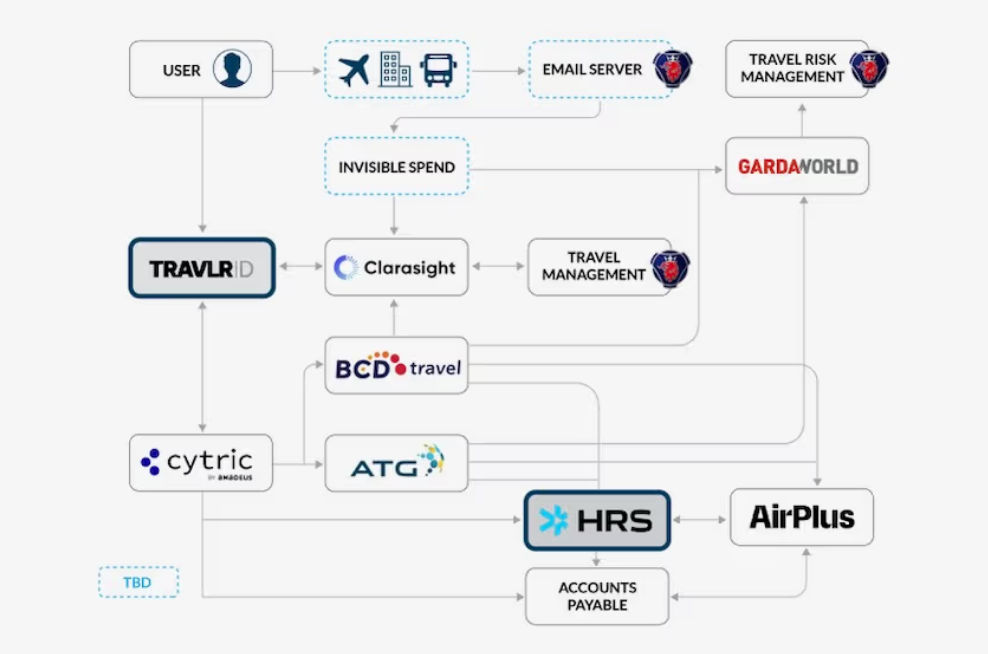
Instead, they chose to create an independent profile layer
through TravlrID. The platform receives traveler information directly from
Scania's HR systems via an API integration and acts as the program's single
source of truth. Rather than storing traveler data across multiple supplier
platforms, information resides in one place and is shared only when required
and only with traveler consent.
"The profile is the holy grail," according to Andersson.
"TravlrID is an enabler for everything to connect. My data is provided to
the airline or hotel only when it's needed for that trip. It isn't just lying
around in different systems."
The approach fundamentally changed the architecture of the program:
with the traveler at the core, and suppliers functioning as connected service
providers operating around it.
"Owning that single source of truth gives us
flexibility for the future," Andersson added. "It enables us to build
an even more interconnected program. We can connect new suppliers, new services
and new business requirements without having to rebuild everything. We are a
future-proof program today because of that."
Building a Connected Ecosystem
After establishing the profile layer, Scania introduced a select
mix of suppliers, each responsible for a specific capability within the program.
TravlrID became the central profile management platform.
Cytric in Microsoft Teams became the primary booking environment, while
incumbent agency BCD Travel remained the primary TMC partner, responsible for
15 global markets, and ATG overseeing seven markets. Scania introduced HRS Pay to
automate hotel payments and remove the need for many expense claims. Clarasight
now provides visibility of emissions data, while GardaWorld strengthens traveler
tracking and duty of care.
The implementation required intensive collaboration between
travel, procurement, IT, data privacy and security teams.
"Instead of saying, 'such and such supplier would be a
good fit, let's bring it in,' we asked ourselves what we needed from end to
end," says Andersson. "It was a much bigger review."
Festive Road’s Ami Taylor worked as an outsourced tech
experience manager, but operated as an internal Scania team member. Taylor
brought an “outside-in perspective” to Scania that helped formulate the program’s
tech strategy.
"Every travel program should have some form of travel
technology expert," Andersson said. "I know travel and meetings programs
inside and out, but I'm not a tech expert. Ami was able to challenge us,
challenge our suppliers and speak the language of our internal IT teams."
Although the core transformation project is now complete,
Andersson says the travel team continues to work closely with Scania’s internal
IT resources, keeping them engaged and “up to speed” with the travel program
with regular calls—something that had not previously taken place.
The TMC's Role
The traveler-centered ecosystem raised questions about the
role of the TMC. Initially, some suppliers questioned why Scania needed a
separate profile management platform at all.
"We heard resistance at the beginning," said
Andersson. "The question was always, 'Why do you need TravlrID when we
already provide profiles?'"
 Source: Scania
In Scania's redesigned travel ecosystem, rather than acting
as the owner of traveler data, the TMC would become one specialist service
provider among several connected partners. Traveler profiles would flow into
the TMC environment when required, enabling agents to deliver services without
becoming custodians of the data itself.
Andersson believes the model is beneficial for both sides.
"It has actually simplified things for them as well because they know the
right data is coming in," she said.
Now the TMC focuses on complex bookings, which currently
make up 25 percent of Scania’s total booking volume. Meanwhile, simple
point-to-point bookings increasingly are handled online through Cytric’s Teams
integration.
"We will pay for a TMC if they give us value," said
Andersson. "The value is in the complex bookings, traveler support and
specialist expertise."
At the same time, the profile-led architecture has
simplified traveler onboarding and supplier transitions. As Scania moves toward
a single global TMC strategy, the company can migrate travelers far more
efficiently because profile ownership remains independent of any individual
provider.
Improved Experience, Better Outcomes
Scania’s global travel program now incorporates 85 percent
of the company’s travel spend, up from 60 percent, and supports some 17,000 travelers
on around 57,000 trips annually.
Travel spend has fallen by 20 percent, while average ticket
prices have decreased by 10 percent. Online adoption has risen to 67 percent
and continues to move toward Scania's target of 75 percent.
Perhaps most importantly, travelers themselves report
significant improvements.
"Sixty-seven percent of our frequent travelers say they
are more efficient now," says Andersson. "That's from booking until
they come home and complete their expenses. The whole journey is simpler."
Traveler profiles are now fully automated, eliminating
manual profile creation and reducing finance and reporting errors.
Scania has even introduced a "no profile, no
booking" policy, which was recently extended to guest travelers, and is
strictly enforced with its TMC.
"A year ago we couldn't have done that," says
Andersson. "Today we can because we have such an efficient automated
process."
“We now have a purposeful travel program that allows Scania
to manage, influence and control travel according to our shifting needs,” she
adds. “We built a platform to encourage travelers to make the right choice, ensure
they travel for the right reason, in the right way and at the right cost.”
The booking experience itself has also become significantly more user-friendly.
Cytric's integration with Microsoft Teams has delivered a “much-needed” mobile
booking capability, while a ‘Share My Trip’ feature went down particularly well
with travelers.
“Our travelers are more satisfied, our program is more
effective, and employee feedback indicates increased productivity and
efficiency,” says Andersson, who says the transformation has also strengthened
Scania’s culture of collaboration and innovation.
What's Next?
Andersson views the program as a constantly evolving
platform. Her focus now is on increasing adoption, integrating additional
capabilities and exploring new opportunities for artificial intelligence.
Scania is also evaluating how the profile-centered
architecture could support adjacent functions such as meetings and events and
global mobility.
"The transformation isn't finished," said
Andersson. "It's about continuous improvement."
While most buyers still rely on suppliers to provide the
architectural backbone of their travel programs, Scania has demonstrated the
value of a ‘build-your-own ecosystem’ approach—one that is centered on traveler
outcomes rather than supplier capabilities.
"The traveler experience was the game changer,"
Andersson says. "Everything starts there."