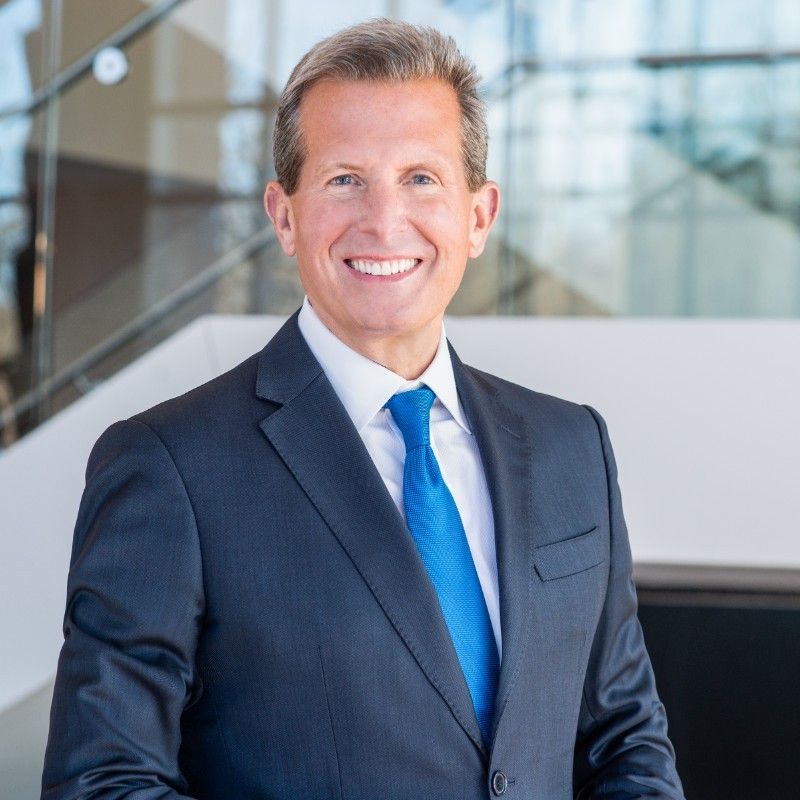
This year's list of most influential figures in the business travel industry is rife with dealmakers: executives who pushed, cajoled and negotiated to find common ground with merger partners and regulators alike, some successfully, some not, and some to be determined. Wyndham Hotels & Resorts president and CEO Geoff Ballotti, on the other hand, is on this list due to a merger proposal he spurned, one that could have created an economy-tier behemoth in the U.S. hotel space.
Ballotti and Wyndham's board of directors, chaired by Stephen Holmes, never wavered in their opposition to the merger proposal offered—first on a friendly basis, then not—by Choice Hotels International. Choice after nearly a year would give up the pursuit, at least for now, of creating an operator with more than 15,000 properties worldwide.
When Choice after about six months of private negotiations with Wyndham went public with its $7.8 billion offer, Ballotti and the board publicly rejected it, calling it undervalued, too dependent on Choice stock and possibly drawing objections from federal regulators. Ballotti never changed that position, even when Choice revised the deal and then launched a hostile bid for the company. He called Choice's pursuit a "distraction," before Choice gave up the ghost.
Ballotti throughout Choice's pursuit cited a growth strategy that would allow Wyndham to increase in size without a merger. To that end, Wyndham in 2024 furthered the growth of Echo, its first extended-stay brand, and partnered to bring extended-stay brand WaterWalk's 11 properties into its portfolio. The company also launched a loyalty program for businesses that allows corporate clients to accrue points for Wyndham hotel stays.
Choice in its hostile bid offered Wyndham shareholders $90 per share while Wyndham's share price was in the lower $70 range. At press time, it was trading at $98 per share.
A Choice-Wyndham tie-up would have transformed the economy and midscale tier of the U.S. hotel markets, brands popular among the infrastructure-related business travel that marks both companies' demand landscape. That effect could have drawn antitrust regulators' attention, as Ballotti warned, even though the franchise model both hotel companies employ makes for complex ownership considerations.
In the end, it didn't get to that point, and Choice and Wyndham remain competitors for blue-collar business travel. Still, Choice president and CEO Patrick Pacious after ending his pursuit reiterated the company's interest in M&A, and when asked last spring, wouldn't rule out a renewed attempt with Wyndham. In this industry, never say never.