Ratings for chauffeured ground transportation services in
the annual BTN Car Rental and Ground Transportation Survey and Report slipped
slightly in 2025, averaging 3.80 on an ascending ratings scale of one to five
compared with 3.83 in 2024. Of the 10 categories rated, seven declined from a
year prior.
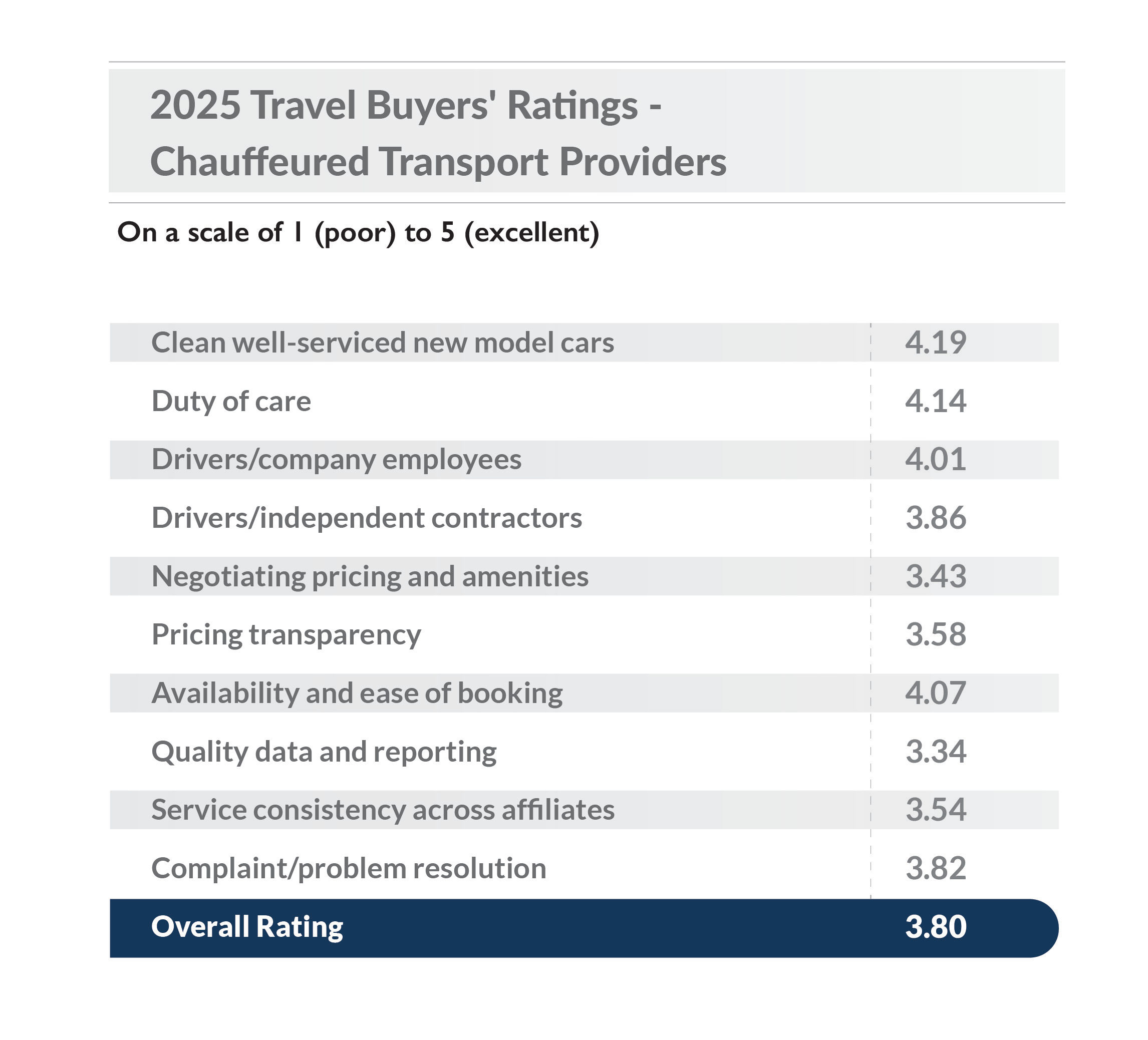
The categories that showed improvement included availability
and ease of booking, up 0.08 points to 4.07, and complaint and problem
resolution, up 0.07 points to 3.82. Clean, well-serviced new model cars held
steady at 4.19 and was the highest-rated category.
The area where the rating slipped the most was service
consistency across affiliates, dropping to 3.54 from 3.69 in 2024.
That decline "may be due to a couple different factors,
like inconsistent training and onboarding as well as challenges scaling
operations to meet demand from chauffeured transportation partners, which
ultimately affect service delivery," National Limousine Association
president Brett Barenholtz said in an email.
Industry Trends
Barenholtz added that one key current trend is that
operators are increasingly adopting technology to streamline operations. "Enhanced
booking platforms and automated dispatch systems are standard, along with
integration with all the top corporate travel management systems like Concur,
allowing for more efficient service."
Still, in the survey's open-ended comments, multiple buyers cited
an area of improvement could be in mobile apps.
"Technological adoption and enhancement is a priority
for our industry, and I think we will continue to see strong improvement
through the year ahead," Barenholtz said. "Earlier this year, we saw
the acquisition of one of the major technology providers for the chauffeured
transportation industry, GroundWidgets, by Fullsteam, which is focused on
driving innovation and fueling growth. With this, we expect to see continued
improvement in technology solutions throughout our industry this year."
Many travel managers cited improved communications between
them and their chauffeur suppliers. "As technologies like AI evolve at a
rapid pace, our industry has been able to leverage these tools to allow for
connectivity, efficient booking and better customer service, without losing the
high-touch (human) service that chauffeured suppliers are known for,"
Barenholtz said.
Sustainability components in travel programs for chauffeured
services remained mostly consistent with last year's results: 84 percent did
not have them compared with 82 percent last year. Of those that do have a
sustainability component, the percentage of respondents who said suppliers "fully"
met sustainability needs fell to 22 percent from 34 percent in 2024. "Most"
needs were met by 28 percent of respondents, the same as last year, while those
who said "some" sustainability needs were met increased to 39 percent
from 25 percent.
Barenholtz said that despite these steady findings, the NLA
is seeing a growing emphasis on sustainability, "with operators adding
electric vehicles and sustainable practices to meet the demand from corporate
clients," he said. "The NLA is also developing sustainable
procurement standards for the chauffeured transportations space, which will be
released later this year."
The portion of survey respondents who have chauffeur
contracts increased slightly this year. Fifty-nine percent indicated they had
active chauffeur contracts compared with 57 percent last year. Those with one
to two suppliers represented just over half of those with active contracts; about
15 percent of those with active contracts said they were juggling three to five
suppliers.
Four in five respondents said the overall chauffeured
service quality has stayed the same, while 14 percent said it had improved the
past year.
VP of program management at KesselRun Corporate Travel
Solutions Krissy Herman noted a significant quality change in the number of chauffeured
ground suppliers ready to service group needs for events and meetings. "Fewer
ground transportation companies are able to assist at the level that they used
to," she said. "Airport greeters, directing traffic, to some extent
having cars staged and ready to roll as people get ready to leave. We've had
some pushback in several programs we work with, just that [they] don't have the
bodies or the fleets to be able to support big, mass needs.
"In some cases, they've shifted to more of a rideshare
model—figure it out yourself, here's a code," Herman said. "We have
also seen in some locations for some events, the hotel or resort being able to
help accommodate transfer needs."
Ride-hailing Results
As for ride-hailing suppliers, more travel managers are
signing contracts with them for their programs. The portion of respondents with
preferred contracts increased to 47 percent from 36 percent a year prior. Those
that don't allow but reimburse anyway, or who disallow and do not reimburse
dropped to 3 percent from 5 percent.
"In the last two years, all of our clients who hadn't
been on board, who hadn't had formal partnerships have gotten into formal
partnerships," Herman said. "All of our clients have always allowed
rideshare if it was the most reasonable transportation from a price standpoint,
but in terms of those formal programs, the last two years has been that
shift."
Satisfaction with ride-hailing services, however, dropped
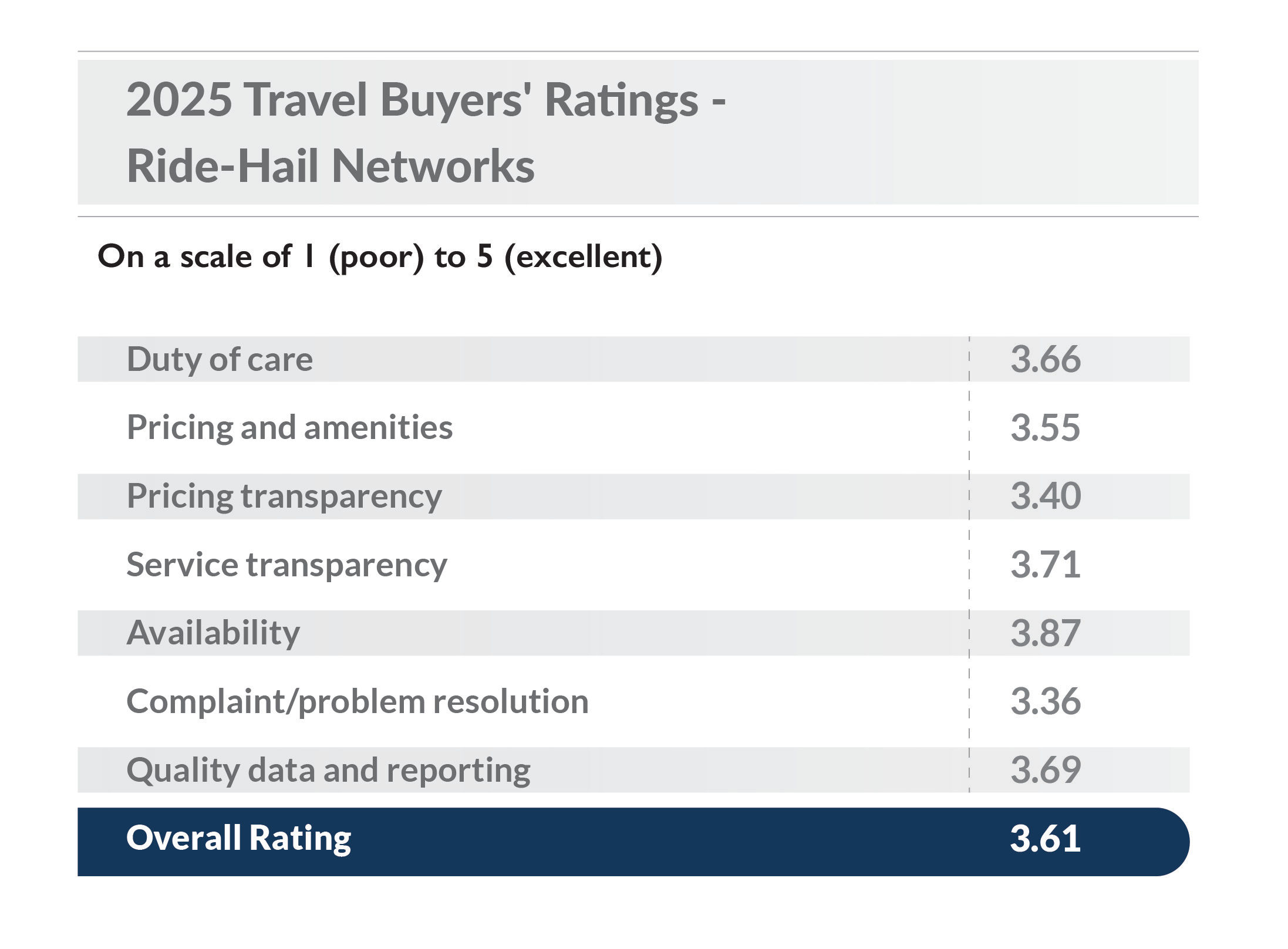
significantly in 2025. The average score for the seven categories rated was
3.61, down from 3.74 in 2024. Pricing transparency slid the most, dropping 0.30
points to 3.40. Two other categories with big drops were complaint and problem
resolution at 3.36 from 3.57 a year prior, and pricing and amenities at 3.55
from 3.73.
In the open comments, some respondents cited sustainable
options and better insights into carbon reporting were appreciated. Several,
though, said that the main thing ride-hailing companies could do in the next
year to improve their service was to provide corporate discounts or rebates. Another
was a call for improved global reporting.
Herman noted that surge pricing remained a challenge, and
"a lot of travelers, organizations and travel managers feel like they are
at [the supplier's] mercy and there's no way to really control this besides
maybe some education to travelers," she said. She added that part of that
education would be to tell travelers to "check [multiple] providers, if
there is more than one operating in the location. Check if you're able to wait
a little bit, see if [the price] goes down."