When Jennifer Steinke arrived at ACT two years ago, its business travelers were in a funk. "ACT has great travelers who are good at listening, and there's a compliant culture," said the 20-year veteran of managed travel, now ACT manager of corporate travel services. "Travelers did what they were supposed to do, but they craved a more traveler-centric environment."
Steinke knew travelers wanted more freedom to search and book content available outside the program but that once they were on the road, they actually wanted more structure and support.
Steinke addressed the desire for booking freedom with a two-pronged approach: Short's Travel Management's FindIt tool detects when a traveler is researching travel itineraries on supplier-direct and travel-aggregator sites and prompts the user to send the flight and hotel to the travel management company for booking or to find comparable in-policy flights. But Steinke didn't stop there. She also integrated with Concur's TripLink to catch bookings that get past FindIt.
"You have to create an end-to-end experience that incorporates different ways to book the travel," she said. "Why not create those ways to keep them compliant and service the bookings?"
FOLLOWING TRAVELERS ON THE ROAD
Servicing the bookings was key for ACT travelers because they were feeling the bottom drop out of their travel-support system when they were actually on the road. "The consumption part of the trip proved to be really important to them," Steinke said.
To answer that need, she leveraged the suite of Concur tools that ACT's management team had acquired prior to her arrival. "There are other tools out there," she said, ticking a few names off a list of leading-edge mobile technology innovators, "but knowing that we were going down the Concur path, I knew I could leverage the capabilities to get this done."
Steinke harnessed the Concur Messaging product, built off the conTgo platform the company acquired in 2013. While Concur markets the product for duty of care, Steinke incorporated policy messaging and integrated with itinerary data to drive right-time messaging to travelers. "If they don't have a rental car, for example, I can automate rich messaging around getting the best ground transportation based on policy," said Steinke. "If there is a trip disruption, we can provide proactive accommodations for travelers, and, of course, we also do use it for risk messaging," she said.
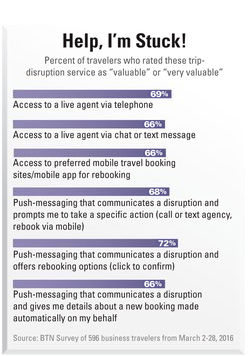
When Steinke reviewed with travelers the new mobile messaging capabilities in the Concur implementation training sessions, they got excited. "When I told ACT travelers about additonal support [during travel], they were really hungry for it. When we got to trip-disruption services, their eyes lit up. We needed to create a better experience for them and provide better engagement touch points. That's going to drive cost control and drive traveler behavior," she said, taking trip disruption as her reference. "Infrequent travelers, in particular, may overspend to get home. A message that tells them they were reaccommodated eases the burden on them and eases the cost on the company."