For the third consecutive year, Hilton Worldwide ranked first in BTN's annual survey of corporate travel buyer ratings of traditional hotel brands, with IHG Hotels & Resorts close behind in second.
BTN asked survey respondents to rate major hotel chains across nine criteria: strategic property locations for business needs, safety and security standards, product quality and service consistency, innovation and digitization, rate availability and transparency, sales empowerment and responsiveness, a partnership approach to corporate business including rate flexibility, data quality and reporting and sustainability.
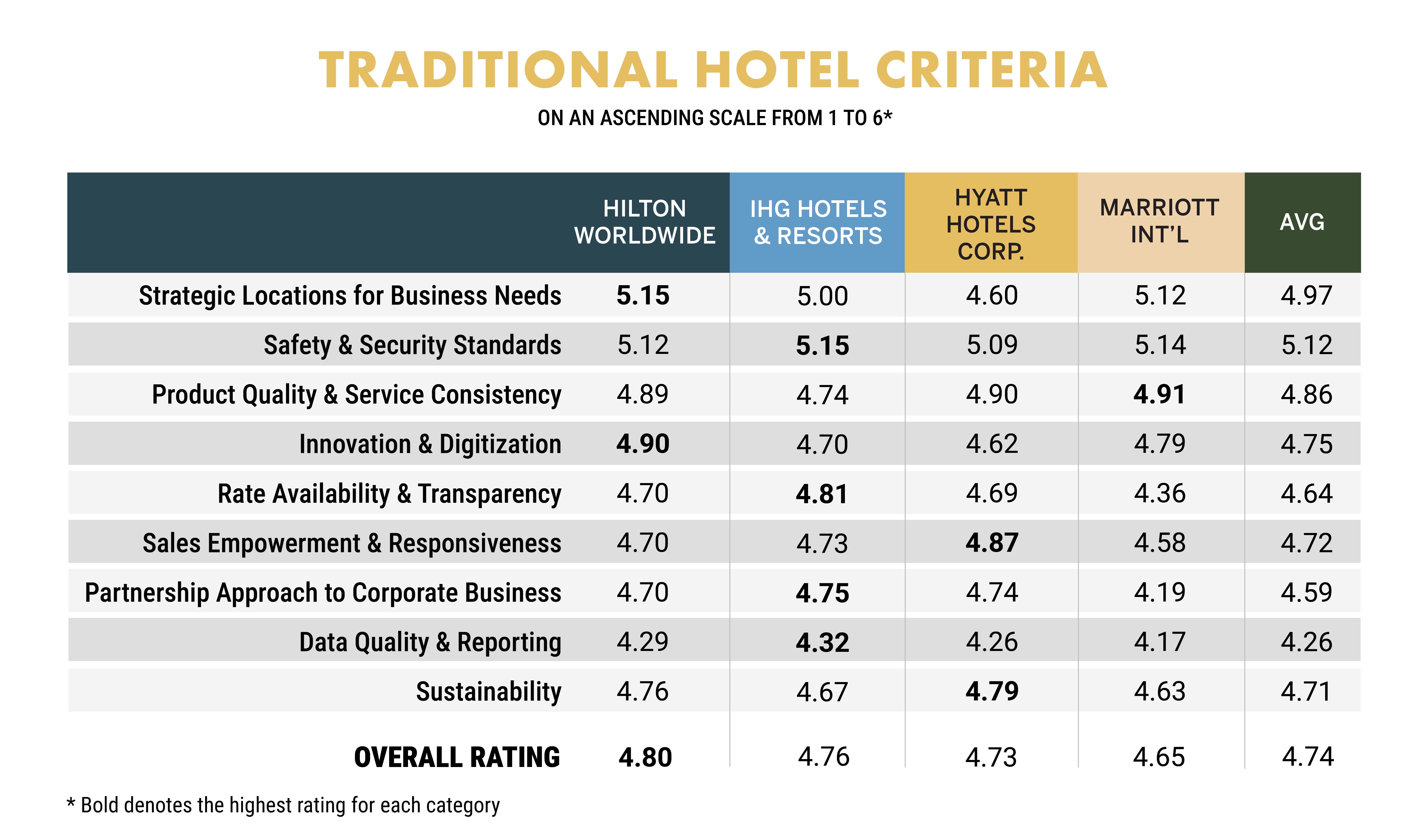
This was the third year in which the hotel survey asked buyers to consider all hotel company brands. (Extended-stay brands were excluded, see those results here.) Hilton has finished on top each year since the change was implemented.
Hilton's score of 4.8 on an ascending scale of one to six bested its score from the prior year, but it was only four-hundredths of a point ahead of IHG. Hilton finished first in two categories: strategic locations for business needs and innovation and digitization.
Hilton in 2026 has continued to build up its portfolio of brands and properties. It launched Apartment Collection in January, bolstered by a partnership with accommodation provider Placemakr, and introduced the new upper-midscale Undergraduate brand in June, bringing its brand total to 28. Hilton added 32,500 net rooms during the first two quarters of 2026, bringing its total system size to more than 1.38 million rooms in 9,453 properties, as of June 30.
In July, Hilton also announced a partnership with travel management company Navan, giving the travel management company direct access to its central reservation system and content services via API.
"What's exciting about [the Navan partnership] is our ability to provide to them real-time inventory, as well as enriched content so that we can ensure that they have a robust product offering for their customers," Hilton VP of global business travel sales Christiane Cabot Bini told BTN.
Cabot Bini pointed to technology platform investments made "years and years ago" as a driver of Hilton's high score for innovation and digitization.
"Those investments have enabled us to be really flexible in terms of how we build out capabilities for our corporate customers," Cabot Bini said.
Almost all—97 percent—of Hilton's U.S. hotels are on a unified, cloud-based property management system, according to Cabot Bini, which enables a smoother check-in and check-out process and enhanced communication with guests throughout the life cycle of a trip.
Hilton last year struck a deal with Conferma to give the payment solution provider access to Hilton's PMSs to support the transmission of single-use virtual card numbers via API.
Cabot Bini said the Conferma partnership and the Navan deal are examples of Hilton's philosophy to "meet people where they are," whether they're corporate customers or industry partners.
"We still have many TMC partners that utilize the [global distribution systems], and that is a good solution for them," Cabot Bini said. Though she said Hilton has more direct connections in the works, "we will continue to invest in our GDS partnerships."
IHG Wins on Corporate Relations
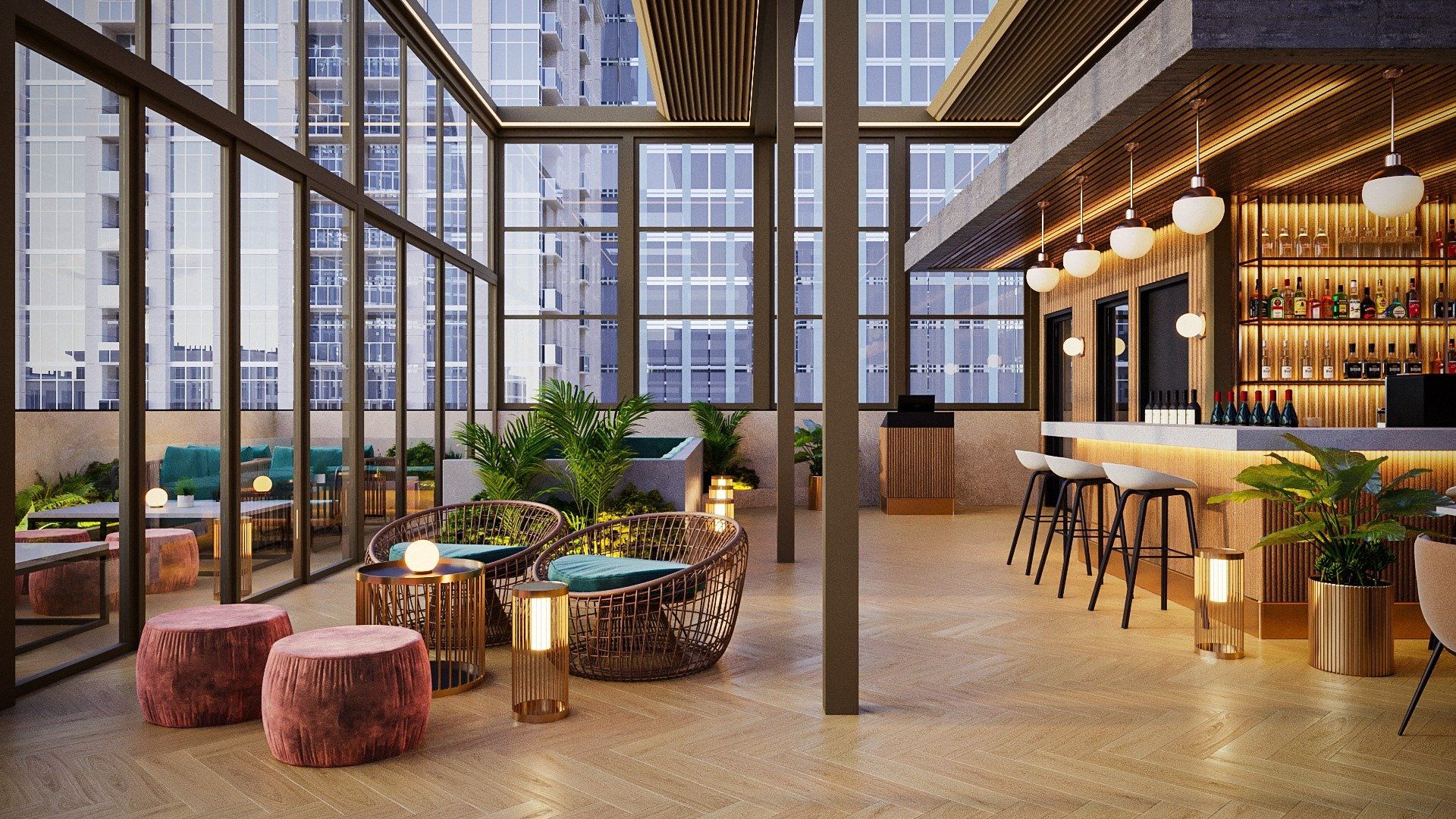 The Voco Times Square – Broadway, which opened in February 2026. Source: IHG Hotels & Resorts
IHG Hotels & Resorts placed second, narrowly trailing Hilton after ranking third last year and fourth in 2024. IHG earned top marks in four categories: safety and security standards, rate availability and transparency, partnership approach to corporate business and data quality and reporting.
In 2026, IHG also has been focused on the expansion game, growing its net system size by 5 percent year over year and opening 197 hotels through June, bringing its total system size to more than 7,100 hotels globally. In February, IHG launched the Noted Collection brand, which sits in IHG's premium portfolio alongside Crowne Plaza, Voco and Ruby.
While IHG's scale is ever-growing, both in portfolio size and among corporate customers, VP of global sales strategy Ryan Plemmons said one of IHG's primary objectives in its account relationships with buyers is to "understand what success looks like for them and then try to match that back to different programs and solutions within IHG."
One of those solutions is the small and midsize enterprise program IHG Business Edge, first launched in 2018, which Plemmons called "wildly popular with those companies that don't necessarily have a dedicated travel function."
But Plemmons said IHG also tries to work with customers through "strategic pricing" in which, in addition to chainwide pricing based on volume, the company can also customize a dynamic discount program for a subset of hotels, such as a discount that applies across a single brand.
"It works very well. It's very popular with our customers and offers a bit of that customization to a program," Plemmons said. "It's not what IHG wants, it's more so what fits best for our client."
Regarding IHG's category-high scores for data quality and reporting, Plemmons said the global sales function is supported in a shared service model by a global insights and analytics team.
Similarly, IHG has specialized rate-loading and channel distribution teams that work together to ensure rates are loaded properly and that it's not solely up to corporate customers to spot rate-loading errors.
Plemmons said the throughline across the criteria in which IHG scored highest is trust.
"We're here to create win-win programs for our customers," Plemmons said. "Whether it's data we're providing, the standard around safety and security—which is always on—the rate availability … there's a trust factor there that we're accountable."
Hyatt Scores for Sales and Sustainability
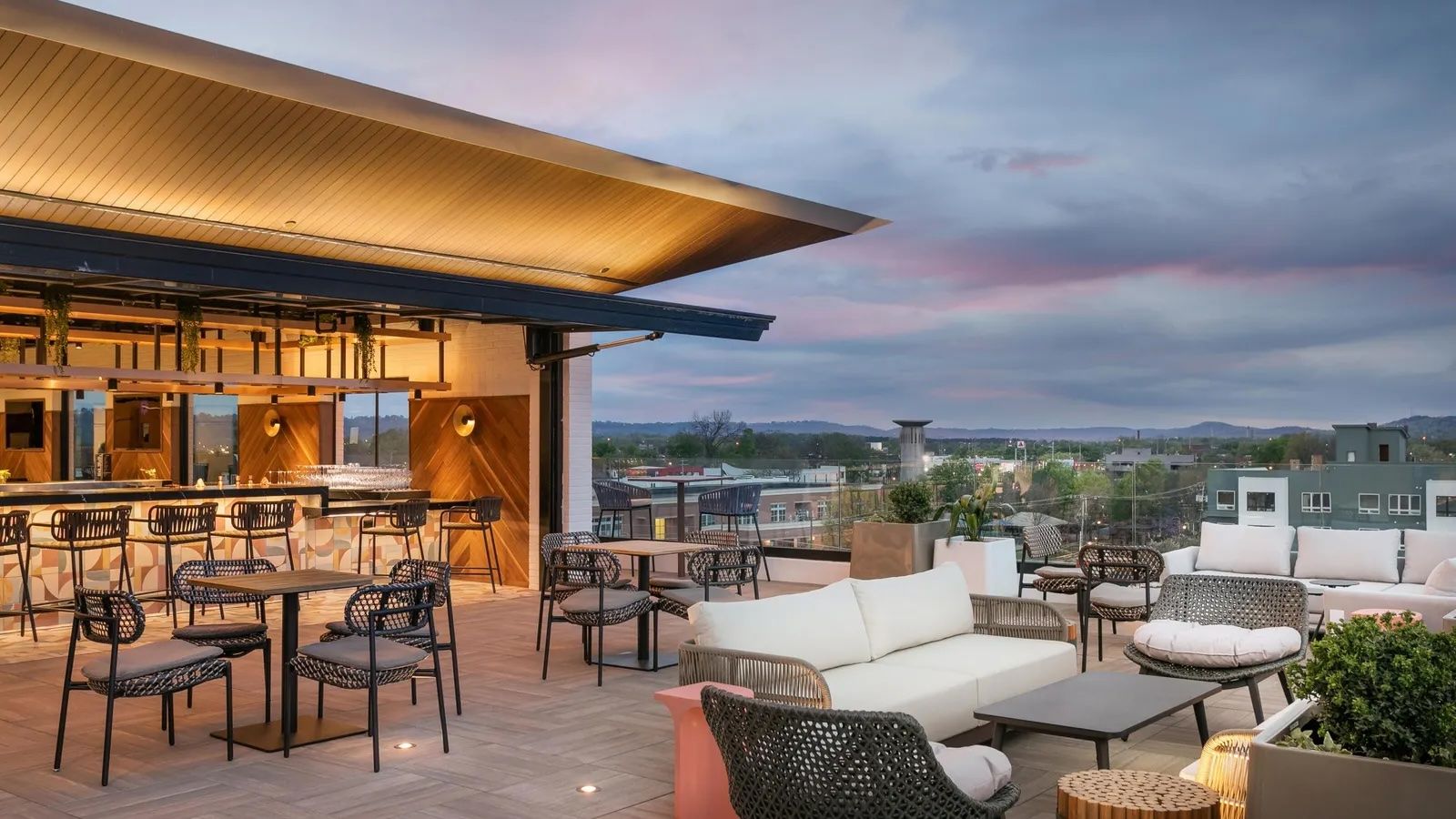 The rooftop at the Caption by Hyatt Chattanooga Downtown, which opened in March 2026. Source: Hyatt Hotels Corp.
Hyatt Hotels Corp. finished third in the Hotel Survey rankings, earning the highest scores for sales empowerment and responsiveness and sustainability.
Hyatt has benefited from the sustained boom in leisure, which CEO Mark Hoplamazian said in Juneaccounts for 50 percent of the company's revenue, compared with 35 percent pre-Covid.
Nevertheless, Hyatt SVP global sales and commercial services for the Americas Alice Harrington-Caravello said the corporate sector continues to be a priority for the company.
The focus is reflected in Hyatt's score of 4.87 for sales empowerment and responsiveness, which came in above its competitors in this year's ratings and improved on the company's category-winning score of 4.79 in the 2025 Hotel Survey.
Harrington-Caravello pointed to a combination of culture and technology as potential factors in buyers' scoring decisions.
On the culture side, she said Hyatt prides itself on being a company rooted in care and collaboration, taking a "listening first" approach with customers.
On the technology side, Hyatt is more than two-and-a-half years into its AI journey. CEO Mark Hoplamazian told analysts during a May earnings call that the organization has been focused on fostering AI adoption and "building out a number of agentic platforms," which has led to gains in both revenue and productivity.
Harrington-Caravello said the sales function within Hyatt has been using AI for business development. For example, the team can identify markets where customers have existing travel volumes and proactively highlight new and upcoming hotel properties suited for their programs, rather than contacting them for every addition to Hyatt's portfolio.
"AI is a strategic enabler for us," Harrington-Caravello said. "We are focused on trying to make sure that we enhance our human connections and capability. We're never taking the human out of the loop; it's about making sure we're saving time and leveraging efficiencies."
Hyatt also topped the survey for sustainability. Harrington-Caravello said the topic may have become less central to industry conversations in recent years, but it's still a genuine priority for customers and the company rather than a marketing add-on.
She pointed to Hyatt's "World of Care" global environmental, social, and governance platform, along with property-level initiatives like beehives at the Hyatt Regency Atlanta, as evidence that the commitment predates the current wave of cost-focused pressures.
"It's core to who we are," she said, "not just something we need to do in order to drive more business into the hotels."
Marriott Gets a Top Mark for Consistency
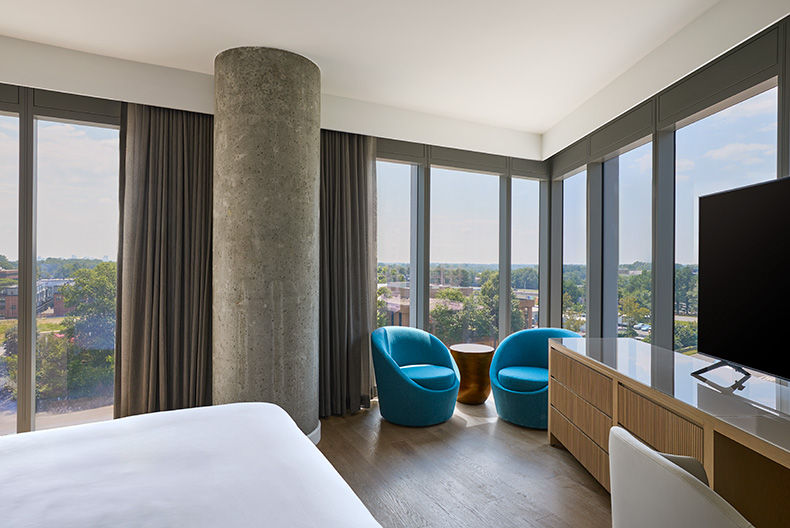 A guest room at the JW Marriott Reston Station, which opened in September 2025. Source: Marriott International
Marriott International received the highest score among traditional hotel companies for product quality and service consistency—no easy feat for a hospitality giant that surpassed 10,000 properties during the second quarter.
In 2026, the hotelier entered the final phase of a multi-year, billion-dollar tech revamp to re-platform its central reservation system, its property management systems and its loyalty platform. It also continued the sales shake-up that began in 2025, most recently naming former Avis executive Beth Kinerk as SVP of global sales and promoting Shannon Fogarty Patterson to chief commercial performance officer.
Patterson attributed Marriott's top score in product quality and service consistency to the company's culture and its investment in onboarding, training and developing associates across the company's global network.
"Marriott's people-first culture, combined with global brand standards, quality assurance programs, and our continued focus on our digital and technology transformation, allows us to deliver the reliability travelers expect and empower our associates around the world," Patterson said in a statement provided to BTN.
Despite the strength of Marriott's scores around strategic locations for business needs, safety and security standards and innovation and digitization, its weaker ratings in corporate-travel-centric areas have put Marriott fourth in the overall rankings for the third consecutive year.
The hotelier has become the poster child for buyer discontent with suppliers' dynamic rate strategies. Multiple survey respondents pointed to "Marriott's [non-last room availability] rate strategy," "Marriott rates" and simply "Marriott" as the biggest challenge to their program.
Nevertheless, Marriott EVP and chief revenue and technology officer Drew Pinto told BTN in July that the company benefits from collaborative relationships with enterprise-level customers with mature managed travel programs who advise them on new initiatives.
"We have customer advisory boards, they're very active with us, and they share what's going to be successful for us and for them in this space," Pinto said.