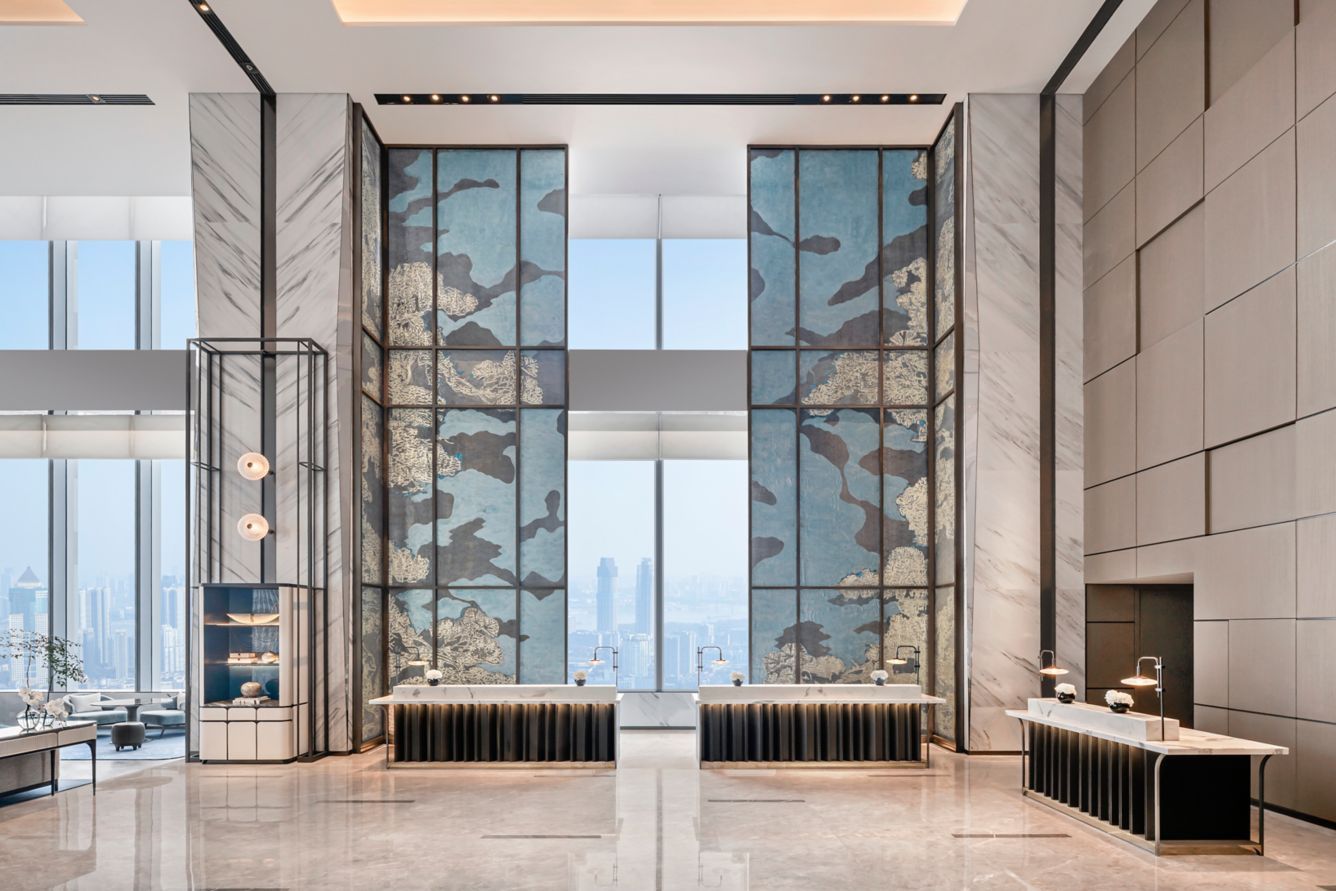
 Ritz-Carlton Wuhan opened March 31; the Sky Lobby is pictured here. Source: Marriott International
For a certain kind of business traveler, hotel design, a sense of culture and space, and anticipatory service are must-haves—and that's not to mention a plush robe, stocked minibar, turn down service and an accessible human concierge in the lobby. Right now, those must-haves are getting harder for companies to afford, and the hotels providing them show no signs of making it easier.
Last year, average daily rate growth in the luxury segment outpaced rate increases across all other segments, according to CoStar data and results from major hotel chains.
Global ADR across luxury hotels in the U.S. rose 5.5 percent year over year to $351.51, compared to 3.2 percent rate growth in upper upscale and 2.8 percent growth in upscale in 2025, according to CoStar. In the U.S., where revenue per available room last year declined for the first time in a non-recessionary period, ADR growth at luxury hotels rose 3.6 percent to $397.68, while upper upscale rates increased 1.3 percent and upscale rates fell 0.6 percent.
"[Luxury has] probably been the most fun story to tell for the last number of quarters on our earnings call," Marriott president and CEO Anthony Capuano said during a session at the J.P. Morgan Gaming, Lodging, Restaurant and Leisure Management Access Forum on March 12. "There have been, understandably, lots of questions about the resilience of that luxury consumer, but we continue to see really strong demand and really strong pricing power, which for us, given that we've got such a large portfolio and pipeline globally, is really encouraging."
Marriott International, which has seven luxury brands in its portfolio, posted a 4.6 percent year-over-year ADR gain at its luxury hotels in the U.S. and Canada in 2025, reaching $295.15. That outpaced growth at its premium and full-service properties in the same region, which rose 1.8 percent and 2.5 percent, respectively.
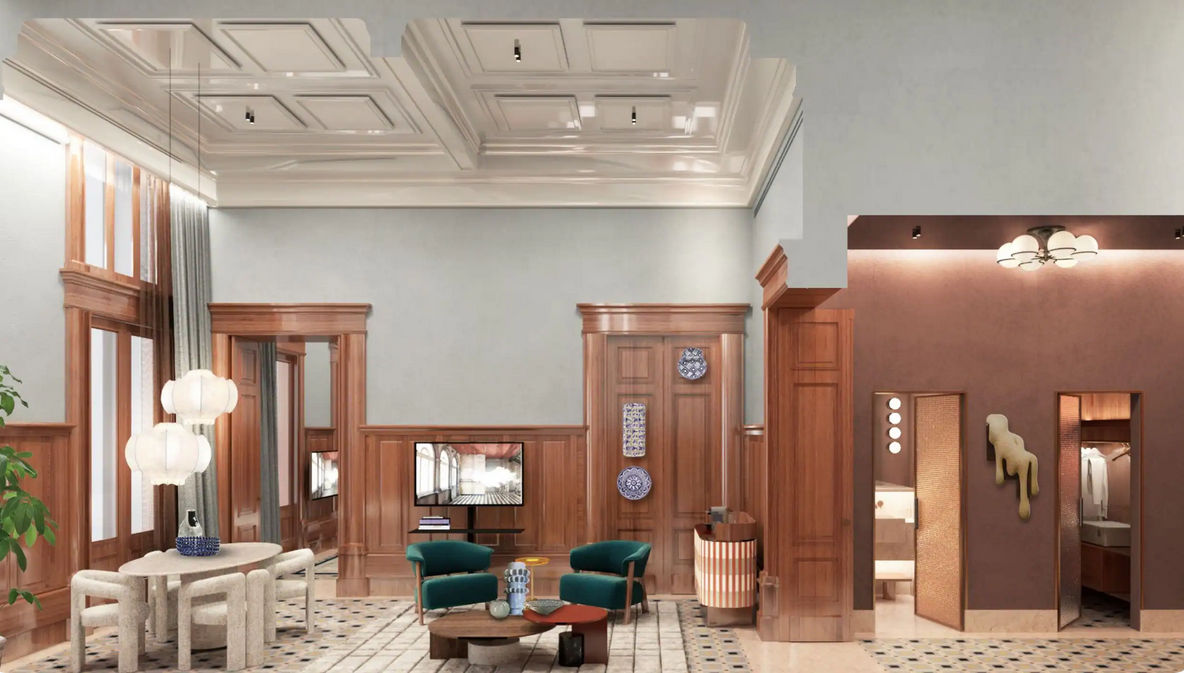 The Loft Suite of Hyatt's Andaz Lisbon; the hotel opened on March 11, debuting Andaz in Portugal. Source: Hyatt Hotels & Resorts
Hyatt president and CEO Mark Hoplamazian called "outperformance" by the company's luxury and full-service brands a "sustained trend" during the company's most recent earnings call in February. Hyatt's eight luxury brands increased ADR 2.6 percent year-over-year in 2025 to $291.43, while rates at its upscale brands grew 1.5 percent and rates across all other segments declined.
Why Premium Rates Are on the Rise
While rate growth in the premium travel segments in 2025 gave CEOs plenty to crow about, the question is why rates are growing so much faster in the luxury and, to an extent, the upper upscale segments.
A key reason is cost.
"Number one is wages," said Areka hotel practice lead Jean Tan. "Premium hotels require more labor because of the services they offer. And wages aren't coming back down; they're going to keep going up. It's the cost of doing business in that category—and then, of course, the cost of everything else is going up."
Tan added that most premium hotels offer full-service restaurants, which have seen labor and ingredients costs rise in recent years—those factors also drive up room rates.
But cost is only part of the story—the other is demand. In recent years, the hotel market has seen what PwC called in its December Hospitality Directions report a "bifurcation" between performance in the luxury/upper-upscale segments and the lower/economy chain scales.
The trend was further detailed in PwC's Emerging Trends in Real Estate 2026 report: "Demand has softened at the lower end of the chain scale spectrum, while higher-income travelers, buoyed by stock market gains and more resilient discretionary spending power, have continued to support performance at the luxury level."
In the past year, the luxury segment has seen something else: supply growth. According to PwC, the luxury segment experienced the greatest supply growth, driven, in part, by a return to construction post-pandemic.
The pipeline for luxury properties in the U.S. reached record highs during the fourth quarter of 2025, according to Lodging Econometrics, with an 8 percent year-over-year increase in projects to 1,328 (representing 252,544 rooms). Upper upscale also hit record highs, with projects up 9 percent to 1,883 (or 391,391 rooms).
Capuano said in March that roughly 40 percent of Marriott's 600,000-room pipeline sat in the luxury or upper-upscale segments.
Despite the new supply and further pipeline growth, hoteliers expressed optimism that premium travel would hold, at least in leisure markets.
"Our luxury and lifestyle brands continue to perform well," Hilton president and CEO Christopher Nassetta said during the company's Feb. 11 earnings call. "We’re not seeing any meaningful softness there. If anything, demand remains healthy, supported by experiences, international travel, and high-end leisure."
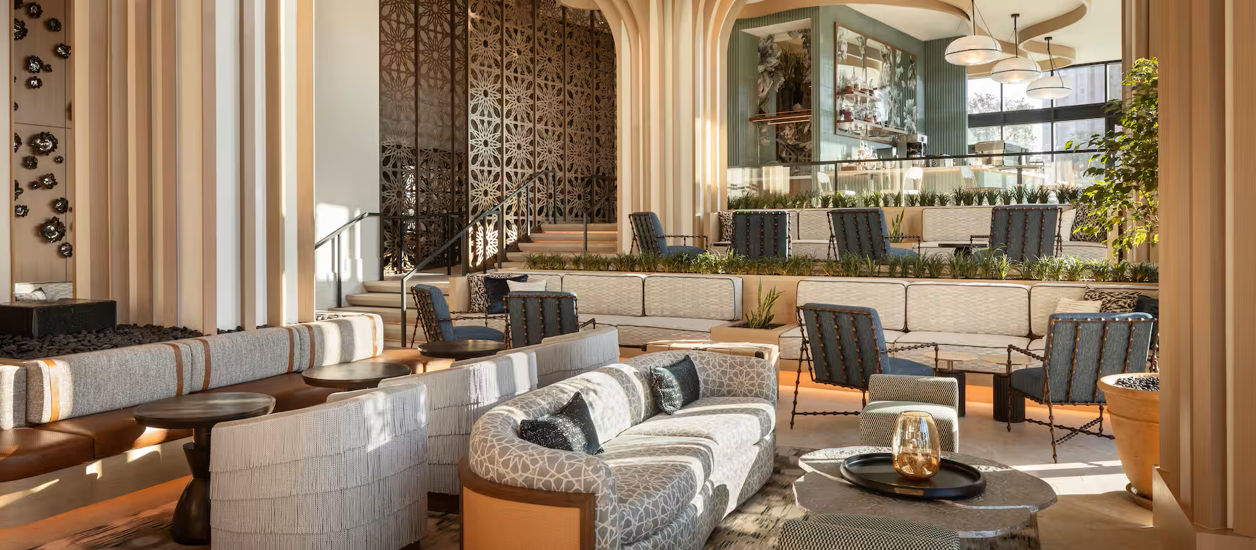 The Monarch San Antonion opened March 3 as part of Hilton's Curio Collection lifestyle brand.
Corporate Travel's Approach to Premium
While certain business travelers may have luxury expectations, the current rate climate means premium hotel stays are being pushed down a tier.
Tan said the small handful of clients she works with who rely heavily on premium hotels have swapped luxury for upper-upscale brands to reduce spend.
"In corporate budgets, the first thing to get cut is almost always travel," Tan said. "You might have to go from a JW Marriott to a Marriott, or an Andaz to a Hyatt Regency."
Goldspring Consulting partner Neil Hammond said the swap down a tier to save budget isn't as black and white as the STR chain scales would suggest.
"[Hotels] have a nomenclature problem," Hammond said. "What is even a luxury hotel? What is even a five-star hotel?"
STR sets its chain scales each year based on the prior year's system-wide average daily rate. Star ratings, however, aren't set by a single entity and can vary from property to property, even within the same brand. Hammond said the hotel databases most corporate travel managers use don't consistently distinguish between the various hotel tiers.
"Think about airline," Hammond said. "We go to the ends of the earth to define that. What do we really do for hotel?"
Instead, program managers leverage rate caps or market caps to reduce hotel spend. Tan said she's worked with clients to apply caps in various ways—using the highest negotiated preferred hotel rate as a market cap, setting lower rate caps at non-preferred hotels to drive travelers to preferred properties with a higher cap or using in-depth analysis to enact caps in $25 increments above the average spend in a given zip code.
Despite the pressure to limit luxury stays—or at least the high price tag that comes with them—Tan said it's not always a necessary trade-off.
"Outside of North America, luxury hotels, especially in Asia, the rates are [comparatively] lower," Tan said. "The cost of a JW Marriott or Intercontinental in China is going to be lower than in the U.S. When [business travelers] stay abroad, especially in that part of the world, they're likely to continue in the luxury category that they're used to without having to downgrade."
The same market forces pushing luxury rates up in some destinations are also what's left some convention and city-center hotels struggling to attract guests. For these properties, corporate travel represents something that luxury leisure demand can't always offer: consistency.
"I've had conversations with some premium hotels that my clients are using, and they really want the business," Tan said. "Some of them, depending on where they're located, are really hurting. If they can't capture the leisure market, the only market they're going to capture is business travel."