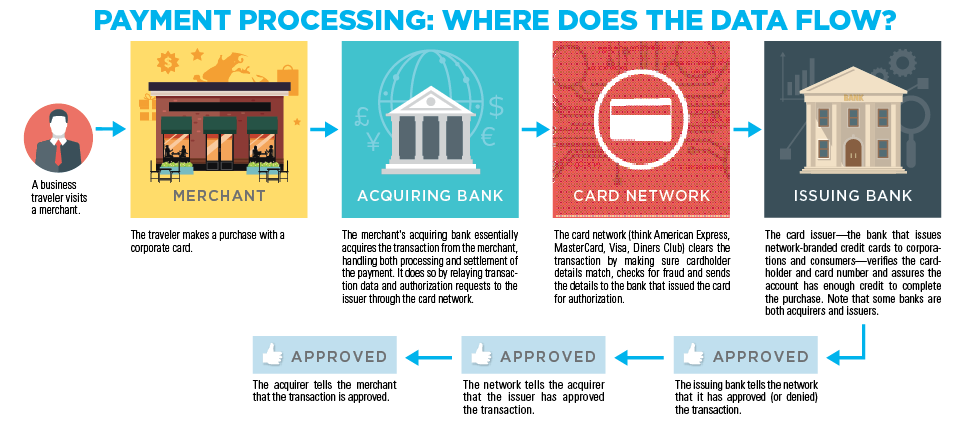
A lot goes on in the few seconds after travelers
swipe their cards and then wait for transactions to go through. Even more
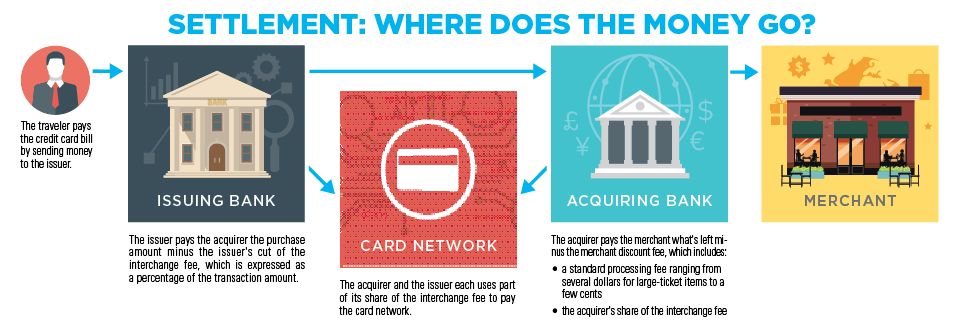
happens after paying the monthly bill. Travel managers who have taken on
payment, or who think they might, should understand what happens behind the
scenes and who's waiting in line for a cut of the fees.
Click on each image to enlarge.
What Is This Interchange Fee?
Acquirers, which operate as a clearinghouse during the
settlement process, charge merchants interchange fees, which the acquirer and
issuer divvy up and use to cover handling costs and payouts, including to the
network. As the entity that assembles a network of merchants and makes it
possible for a card to be used at those merchants, a card network publishes
suggested interchange rates. It bases those suggestions on whether the
cardholder is present, whether it's a large-ticket item (typically more than
$7,000), card type (i.e., premium/gold/platinum), whether it's a chip card and
whether the country where the card is issued is different from the
transaction's point of sale. An issuer might raise the interchange fee for a
card with a lot of perks.
The issuer:
- pays the network for authorization (and perhaps other
services, such as sending fraud alerts and statements to cardholders)
- pays company rebates
- pays cardholder rewards
- pays virtual card providers for technology and processing
- covers risk, as the issuer is closest in the settlement
chain to the cardholder
The acquirer:
- takes a cut for profit
- pays the network for authorization