.png "January 2025 Icon")
After a year of hesitation and uncertainty, the new year kicked
off with some signs of momentum in overall travel demand, but business demand
in particular was more uneven.
Airlines Reporting Corp. started off 2026 with a noteworthy
milestone: U.S.-based agency air ticket sales in January exceeded $10 billion, first
time in any month since the company started tracking that data that sales
reached eight figures.
"January's agency air ticket sales reflect the optimism
for continued travel demand expressed by several North American airlines in
their recent earnings call," ARC chief commercial officer Steve Solomon
said in a statement. "The travel agency channel remains a key driver of
airline revenue, particularly as travelers show sustained interest in
international destinations and premium cabin offerings."
Solomon did not include corporate travel demand as an area
of strength, for good reason. The number of air tickets sold in January by
U.S. corporate travel agencies and settled by ARC dropped 2.7 percent year
over year, the 11th month out of the most recent 13 that it has declined, a sign
that many businesses haven't turned the page from the macroeconomic uncertainty
and tenuous approach to travel that marked 2025.

The January spike in air demand, outside of corporate, came
as domestic airfares were on the rise, foreshadowing trends that would take
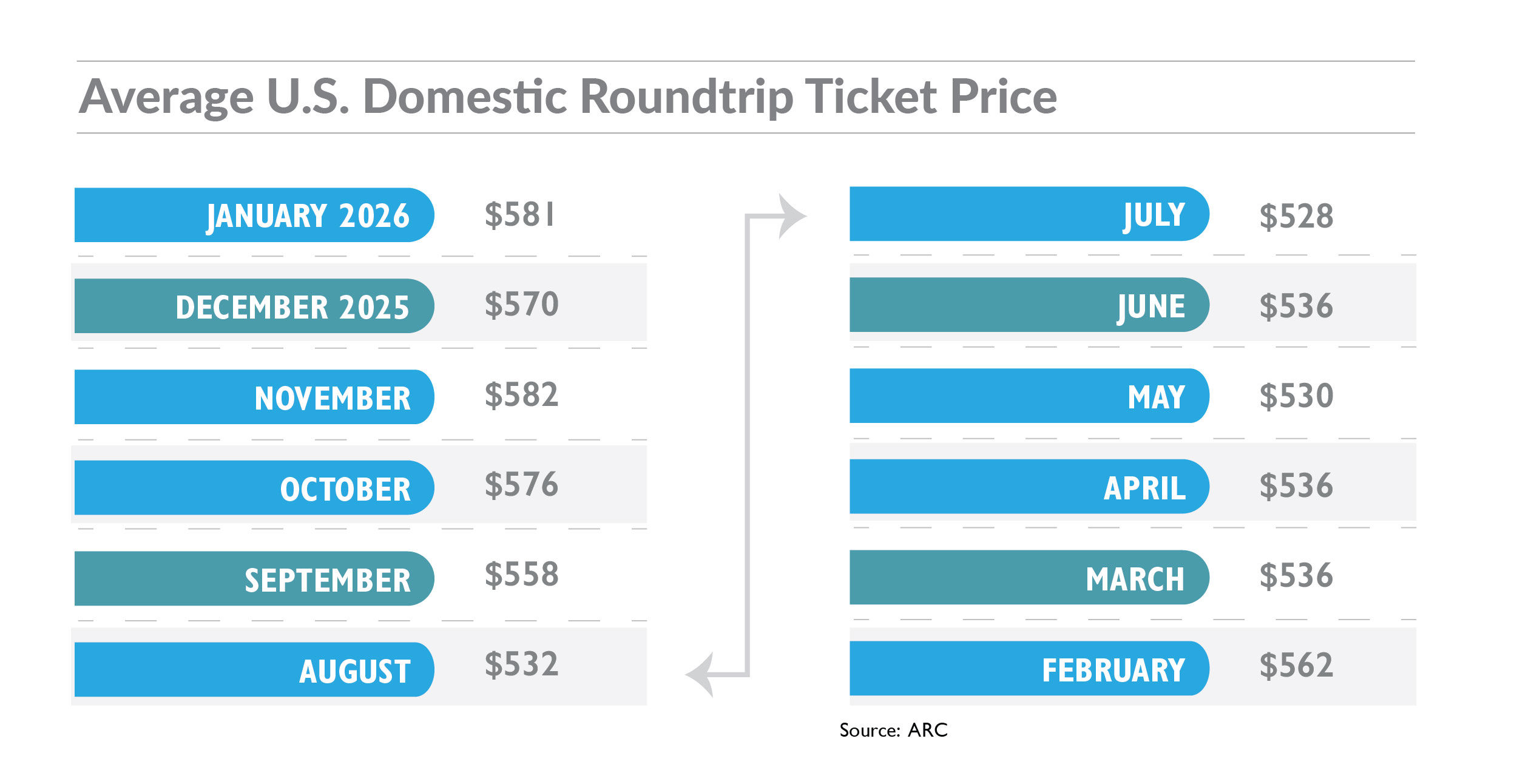
hold later in the winter. The January average price for a U.S. domestic
roundtrip ticket was $581, up from $570 in December 2025 and $557 in January
2025. Outside of November 2025, when it was one dollar more, the January
average was the highest monthly figure reported by ARC since June 2022, when it
was $605.
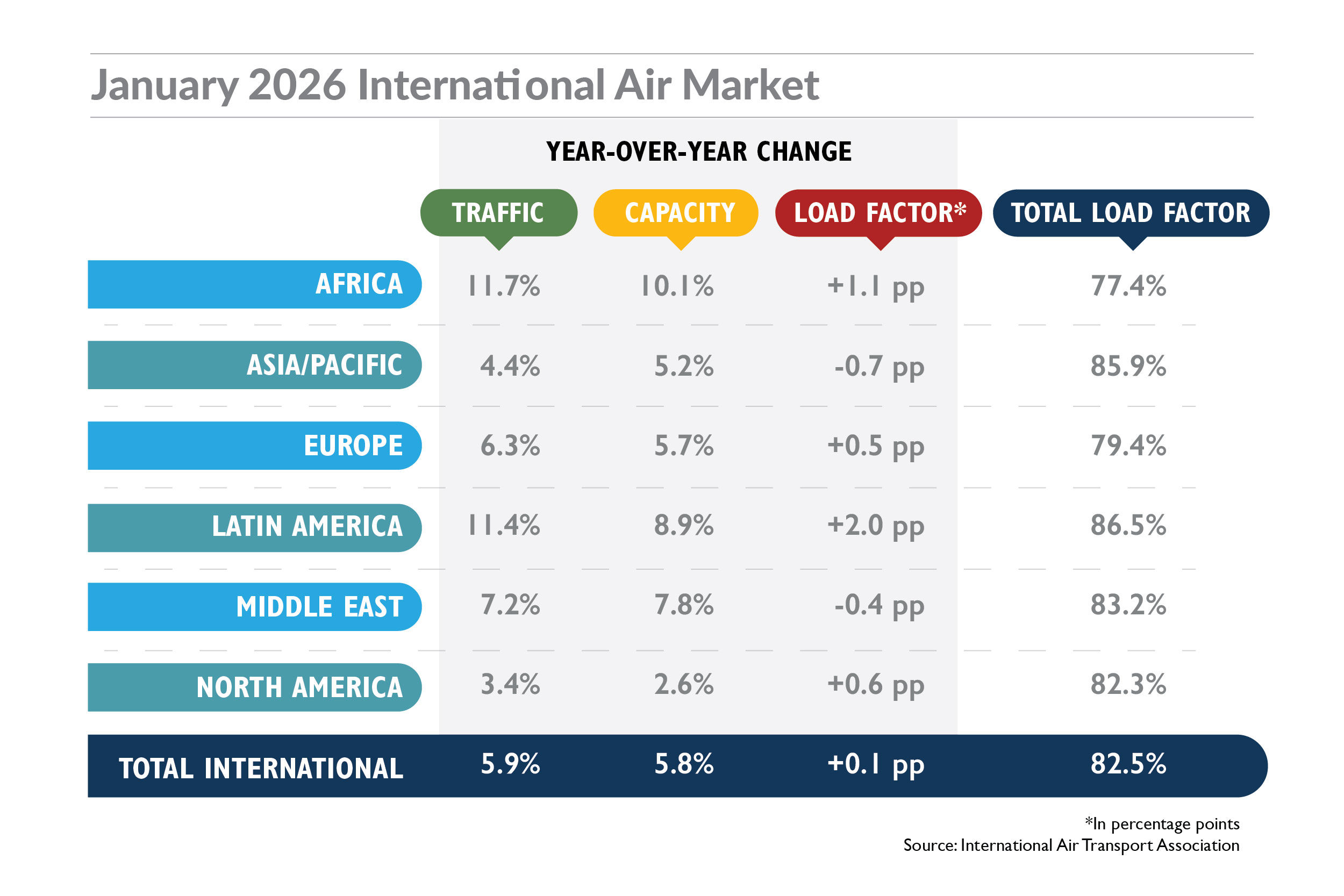
International air demand growth far outpaced that of
domestic demand in January, according to the International Air Transport
Association. International demand, as measured in revenue passenger kilometers,
increased 5.9 percent year over year. That includes a 3.4 percent increase on
traffic on North American carriers, a rate lower than the increase in other
regions. Note that January demand was affected by the shift in the Lunar New
Year from January in 2025 to February in 2026.
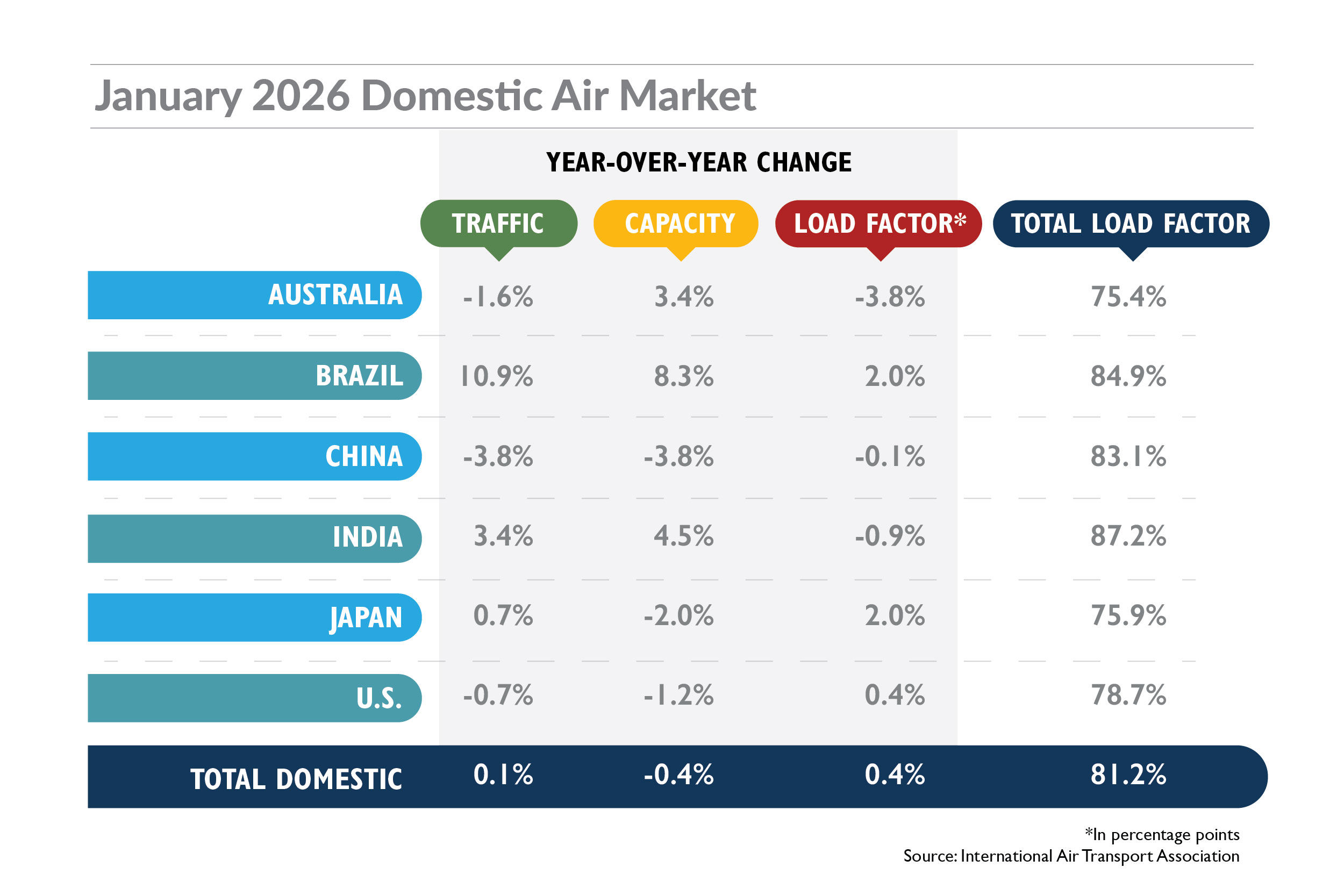
Overall domestic air demand in January increased 0.1 percent
year over year, dented by declines in domestic demand in China (affected by
Lunar New Year) and Australia. U.S. domestic demand also declined 0.7 percent.
Still, "the fundamentals are in place for demand to continue strong growth
in 2026," IATA director general Willie Walsh said in a statement.
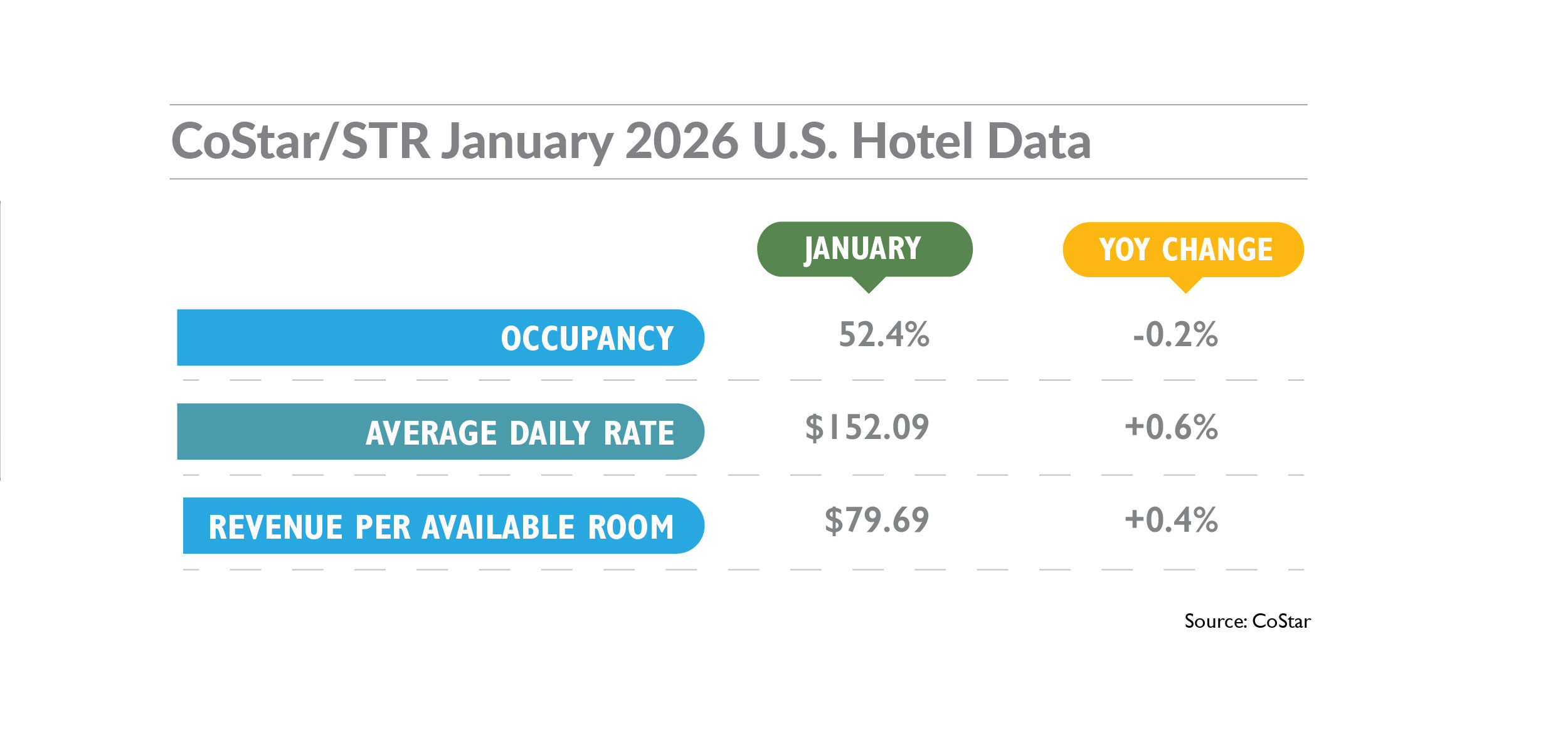
U.S. hotel revenue per available room in January increased
0.4 percent year over year, the first such monthly increase since March,
according to real estate data provider CoStar, parent company of hotel
analytics firm STR. U.S. occupancy, however, declined for the 11th straight
month, albeit only by 0.2 percent year over year.