After a very tenuous 2025, February featured some of the strongest U.S. hotel performance in more than a year, perhaps further evidence of consolidating business travel demand. The month ended on an ominous note, however, with the Feb. 28 outbreak of armed conflict in the Middle East between the United States and Israel and Iran.
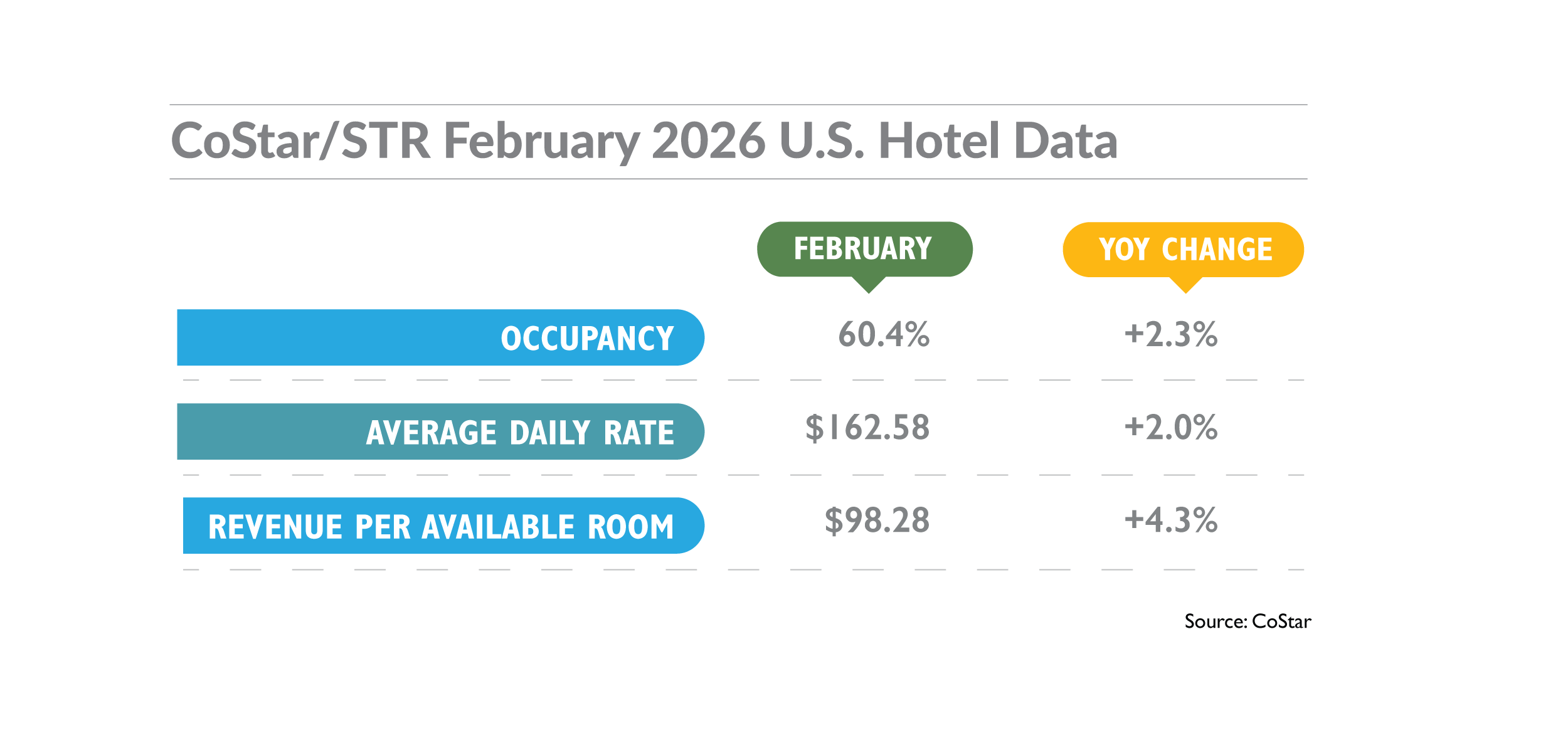
U.S. occupancy in February increased 2.3 percent year over year to 60.4 percent, according to STR hospitality data from Costar, the first month since February 2025 in which occupancy rose versus the prior year. Average daily rate and revenue per available room followed suit, each increasing year over year. It was the second straight month that RevPAR increased from prior-year levels after nine months of decline.
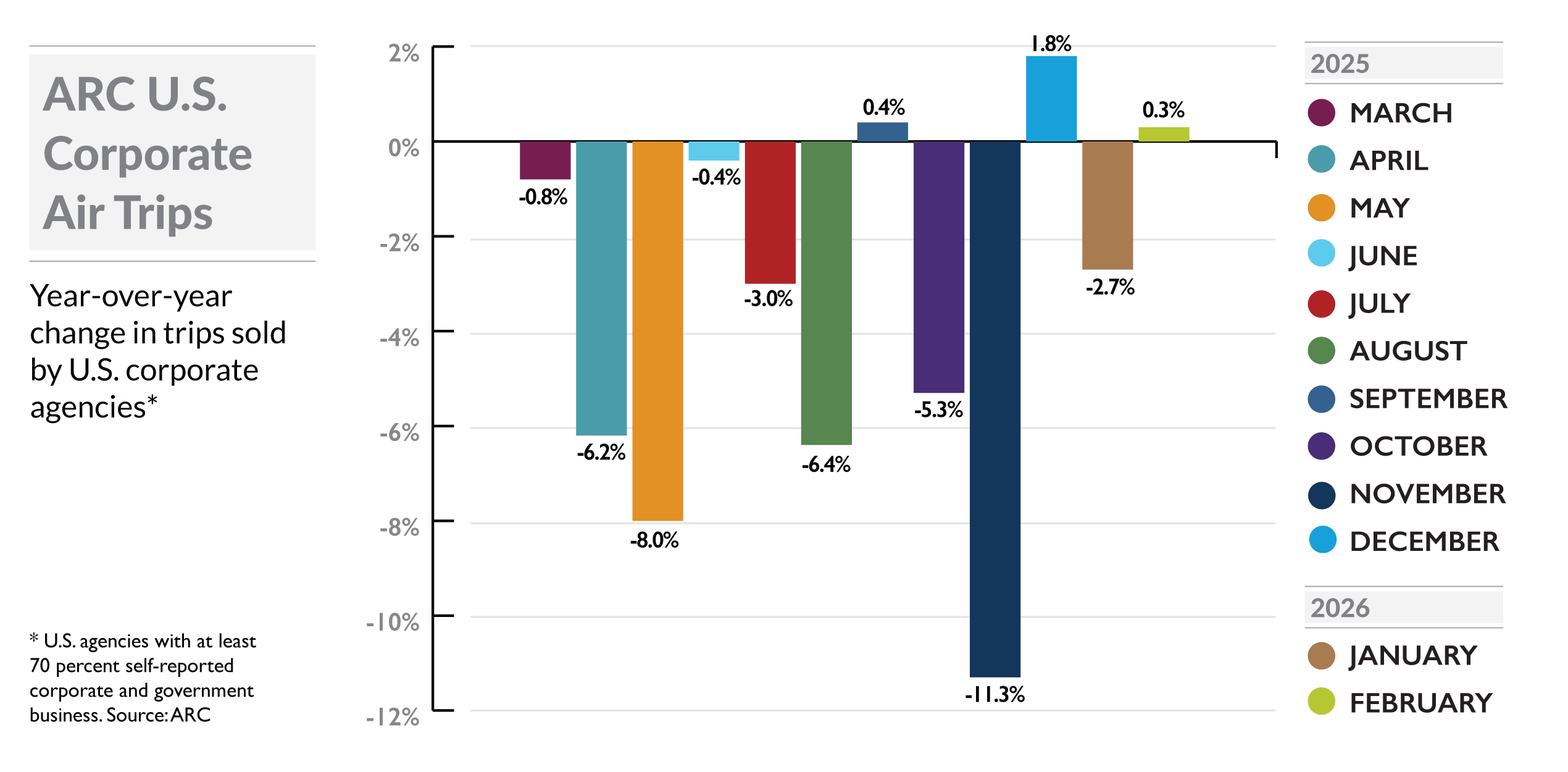
As further evidence of solidifying business travel demand, the number of air tickets sold in February by U.S. corporate travel agencies and settled by ARC increased by about 0.3 percent year over year—not a dramatic increase but still only third month in the past 14 that featured any sort of growth compared with the prior year.
ARC chief commercial officer Steve Solomon in a statement noted strength was broad-based, with each agency segment it tracks—leisure and online travel agencies along with corporate—increased year-over-year sales for the first time since September. The growth reflects "travelers' resilience as they braved winter weather disruptions and volatility for some international destinations," he said.
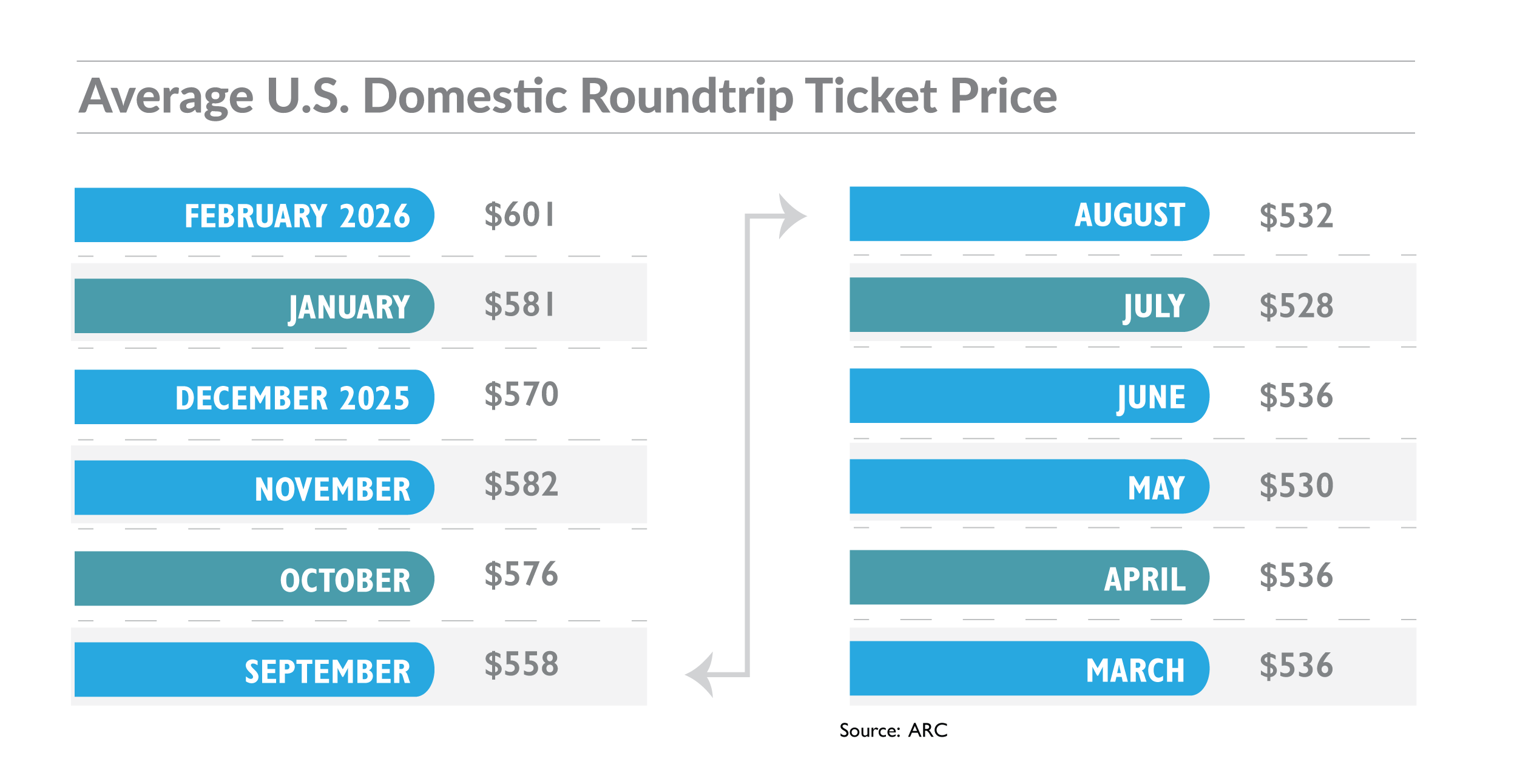
As was the case in January, the increase in demand was accompanied by an increase in airline ticket price.
The February average price for a U.S. domestic roundtrip ticket was $601, up from $581 in January 2026 and $562 in February 2025. The January average was the highest monthly figure reported by ARC since June 2022, when it was $605
Both international and domestic air demand on average in February increased year over year, but the International Air Transport Association expressed some caution over the outbreak of war in the Middle East and its effect on demand and fuel prices.
"February was a strong month," said IATA director general Willie Walsh in a statement. "However, without knowing the length and intensity of the war in the Middle East, it is impossible to quantify the full impact that it will have on airline prospects.
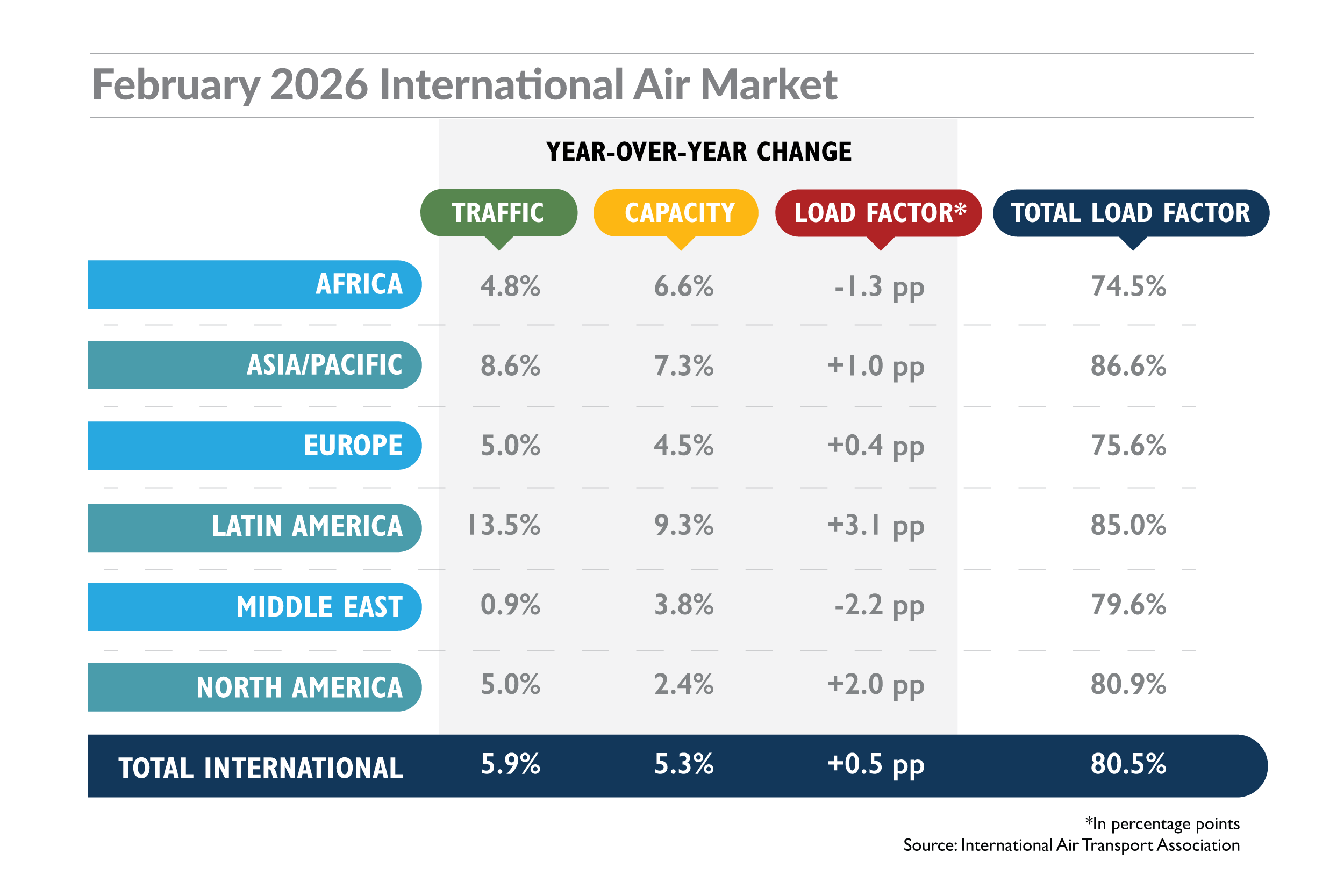
International demand in February, as measured in revenue passenger kilometers, increased 5.9 percent year over year. That includes a 5 percent increase on traffic on North American carriers, a rate commensurate with that of European carriers but below that of airlines in the Asia-Pacific region.
Walsh noted carriers had cut capacity, particularly on Middle Eastern routes. In February, though, the region's carriers increased capacity, as measured in available seat kilometers, by nearly 4 percent year over year.
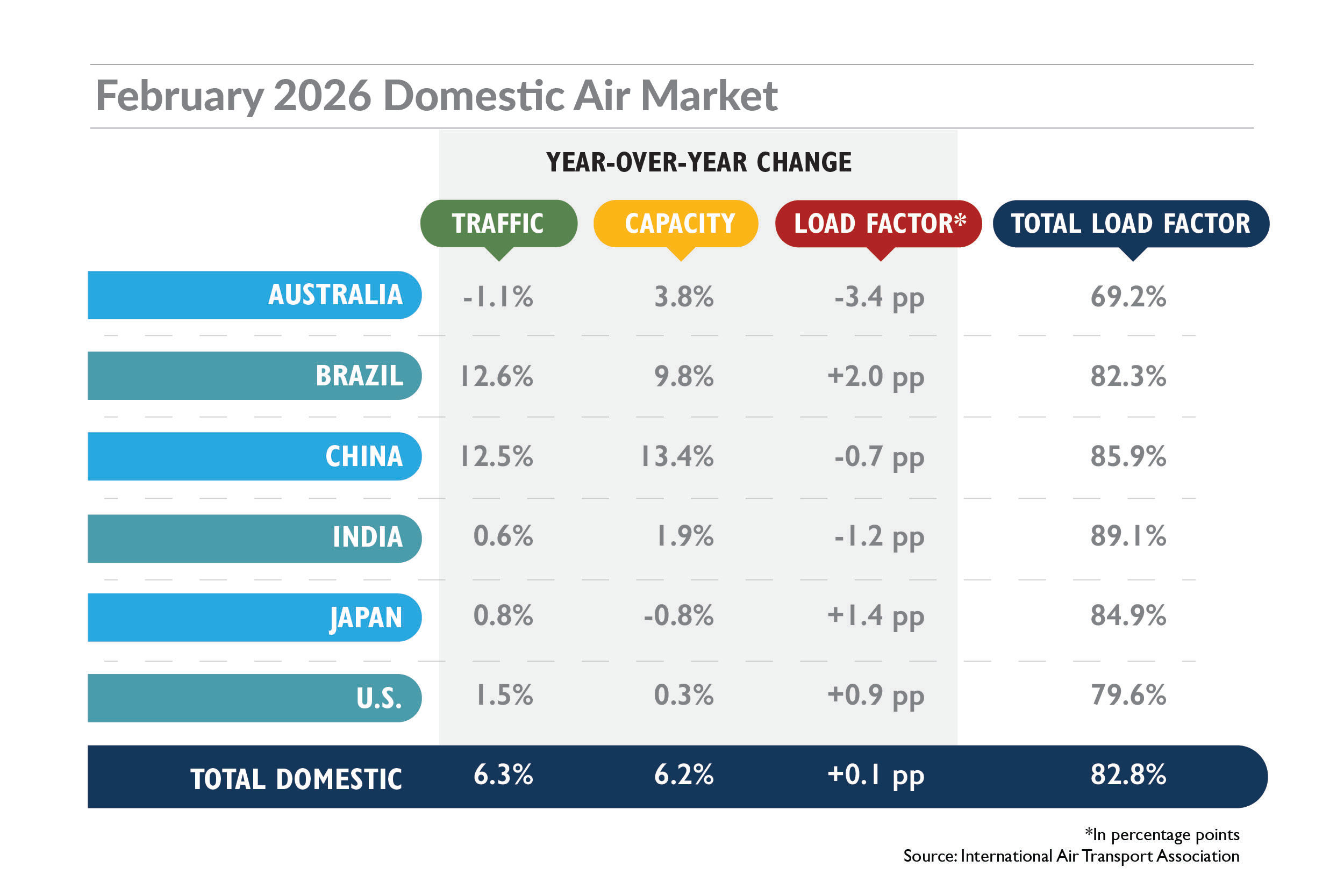
Overall domestic air demand in February increased 6.3 percent year over year, paced by large increases in Brazil and China, a solid uptick which illustrated that, absent the war, "the fundamentals for demand growth were in place for a positive year," according to Walsh. U.S. domestic demand increased 1.5 percent.