Attacks on Iran by the United States and Israel continued in the beginning of April but the countries reached a tenuous mid-month ceasefire, although the U.S. maintained a blockade of Iran and the Strait of Hormuz remained under Iran's control, keeping oil and jet fuel prices elevated. Still, most suppliers reported encouraging levels of business travel demand even amid the conflict, with several during first-quarter earnings calls reporting solid revenue gains and positive future booking trends.
Suppliers nevertheless responded to higher fuel costs. Every major U.S. carrier between March 30 and April raised checked-bag fees for North American travel, each citing higher operating costs, generally by $10 per bag. Several international carriers also hiked fuel surcharges, rankling some travel managers given the general non-negotiability of the fees. Nevertheless, there was little evidence the new or increased fees and surcharges dented business travel volume.
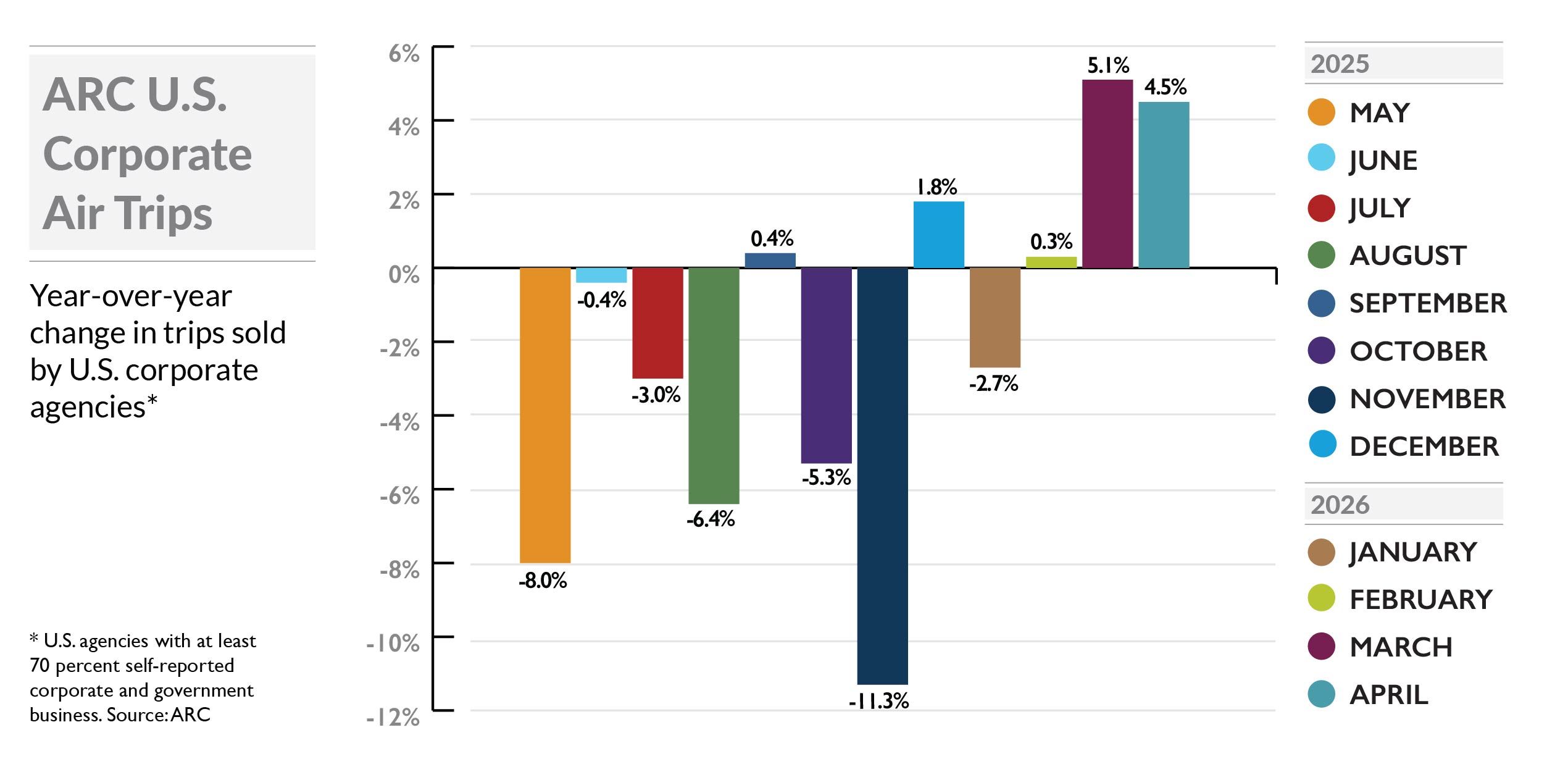
For the third straight month, the number of trips sold in April by travel agencies with at least 70 percent self-reported corporate and government business and settled by Airlines Reporting Corp. increased year over year. In April, it was up more than 4.5 percent.
"We have another month of data demonstrating that traveler demand remains strong," ARC chief commercial officer Steve Solomon said in a statement. "Ticket prices and continued geopolitical uncertainty are not leading to a decline in the number of passenger trips."
Total U.S. air ticket sales in April exceeded $10 billion, up nearly 15 percent year over year.
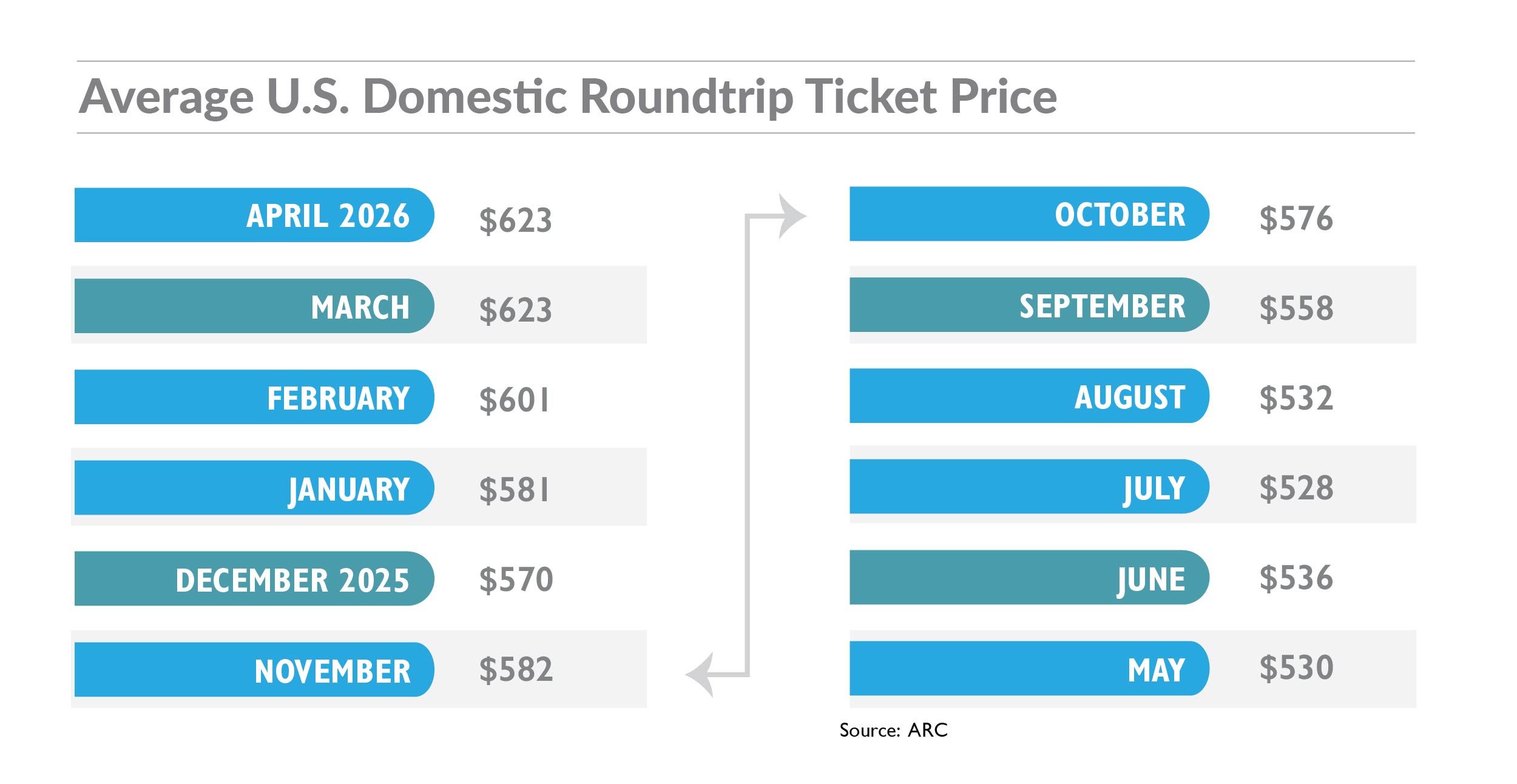
That increase in air sales through corporate agencies comes even as airfares remained elevated. The April average price for a U.S. domestic roundtrip ticket increased 16 percent year over year to $623, a figure that matched March's level, which was the highest price since May 2022.
The average price for a domestic economy-class ticket in April increased 20 percent year over year to $566, while for a domestic premium-class ticket it was up 16 percent to $1,431.
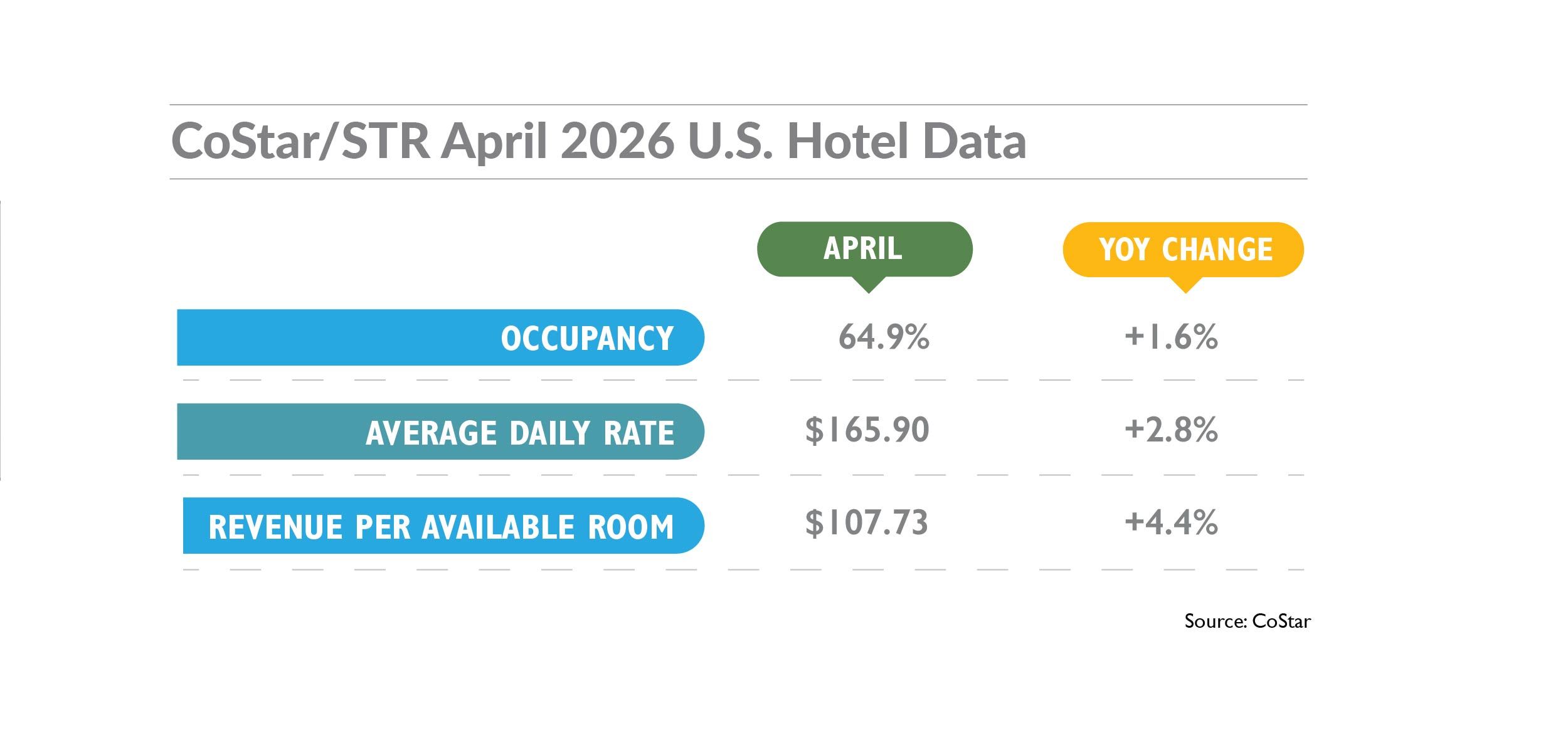
Meanwhile, U.S. hotels continued their strongest stretch of performance in a few years. U.S. occupancy in April increased 1.6 percent year over year to 64.9 percent, the third straight month of increase after 11 straight months of decline, according to STR hospitality data from Costar.
U.S. average daily rate and revenue per available room in April each increased as well, up 2.8 percent and 4.4 percent respectively year over year. It was the fourth consecutivemonth that RevPAR increased from prior-year levels after nine months of decline.
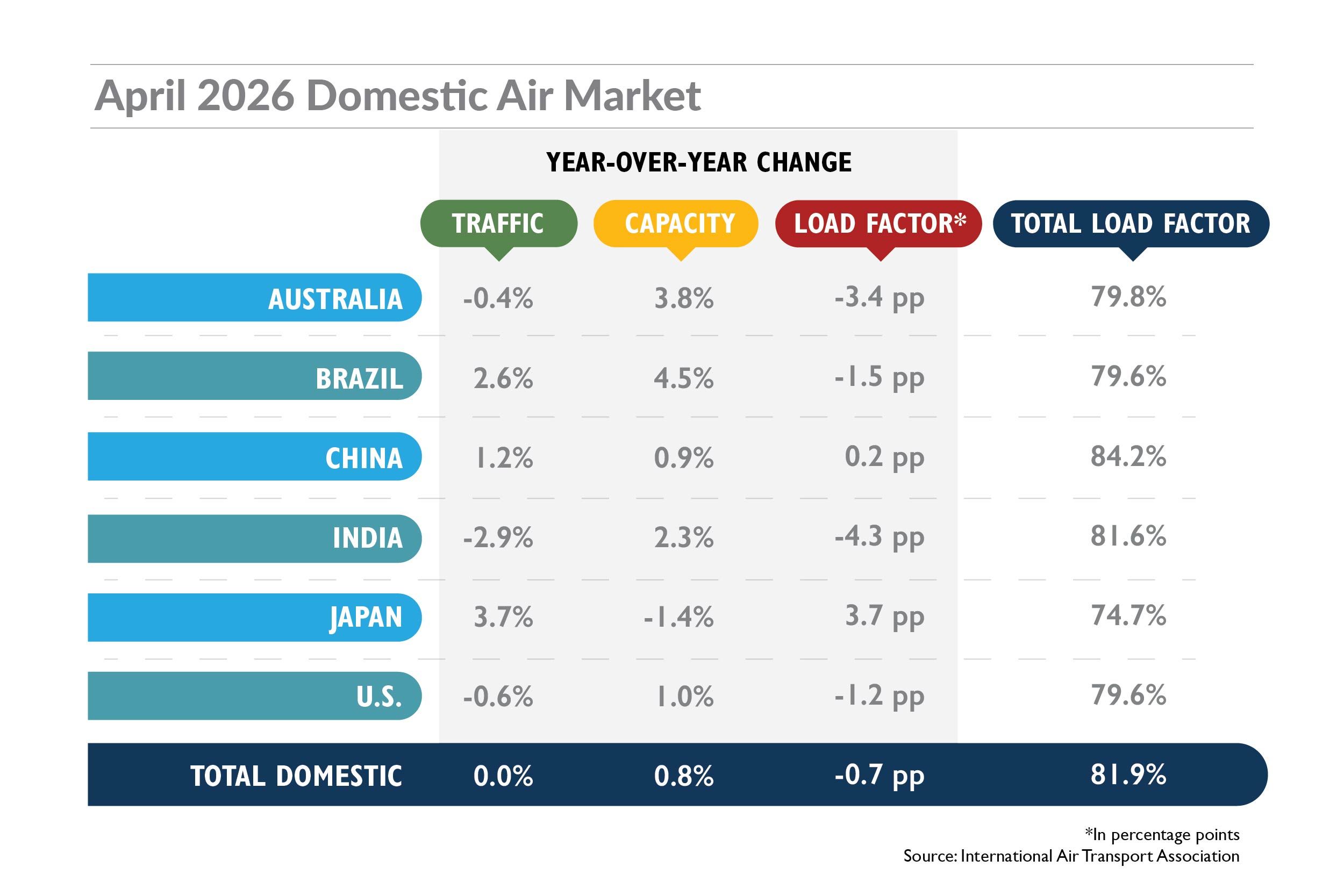
Not every indicator was positive. Even though overall ARC air sales volume increased notably, U.S. domestic air passenger traffic in April, as measured in revenue passenger kilometers, dropped 0.6 percent year over year, according to the International Air Transport Association. U.S. capacity actually increased 1 percent, leading to a load factor decline.
Domestic air passenger demand was a mixed bag in the rest of the world, but it all averaged out to hold steady year over year. April domestic traffic increased 3.7 percent year over year in Japan and 2.6 percent in Brazil but dropped 2.9 percent in India, according to IATA.
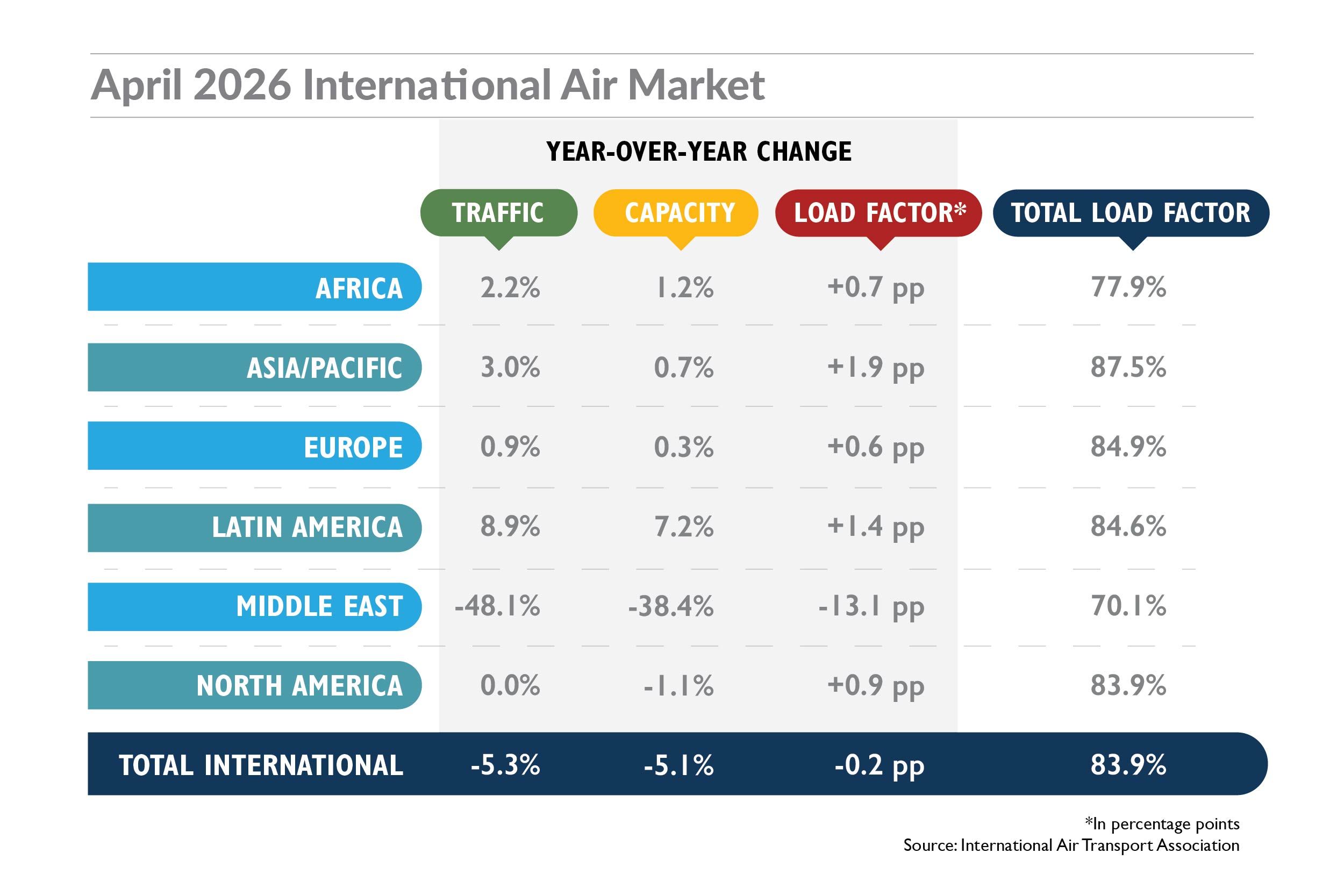
It was a different story on international routes. Overall April international passenger traffic dipped 5.3 percent year over year, according to IATA, but that was due to a decline of more than 38 percent on Middle East routes. Excluding the Middle East, international demand grew 1.9 percent for the period.
"The situation for air transport remains highly volatile," IATA director general Willie Walsh said in a statement. "The cost of jet fuel more than doubled in April, which is pushing airfares up. Forward schedule data is showing a reduced offering in the coming months, indicating that airlines are balancing high fuel costs and weaker demand."
Indeed, several international carriers announced capacity cuts in April, notably Lufthansa, which said it would cut 20,000 short-haul flights. Singapore Airlines, Qantas and Air India, among others, each announced planned capacity cuts and service adjustments.