.png "2025 May rev")
May 2025 was the first month of the spring to offer clean
year-over-year comparisons of business travel activity, given the shift in the
Easter holiday—around which business travel traditionally slows—from March in
2024 to April in 2025. The result wasn't very festive.
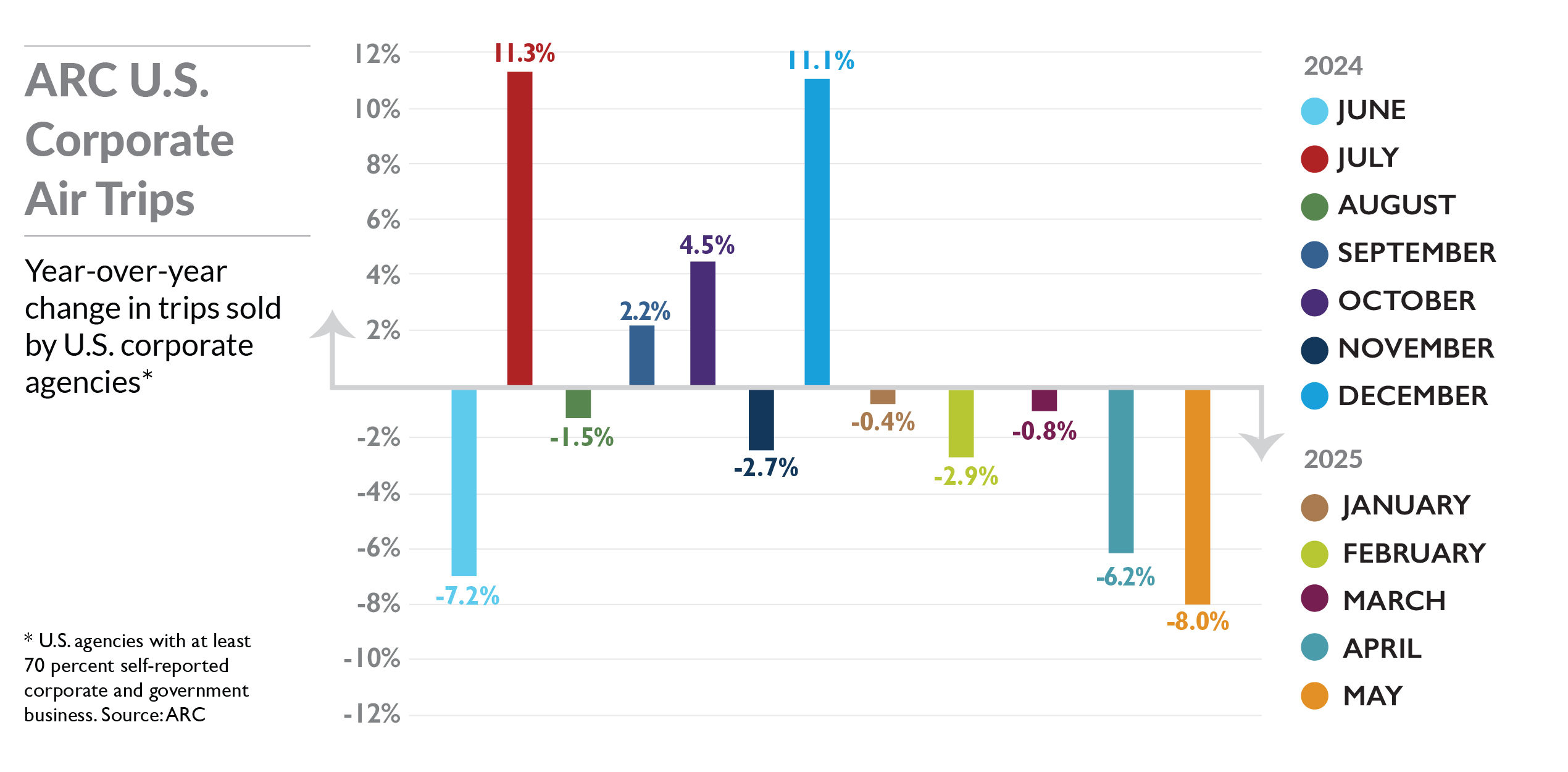
The number of air tickets sold in May by U.S. corporate
agencies and settled by ARC declined 8 percent year over year, the fifth
straight month of decline and the largest percentage year-over-year decline in
any month since the Covid-19 pandemic. Clearly,
the economic uncertainty in the wake of the Trump administration's "Liberation
Day" tariffs, even as many were delayed or withdrawn, affected corporate
travel demand to at least some extent.
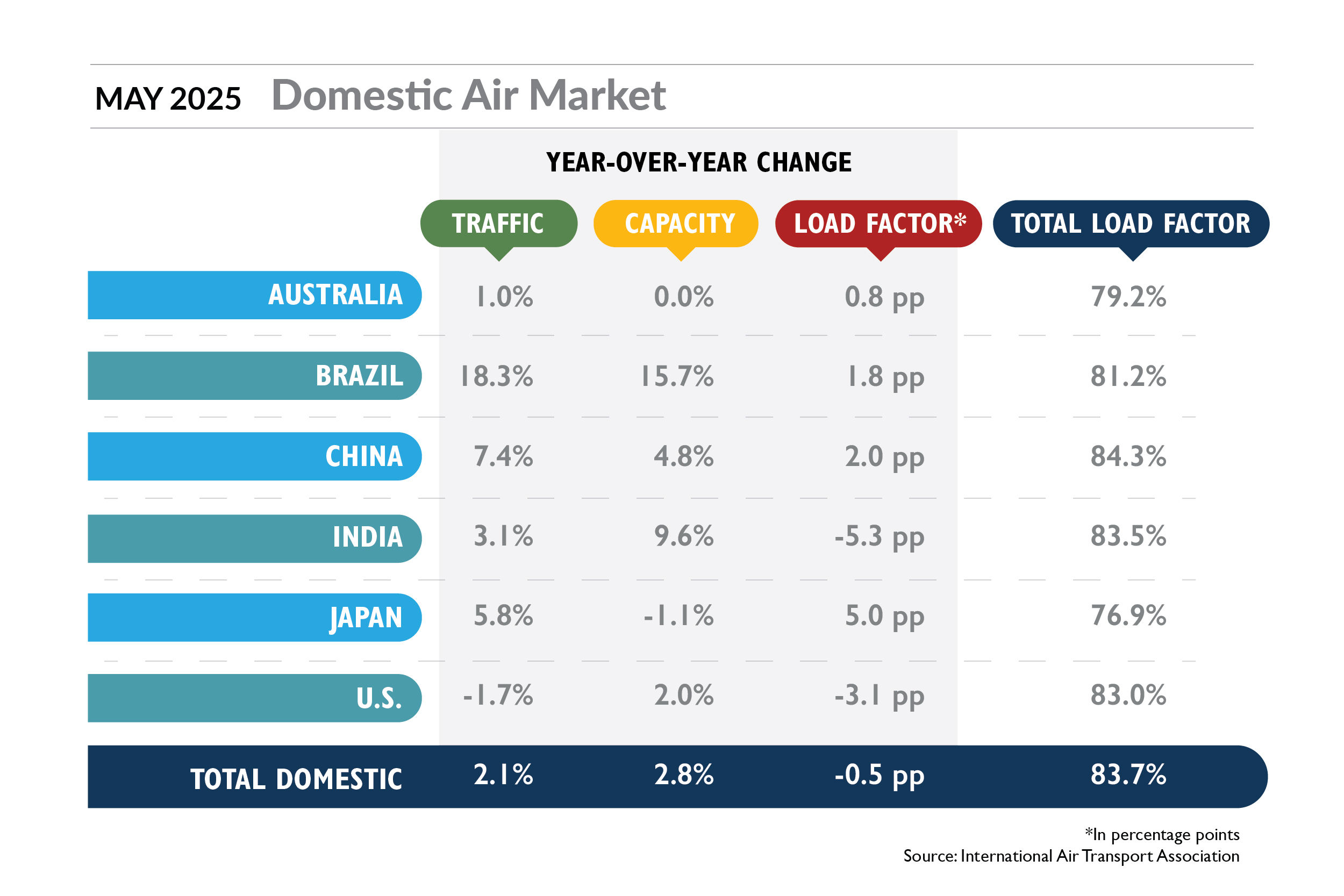
May U.S. domestic air demand declined 1.7 percent year over
year as measured in revenue passenger kilometers, the fourth straight month of
such a decline, according to the International Air Transport Association,
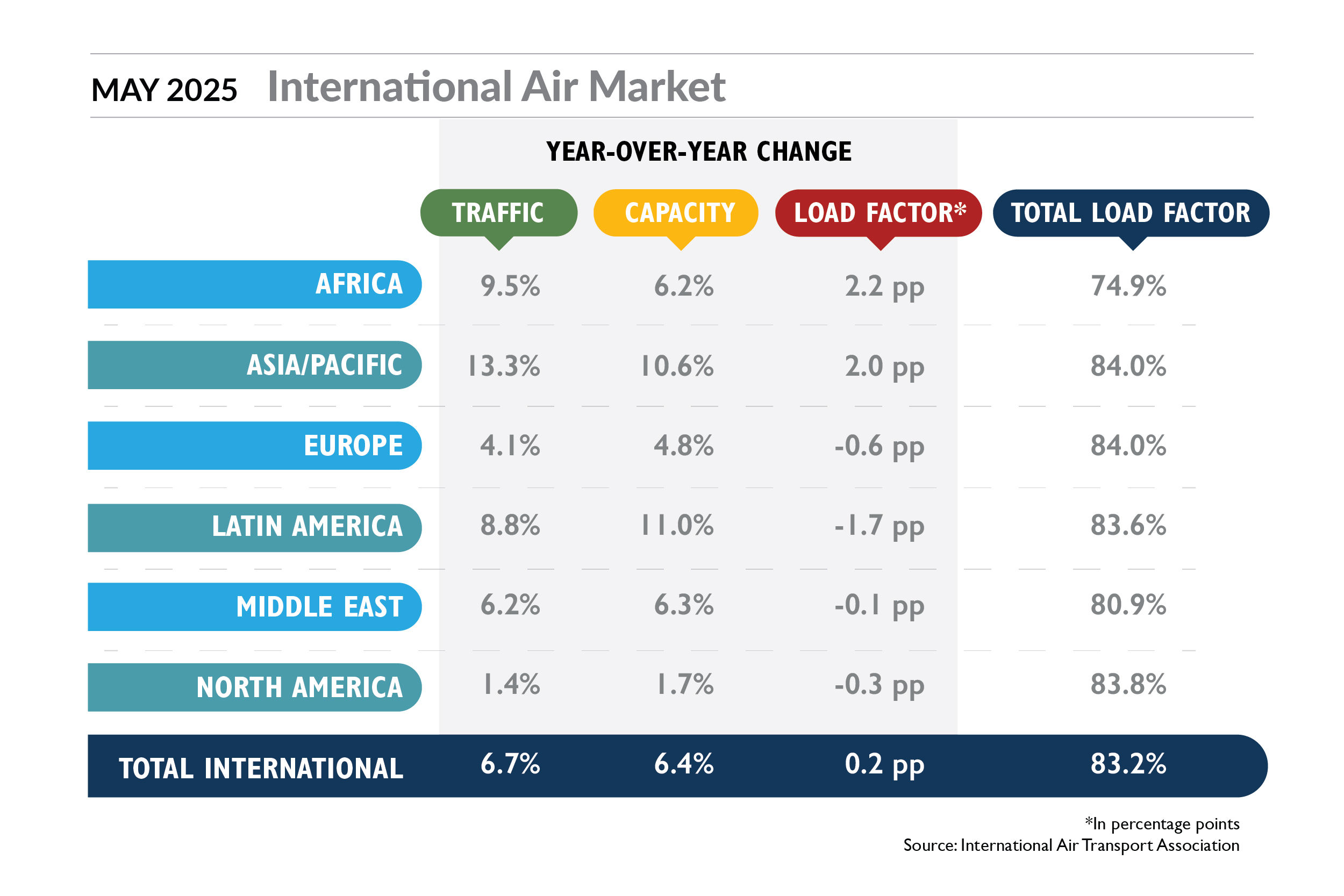
although it suggested figures in North America were an outlier compared with
the rest of the world. Overall May demand in North America dropped 0.5 percent
year over year.
"Air travel demand growth was uneven in May," IATA
director general Willie Walsh said in a statement. "Importantly, consumer
confidence appears to be strong with forward bookings for the peak Northern
summer travel season, giving good reason for optimism."
None of the other large countries IATA tracks showed decline
in domestic demand for May, and IATA said overall domestic demand increased
about 2.1 percent. International demand increased 6.7 percent year over year
and increased in all areas.
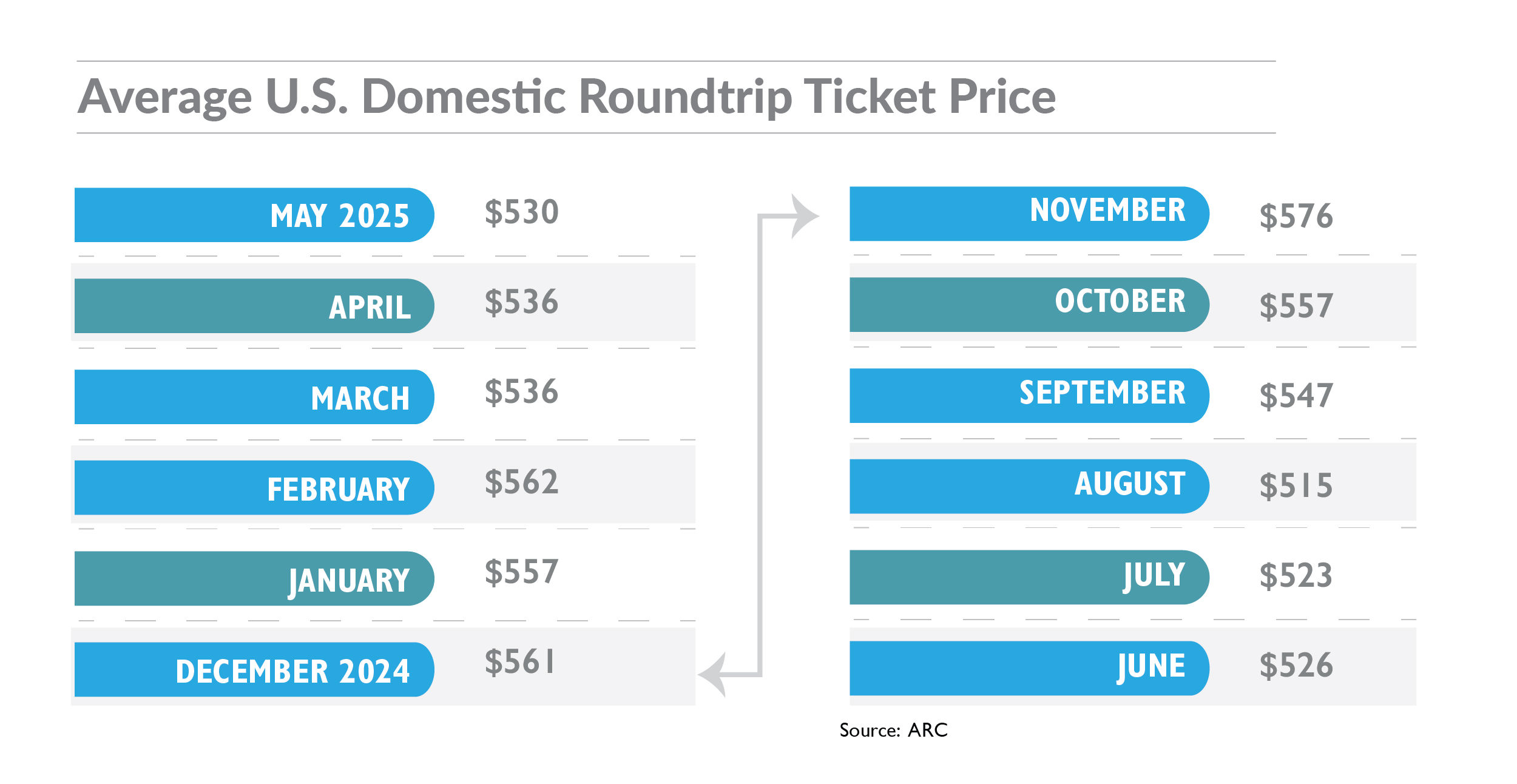
Meanwhile, the overall average U.S. domestic ticket price in
May dipped to its lowest level since August 2024, although the average price
for a premium ticket for the same period increased about 2 percent year over
year, according to ARC.
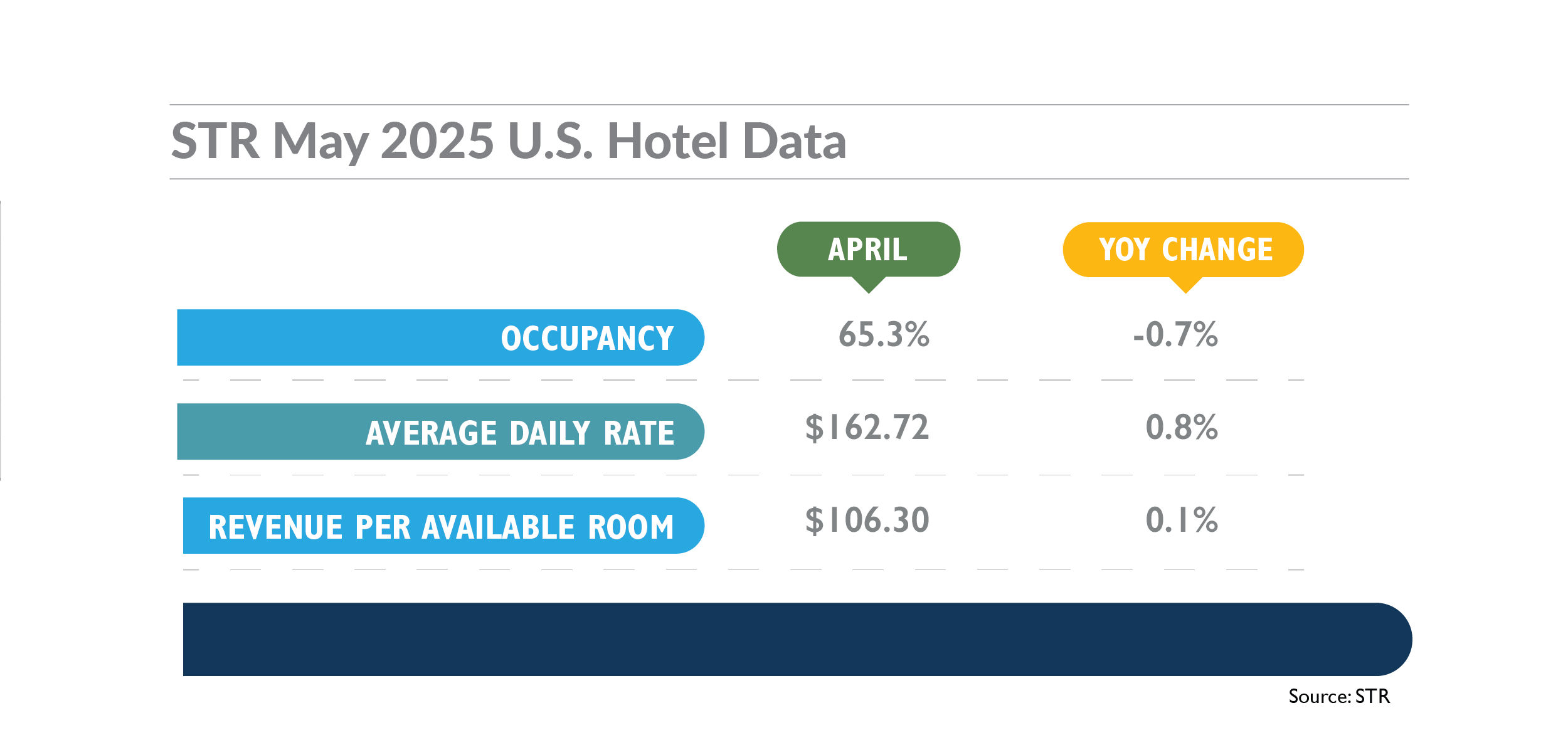
U.S. hotel occupancy in May declined year over year for the third
straight month after five consecutive months of growth, and average daily rate
increased slightly, according to hotel analytics firm STR.