The second half of 2025 began in a manner similar to the first half, with a sluggish U.S. business travel demand environment, as corporates looked for clarity regarding macroeconomic trends and government actions regarding tariffs and trade. And while executives from American Express Global Business Travel and Hilton Worldwide began to cite "green shoots" in July business travel demand, rebounding from the depths of the spring, the month's demand metrics remained subdued.
The number of air tickets sold in July by U.S. corporate travel agencies and settled by ARC declined year over year for the seventh consecutive month, and declined by a higher percentage than in June. That's in an environment in which domestic U.S and international trips each increased, as did overall air ticket sales from U.S. agencies. ARC chief commercial officer Steve Solomon in a statement said that "travel agencies are starting the second half of the year with positive momentum as ticketing trends have normalized after some volatility earlier in the year."

The July average price for a U.S. domestic roundtrip ticket was $528, up from the $523 a year prior, but still the lowest figure since August 2024.
.jpg "2025-07 ARC Price")
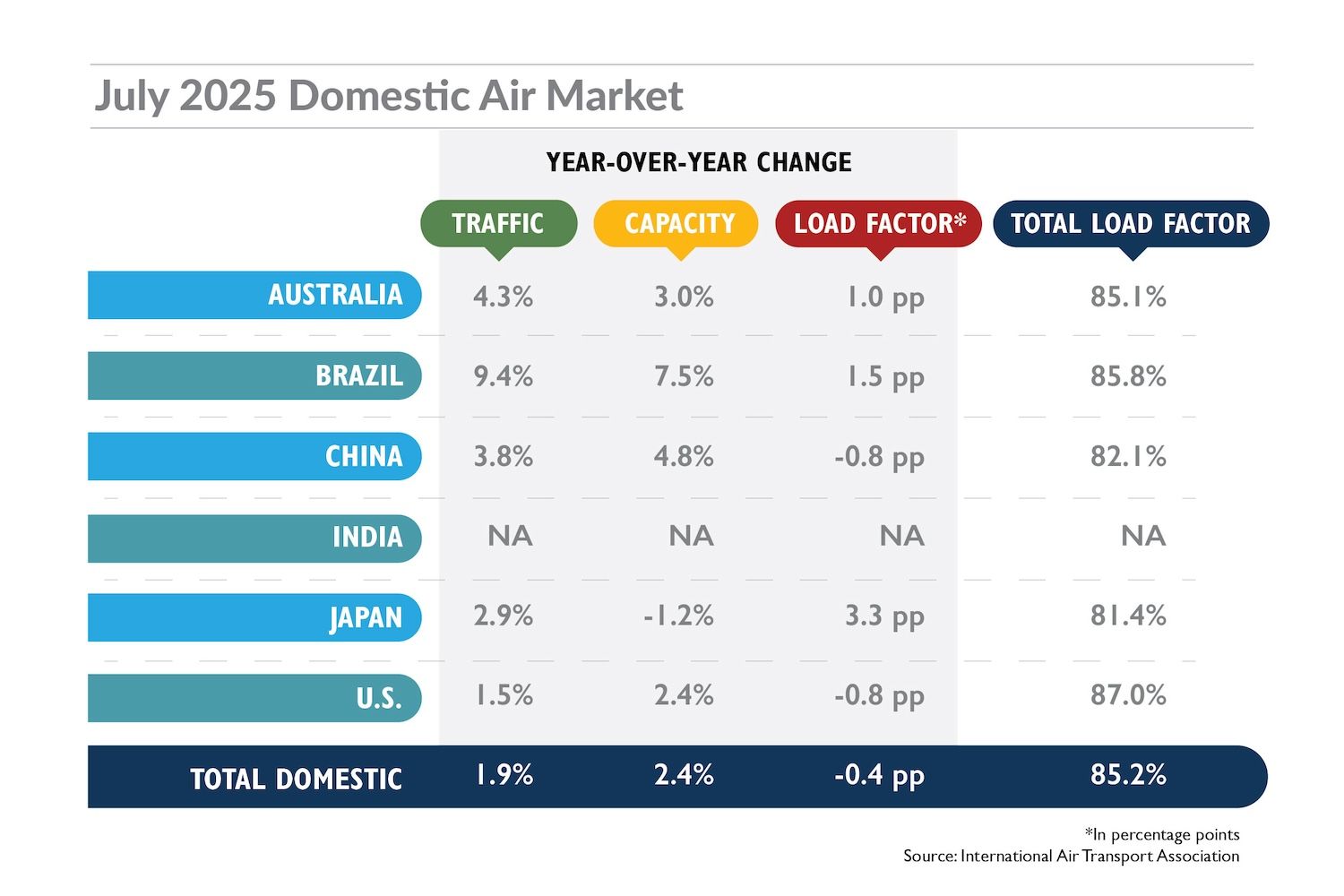
Total July global domestic air passenger travel demand, as measured in revenue passenger kilometers, increased 4 percent year over year, according to the International Air Transport Association, the largest such increase since January. U.S. domestic air passenger travel demand increased 1.5 percent from July 2024 levels, also the highest increase since January.
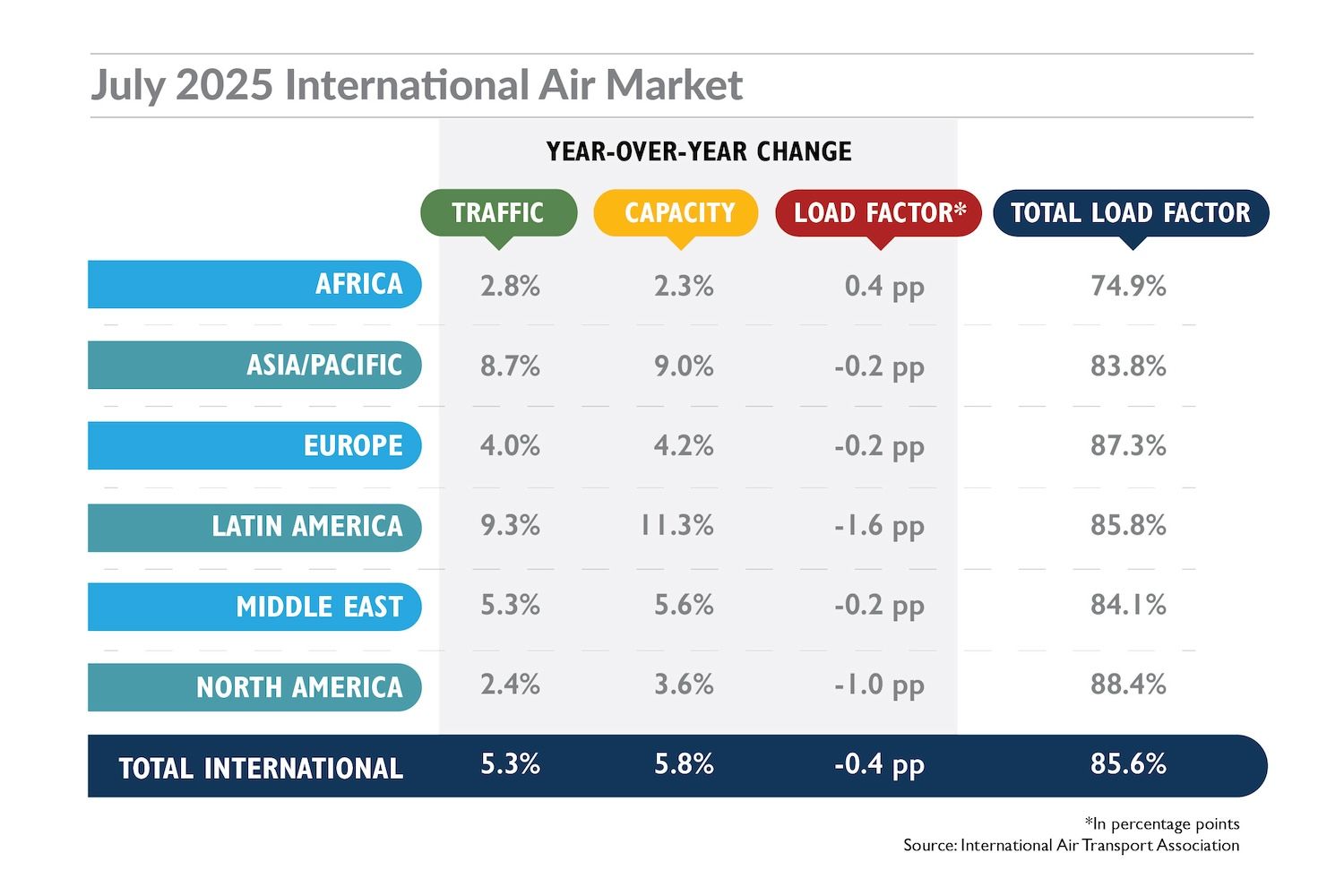
International travel demand in July notably reversed course after a June decline, suggesting that the effect of June's Israeli airstrikes on Iran and subsequent airport closures were temporary. July international demand increased 5.3 percent year over year, while capacity increased 5.8 percent. IATA director general Willie Walsh in a statement said that "momentum has grown over the peak season."
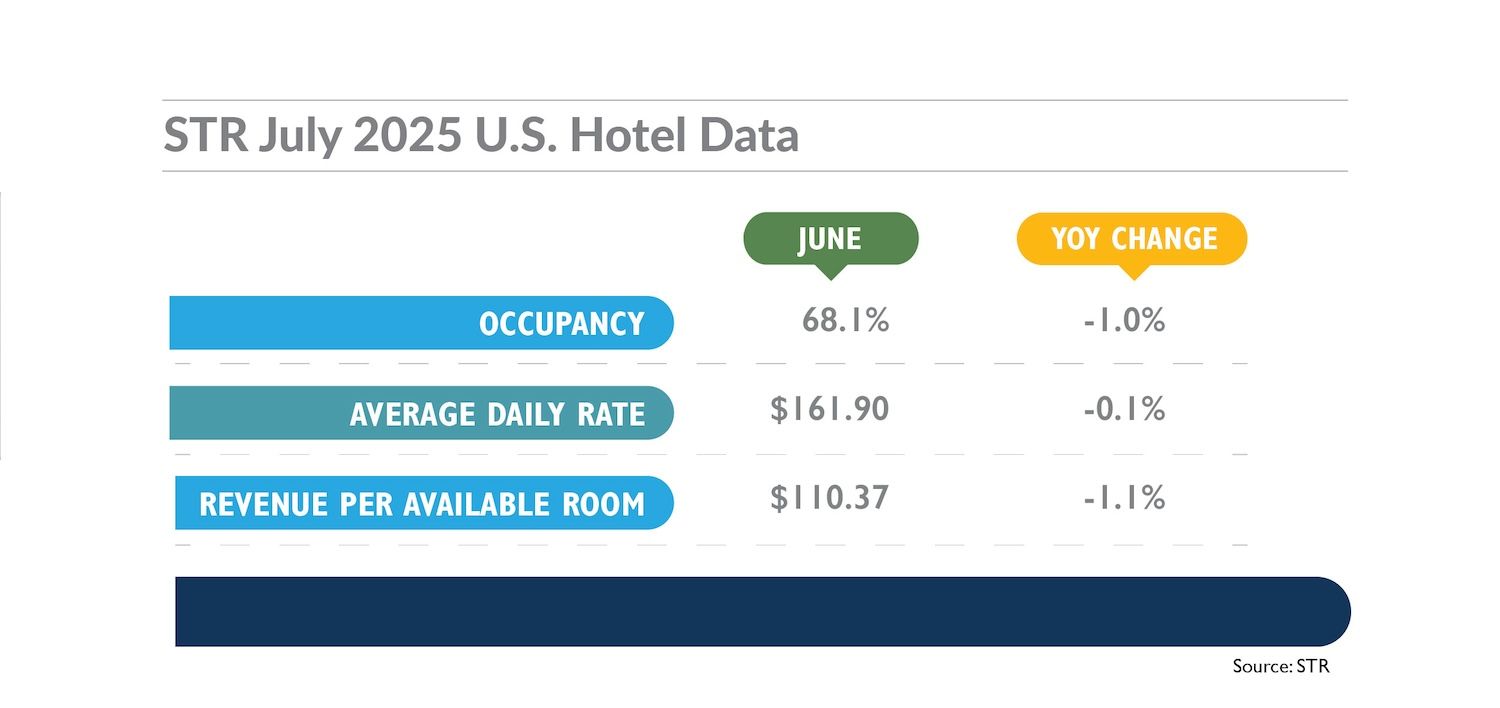
That momentum hasn't necessarily extended to U.S. hotel performance. In July, U.S. hotel occupancy, average daily rate and revenue per available room each declined year over year, marking the fifth straight month that occupancy had declined, according to STR, which shortly after July ended would downgrade its U.S. hotel forecast.