Business travel volume frayed in April, the month in which
President Donald Trump unveiled his "Liberation Day" round of tariffs
on dozens of countries, kicking off a spate of stock market and economic
turbulence that began to ease only when the promised tariffs were delayed or
withdrawn. The volatility was most notable in monthly Airlines Reporting Corp.
data.
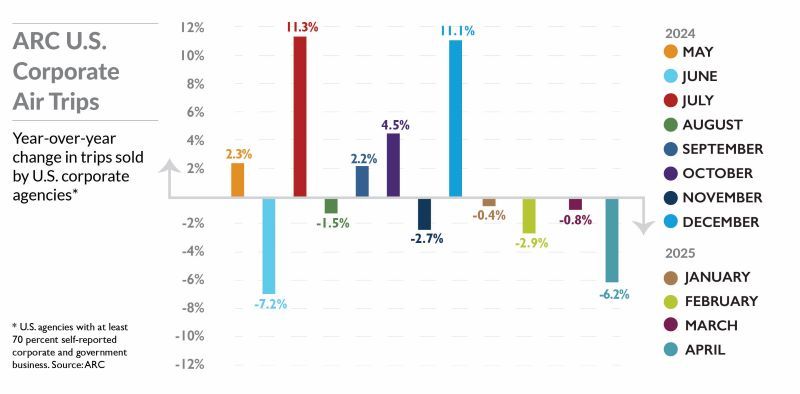
For the fourth straight month, the number of air tickets
sold by U.S. corporate agencies and settled by ARC declined year over year,
and April's decline was the sharpest of all, at 6.2 percent. While direct
year-over-year comparisons are tricky due to the shift in the Easter holiday,
around which business travel traditionally slows, from March in 2024 to April
in 2025, yet another monthly decline is notable. Still, ARC chief commercial
officer Steve Solomon noted that total passenger trips in April increased year
over year, by 0.8 percent and 0.6 percent for domestic and international
travel, respectively.
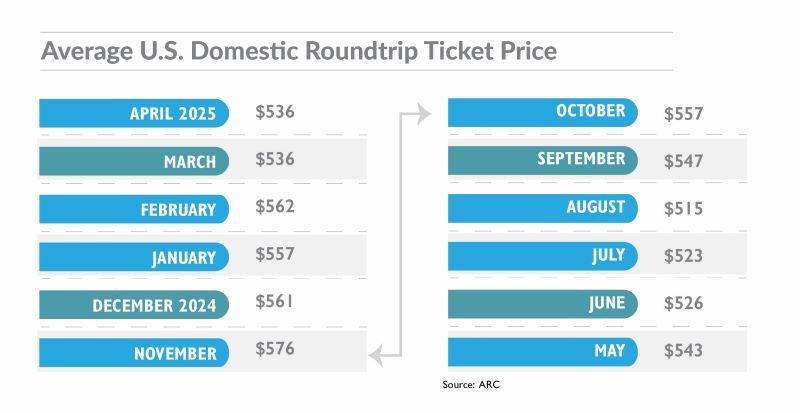
Meanwhile, the overall average U.S. domestic ticket price in
April held at its lowest level since August 2024, while the average price for a
premium ticket for the same period held steady year over year.
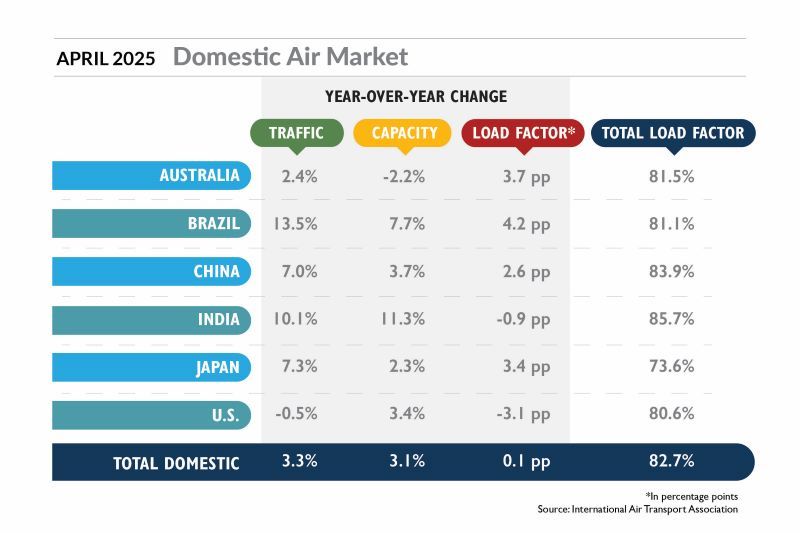
Some softening in April business travel demand perhaps was
illustrated by U.S. domestic air demand, which declined 0.5 percent year over
year as measured in revenue passenger kilometers, according to the
International Air Transport Association. It was the third straight month of
such a decline in the U.S., but it wasn't replicated in the domestic demand in
the other large countries IATA tracks, each of which posted a year-over-year
traffic gain.
IATA director general Willie Walsh in a statement noted
"some signs of fragility of consumer and business confidence with
continued weakness in the U.S. domestic market and a sharp fall in North
American premium-class travel," he pointed to continued strength in
international demand as a demonstration of resilience in economic uncertainty.
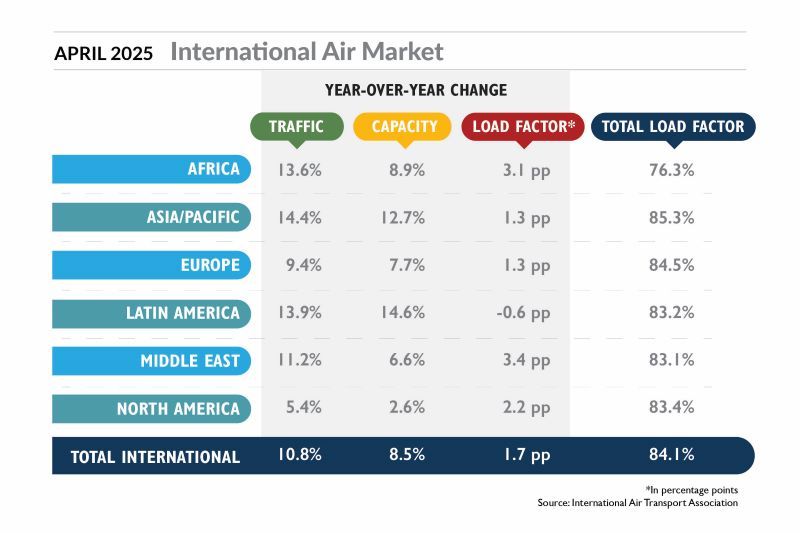
Overall April international demand increased 10.8 percent
year over year, according to IATA. Still, demand for first and business class on
North American carriers declined 26 percent year over year.
U.S. hotel occupancy in April declined year over year for the
second straight month after five consecutive months of growth, according to
hotel analytics firm STR, although the Easter shift and the effects of the
April 2024 solar eclipse, which drove hotel demand in its path, colored the
results. While revenue per room declined slightly year over year, STR noted
that if the 16 U.S. markets in the path of the eclipse were removed from
consideration, it would have increased.