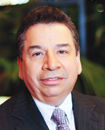
 Ric Villarreal
Corporate housing supplier Oakwood Worldwide in recent years has expanded its global footprint not only through the growth of its own brand but also through its 2012 acquisition of Marriott International's ExecuStay brand. Oakwood president Ric Villarreal spoke recently with Business Travel News lodging editor Michael B. Baker about Oakwood's growth plan, recent changes to its sales structure and initiatives related to booking technology and duty of care.
How is 2014 shaping up for the corporate housing industry?
Now that we're slowly getting out of the recession, we're looking for a magnificent 2014 and beyond. We see the industry beginning to loosen up investment. Our technology company clients are [having] fewer cancellations in the first quarter than they saw for the last three years. We see indications almost as a leading indicator for Oakwood that business is going to start cautiously growing and investing this year.
What is your current sales strategy?
There are still some companies that don't know what corporate housing and serviced apartments are, and that's a driving force for us. Almost a year ago, we structured our entire sales force to focus differently on our clients. We've bifurcated our sales force where one part is driving local sales. [Another focuses] on those larger clients with bigger needs, more analytics and bigger volume who require a more sophisticated strategic approach. Along with our 43 district offices throughout this country, we have close partnerships with our sales organization that understands the marketplace, where the operator understands the inventory market. That intimate knowledge of locations allows us to have better solutions to get the guest in the unit and settled and productive as soon as possible.
What are your plans for unit growth?
We're going to continue to drive our supply chain partners very hard all over the world. If we look at our organization in Asia, we've had a team there now for several years, but for the last couple of years, we’ve put a vice president in that location and a team of almost 50 people. That resembles what we have right now in the U.K. We're looking in Asia to expand the supply chain but also we're going to go into an accelerated mode of investing in and managing more of the Oakwood product in the region. That is also a strategy we're going to do here in the United States. Now that the apartment market is beginning to loosen up a little bit to some extent, it's a good opportunity for Oakwood to invest in acquiring or building Oakwoods. We're very strong in the U.S. and Canada. The energy sector is really exploding, so we see lots of growth in Texas and some northern states like Montana and Wyoming, where you're seeing a lot more oil exploration. We’ve had heavy demand to fulfill in markets like Houston and Dallas that have a lot of infrastructure and engineering consultant business. We know there is value in partnering with apartment owners, to acquire or manage buildings, and with our clients, who may need for us to lease to acquire an entire building and manage the process, so that we can offer year-round housing availability in certain high-demand locations.
What about on a global scale?
The markets we're looking at are the emerging markets, China and India, and London and Germany. In the early '90s, Oakwood decided to go global. In Asia/Pacific, we established a business model in which Oakwood would manage and brand buildings through what are known in Asia as serviced apartments. That industry in Asia is very mature, and serviced apartments are almost a hotel-like experience, except with much larger units. Today, we have 28 buildings in Asia/Pacific as well as a pretty hefty supply chain in 70 countries where we're putting our clients in today. In the late '90s, we opened up our offices in the United Kingdom and really went in and pulled together that supply chain and supply-chain partnerships in Asia and the United Kingdom. We deployed leadership in London and over the last couple of years deployed leadership in Asia solely to manage that supply chain partnership that we have, and there's another complete infrastructure that manages and grows the buildings and those branded buildings.
What benefits have you seen as a result of the ExecuStay acquisition?
ExecuStay was one of those competitors we respected very much. Two years ago, we struck that possibility with Marriott. What came out of it was a very accretive business for us, with a business offering that puts us in place as the only corporate housing provider that offers Marriott Rewards points in our executive product, and also we're a preferred supplier of corporate housing for Marriott. We're both targeting clients and new client prospects and fulfilling their needs, using Marriott hotels as a primary source for our insurance business and interim business. If we don't have a long-term apartment ready, we try to go to Marriott first.
What have you done on the booking side?
Over the last couple of years, while the recession was flattening us out, we went into investment mode, putting in a new booking system, an Oracle-based infrastructure we have for a reverse auction system. Part of what we're doing right now is because we need to have an offering for our clients where Oakwood and all its supplier inventory are equally available as a choice. This new model allows us instantly to send booking requests in any single market with the client requirement and budget, with Oakwood participating at the same level as all the other suppliers.
How has duty of care been a focus?
As an industry, we're focused very much on crisis reaction and crisis management. Since 2012, we started with an investment to really help us mobilize all the data and our experience and understand what it is to be preemptive, and to have systems and processes that were looking to avoid issues or communicate to our clients and their employees much, much faster. It's on behalf of the guest and the client: things such as being aware of where every guest is at any one time. If a tsunami happens, it's being able to communicate to all those corporate clients and guests in three different ways—text, voicemail, email—so that we know they're secure, or also telling their companies that the building they were in today is not involved in whatever the incident was. It's for us to get ahead of it and be prepared, and at the same time react with expertise to make sure we have the health and safety of our guests at the highest level.
What sort of quality range does Oakwood's product cover?
Sometimes it's a high-end home, a penthouse in New York or Los Angeles, where we provide on a consistent basis VIP service, all the way to the interns that are coming in from tech and traveling-nurse groups, who are looking at a more budget-conscious product. It depends on the market. In New York, you can't find enough great high-end apartments. In L.A., it's dominated by the entertainment industry. There are times when it's pilot season and you have to house hundreds of wannabe actors, and they don't have the budget and big incomes yet. In Asia, two-thirds of our buildings are in the five-star and six-star level and a third in the mid-range. All the other buildings we do business with go down to that budget level, being careful that if we get too far down the line then security becomes an issue, especially in certain countries. There's one thing we won't skimp on, and that's a level of service. Today's wannabe dot-com is tomorrow's Facebook.