 Credit: Andrey Gonchar Adobe Stock
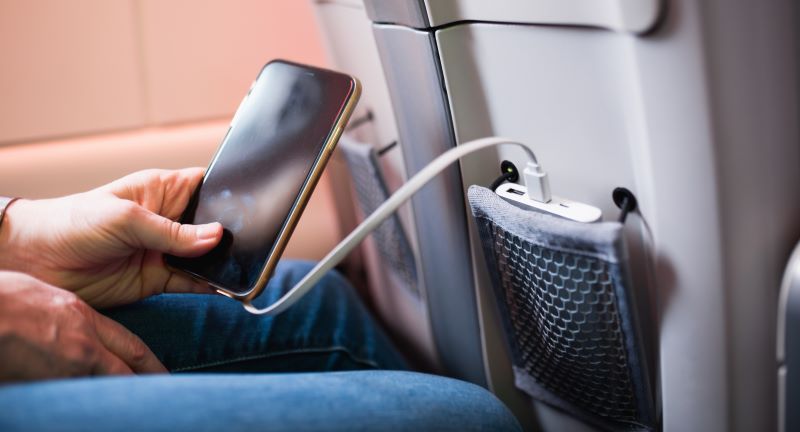
Rules around passenger use of power banks to keep devices charged
while on mid-range and long-haul flights are changing, especially for international
airlines, but on some U.S. domestic carriers as well.
As outlined by Flight Centre Travel
Group's corporate division Corporate Traveler and FCM earlier this week,
which also produced a new airline and safety guide addressing the issue of
staying connected while traveling on business, here's a roundup of new restrictions.
Airlines’ New Rules
- Southwest airlines in May became the first
U.S. carrier to implement a new policy requiring passengers to keep power banks
and other portable charging devises visible during use. The aim is to keep chargers
in view of flight crews in case of overheating lithium-ion batteries, which can
pose a fire risk
- Lufthansa earlier this year became the
first major European airline to restrict in-flight use of power banks.
- Singapore Airlines, Thai Airways, and China
Airlines have each adopted similar restrictions.
- South Korea has implemented nationwide
bans on portable charging in-flight and has also prohibited passengers from
stowing power banks in overhead bins.
- Emirates, the largest airline in the
Middle East, starting in October will also implement a new policy banning the
use of power banks during flights. Emirates passengers will be required to
store switched-off power banks in the seat pocket or under the seat in front of
them.
Staying Productive In Flight
Plenty of business travelers plan to use their in-flight
time working, but even if they don’t, movies and entertainment are essential
for long-haul flights. Flight Centre Travel Group offered some tips for travelers needing a power boost—or
conservation strategies—while in the sky.
- Understand
the Policy – Check your airline's specific policy before you
travel. Rules vary by carrier and are subject to change. Review them on
the airline’s official website.
- Board
with a Full Charge – Start your flight with fully charged
devices. If you’re using them at the airport, take advantage of charging
ports in lounges or restaurants before boarding.
- Pack
a Charging Cord – Bring a USB-compatible charging cord in your
carry-on. Many planes offer USB charging ports, especially on long-haul
routes.
- Prioritize
a Tablet – If you need a device for work or entertainment,
consider using a tablet instead of a laptop. Tablets are easier to charge
via USB ports on-board.
- Use
In-Flight Entertainment – When available, use the plane’s
entertainment system to conserve your own device’s battery.
- Avoid
Public USB Ports – Public USB ports, especially those in airports,
may be compromised by cyber threats. Prior to boarding, use a wall outlet
with your own charger or a portable battery pack whenever possible.
- Choose
Reputable Brands – Only travel with certified power banks from
reputable manufacturers to reduce safety risks.
- Keep
Chargers in the Cabin – Always carry your portable charger in your
cabin bag. Never place power banks in checked luggage, as this is
prohibited by most airlines.