Hindered by international trade tensions, lingering uncertainty around Brexit and the potential for higher fuel prices, air travel demand growth is expected to slow in 2020, according to a new report by American Express Global Business Travel, with fares potentially following suit.
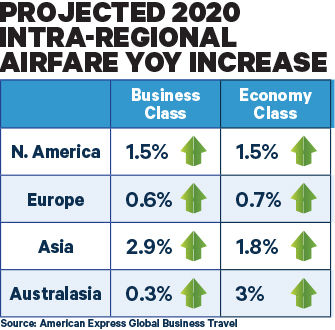
"Rising costs for oil, labor and infrastructure continue to squeeze margins, compelling airlines to recoup costs via higher fares and/or a push for increased ancillaries," according to the travel management company's Air Monitor 2020 report. However, "fierce" competition is restricting airlines' ability to raise economy fares, the report noted. To make up the difference, airlines in recent years have relied on demand by business travelers for premium fares, which have been on the rise since 2017. But that could change if economic factors drag down such demand—in which case, prices are likely to "soften accordingly," the report said.
Meanwhile, changing airline retailing strategies—most notably, New Distribution Capability—are "presenting challenges" for corporate travel buyers, Amex GBT noted. Chief among those issues is the decision by some airlines to remove fares from global distribution systems and/or surcharge for GDS bookings. However, GDSs currently are working to make NDC content available within their systems via joint retailing initiatives, the report noted.
Among other factors dogging the airline industry are this year's grounding of Boeing's 737 Max aircraft after two fatal crashes. The move has had a significant impact on airlines, especially Southwest and Ryanair, which have struggled to increase capacity with the Max grounded, according to the study. The timeframe for the model's return to service has been repeatedly pushed back, and Boeing this week announced it would temporarily suspend production of the Max entirely.
Carriers also have been buffeted by concerns over the sustainability of air travel, the report noted. Those issues have been a point of particular focus in Europe, where the concept of "flygskam"—flight shame—has spread from Scandinavia to other markets thanks to prevalent media coverage. Meanwhile, several major global carriers have rolled out carbon offset or biofuel surcharges. European officials also have set their sights on air travel sustainability, with French president Emmanuel Macron proposing a jet fuel tax and Germany rolling out a tax program designed to discourage air travel in favor of rail.