Flight Centre's Charlene Leiss talks:
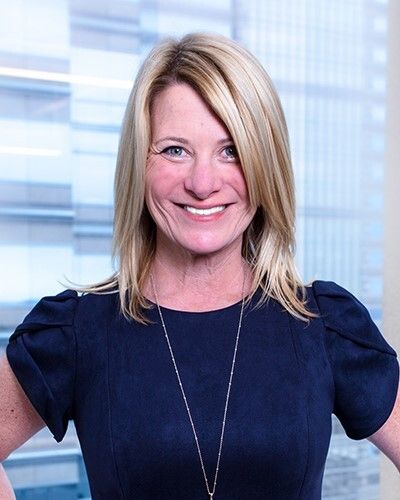 Charlene Leiss, Flight Centre Travel Group America's
- Reasons SME demand for travel is on the rise
- How suppliers are reacting to market changes
- New ways of business travel ROI measurement
Travel management company Flight Centre Travel Group last
month released a survey of 1,200 corporate clients of its FCM Travel and
Corporate Traveler that showed 45 percent planned to increase their travel
budgets year over year in the July 2025 through July 2026 period. Flight Centre
Travel Group Americas president Charlene Leiss spoke to BTN managing
editor Chris Davis about the current state of business travel demand, the
effects of market uncertainty and changing perception of the value of corporate
travel.
BTN: What's your
overall view of corporate travel demand right now?
CharleneLeiss: I'm extremely optimistic and positive. We had a great September, especially in
the SME business, which was up about 15 percent to 18 percent year over year. Definitely,
travel volumes are increasing. Larger corporates usually tend to hold back a
little bit more when there's uncertainty, and we saw a bit of that [earlier in
the year], but in the last month or so even that has really picked up.
I think corporates have just become accustomed to
volatility. They know they have to be out there seeing customers and winning
business, and that's what we're seeing. October's looking strong too.
BTN: Did the
market shift around Labor Day, after what some have called a sluggish summer?
Leiss: Yes. I
think seasonality has changed quite a bit since Covid. We
actually had a strong July and August, though we didn't have a really booming
June. After Labor Day, business travel definitely turned up a notch.
BTN: What's
behind that improvement after the slower spring?
Leiss: Despite
all of the uncertainty in the geopolitical markets and the tariffs and
everything else, I think that most companies have learned to adjust. Canadians
don't really want to come to the U.S. as much, but we're really only seeing a
year-on-year decline in single digits, and they're focusing more on some
national projects and traveling to other locations, both in leisure and in
corporate.
Overall, I think it's that we're not seeing a recession
despite all of the news and the concerns. Even with the government
shutdown, we're really not seeing a big impact as it relates to corporate
travel.
BTN: How does SME
activity compare with larger managed programs?
Leiss: Many SMEs
tend to forego any sort of uncertainty or any concerns around that because
they've got to grow their business very quickly. They are still in
high-growth mode. We're seeing that market continue to boom. We're
seeing more international trips, more transatlantic demand, and we're
starting to see some more Asia-Pac traffic. Even with the uncertainty there,
SMEs are going to manufacturing plants and so forth in other parts of the
world.
At the same time, we're seeing a lot more online
self-service, AI-assisted of course. A lot of our SME customers
are signing on to our proprietary products, and they're doing it themselves.
BTN: Are
suppliers responding to that pickup in demand?
Leiss: I
would say the suppliers for the most part are still very partnership-oriented.
… Airlines are adding capacity back after pulling it earlier in the year when
tariffs were introduced. We're seeing capacity come back domestically and
internationally, and carriers are reporting solid earnings.
BTN: What about
hotels? Are there availability issues?
Leiss: A hundred
percent, especially in New York, where $700 is practically the new normal for a
decent hotel. We're seeing a really strong market.
BTN: In the Flight
Centre State
of the Market survey, about 45 percent of the buyer respondents indicated
they expected increased spend for next year. Of course, things can change
quickly. What potential risks could jeopardize that outlook?
Leiss: Anything to do with world politics with any sort of
international strife. What we've seen [recently] with some of the resolutions
in the Middle East are definitely going to help business travel. But because
there's so much happening and the pace of change is so heightened, it's
probably leading a lot to corporate booking close in. We don't see the advanced
purchase we used to see, and that's true in leisure as well.
BTN: In the survey, you were quoted as
saying that corporate travel was increasingly seen as a non-discretionary
spend, a critical component of business success. How is that reflected on the
ground in how companies are adjusting the way they travel?
Leiss: I think it's pretty clear, and the data backs this, that
for companies that choose to stop business travel, especially customer-facing
business travel, it impacts their results in the months ahead almost
immediately. … I think companies understand that. That's why SMEs continue to
travel, and if anything, there might be a bit of an adjustment with internal
travel, but if external doesn't continue, the companies won't grow.
BTN: Are you
seeing more effort to measure or quantify that return on investment?
Leiss: Yes. That's
more of the conversation now. Travel programs are far more strategic
now. Companies are looking at what percentage of revenue they reinvest in
travel to support customer engagement or acquisition. That's a metric that's
getting a lot more play, and it's much more than companies looking in the
rear-view mirror to see what they spend.
BTN: It's a tricky metric to pin down.
Leiss: It's
getting better, though, because reporting abilities have advanced so much in
recent years that it [makes it easier to] code trips by purpose and tie
them back to sales outcomes or client retention.
BTN: Does all of
this change the role of the travel management company?
Leiss: It makes
the consulting role even more important, and that goes hand-in-hand with the
fast-paced changing landscape. With so much change—NDC, content fragmentation—just
means you need a trusted partner to navigate the complexity of this business.