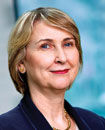
 Katie Benson
Langham Hospitality Group in recent months more
than doubled its North American footprint with the opening of three new
properties: the Langham Chicago; the Eaton Chelsea in Toronto, rebranded from
the Delta Chelsea; and the Langham Place, Fifth Avenue in New York, formerly
the Setai Fifth Avenue. The company this year also spun off three of its Hong
Kong properties into a public investment entity to further spur growth of its
brands. Katie Benson, CEO and executive director of that spinoff, Langham
Hospitality Investments, recently spoke with BTN lodging editor Michael B.
Baker about Langham's plans for a stronger presence in North America and other
markets, its new structure and the company's corporate travel outlook.
What do these three new hotels mean for Langham?
The Langham Chicago is a showcase property for the Langham brand in North America. As such, we hope that some potential owners or investors would come forward to help us expand our brand in key cities. I think it's just a spectacular hotel, and we expect it to be one of the leading hotels in North America. We also hope the rebranding of our hotel in Canada, the Eaton Chelsea Toronto, would assist us with people who maybe have midscale products or are in the Canadian market. This [New York] hotel we've rebranded, but we want to undertake a capital works program. Even though it's pretty new, we want to stylize it into our Langham Place style, which may take us a year. Once that's done, we'll have a showcase of our three major brands in the Americas.
Will Langham leverage its newly expanded North American presence to court more clients in the upcoming request-for-proposals season?
Yes, and we do very well already with corporate clients in [the New York] hotel. Chicago now will be available for the RFP season. The hotel in Chicago is in the bottom 13 floors of what was the old IBM world headquarters building at 330 Wabash, which is now an office tower above. Having a hotel in New York that's perfectly located for all that Sixth Avenue/Grand Central office corridor [traffic] as well as hotels in Chicago and Boston really helps us in the RFP season. In Australia, last year we bought the Observatory Hotel and rebranded it the Langham Sydney, which completes us in Australia and New Zealand. We have Auckland, we have Melbourne and we have Sydney. We'd like to see some more development in a couple of places in the world, certainly Washington, possibly another hotel in New York, possibly San Francisco and downtown Los Angeles or Beverly Hills. Miami is still on our list.
What about developing markets?
We'd like to expand in some other destinations, but probably through management contracts rather than ownership. I still think the company will retain quite strong ownership, and that is what should appeal to people who are looking for management companies, that the Langham Hospitality Group is very heavily invested in its own company and is asset-heavy. That gives you a unique perspective when you're operating a hotel for them, that you have an owner-operator mentality. Great Eagle Holdings, which is the owning company of Langham Hospitality Group, very rarely sells anything. They're very strong on buy and hold. They don't flip, like some other operations.
How will your new structure propel growth?
Our chairman, Dr. Lo Ka Shui, is passionate about growing the Langham brand. He realized that in order to do that, he had to free up some capital so he could make some acquisitions. He said, “I have to put my money where my mouth is and keep buying to grow the brand, especially in key strategic locations. But, I don't have an unlimited amount of money.” So, he decided that we would take the three Hong Kong assets we have—the Langham Hong Kong, the Langham Place Hong Kong and the Eaton, which is our midscale product. They're the best financially performing assets in our company, because Hong Kong is a very strong market and you have a friendly tax regime and a friendly cost structure. He put them into an IPO and spun them off into a separately listed company.
We've founded a trust that's linked to a company that's a very unusual structure. It has a lot of the features of a REIT, which you're used to in North America, but not the expenses of a REIT. Great Eagle has kept 57 percent of the investment, so it's still aligned with the investors. With the rest of the money it raised, it is going to and has committed to look to acquire more assets to grow the portfolio. The trust itself could acquire more assets as well, so our goal is to grow, whether it's acquiring assets that Great Eagle already owns and runs as Langham hotels—because there's a right of first refusal of anything they want to sell to the trust—or finding a bargain that I think is a good asset and could add to the total value of the trust and suggesting to the unit holders that we buy it.
I think we want to just settle things down and make sure we make the forecasted performance in the first year to our initial unit holders, give them some confidence, and then I think we would aim to make an investment sometime in the first two years, or I'd be very disappointed. I don't think Langham Hospitality Group wants to be 1,000 hotels like some of our competitors. It will always want to be 50 or 60 key destination hotels.
For Americans not familiar with Langham's brands, how would you describe them?
You'll find that the Langham and Langham Place brands emanate from London in 1865. The Langham London in 1865 was seen as very innovative and advanced technologically at the time: It had elevators, hot and cold running water, primitive air conditioning and those features. Now, it's still leading in the ways of service, innovation and personal touches but with classical elegance, features like afternoon tea in every hotel. Langham Place, which is the younger sister of the Langham brand, is about modern British luxury. It's seen as still attentive, refined luxury service but in a slightly more contemporized style. If your mother likes the Langham, you probably like the Langham Place. It's the Queen to Prince William, or Audrey Hepburn to Anne Hathaway.
Is your business mostly corporate?
We are a corporate hotel company. We don't really have resorts with palm trees and things like that. That's something that's never happened to us; it doesn't mean it won't in the future. Langham Place especially could convert to a resort brand, and they have a brand standard for it, but you need to focus on what you do well. We're good at corporate [travel] and meetings hotels in key cities. We're a city hotel operator at the present time.
Hoteliers generally have a positive outlook for the coming years. Do you share that?
In North America, you can see things picking up again, and thank God for that. There seems to be a lot of people refreshing their product and making them more exciting. America, especially in that midscale and budget scale, got stuck in the boring lodging establishment at bit, and now they're trying to sex it up or make some of their products more fun, which is great.
What about group business?
Groups are coming back, but people's behavior for [meetings and conventions business] has now changed. In the old day, you have bookings that were two years out and a year out for big blocks. Now, if you have six months, you think you're doing well. That's the way business is done. It's the same with people's travel plans. They book and cancel at a minute's notice. People suddenly decide to have a meeting, then they decide not to have it, then decide to have it again, so you have to have good relationships with your regular meetings clients, because sometimes they will cancel and you have to work it out. You can't afford to keep burning people off because they cancel if they're regular customers. That's what makes them pick you again