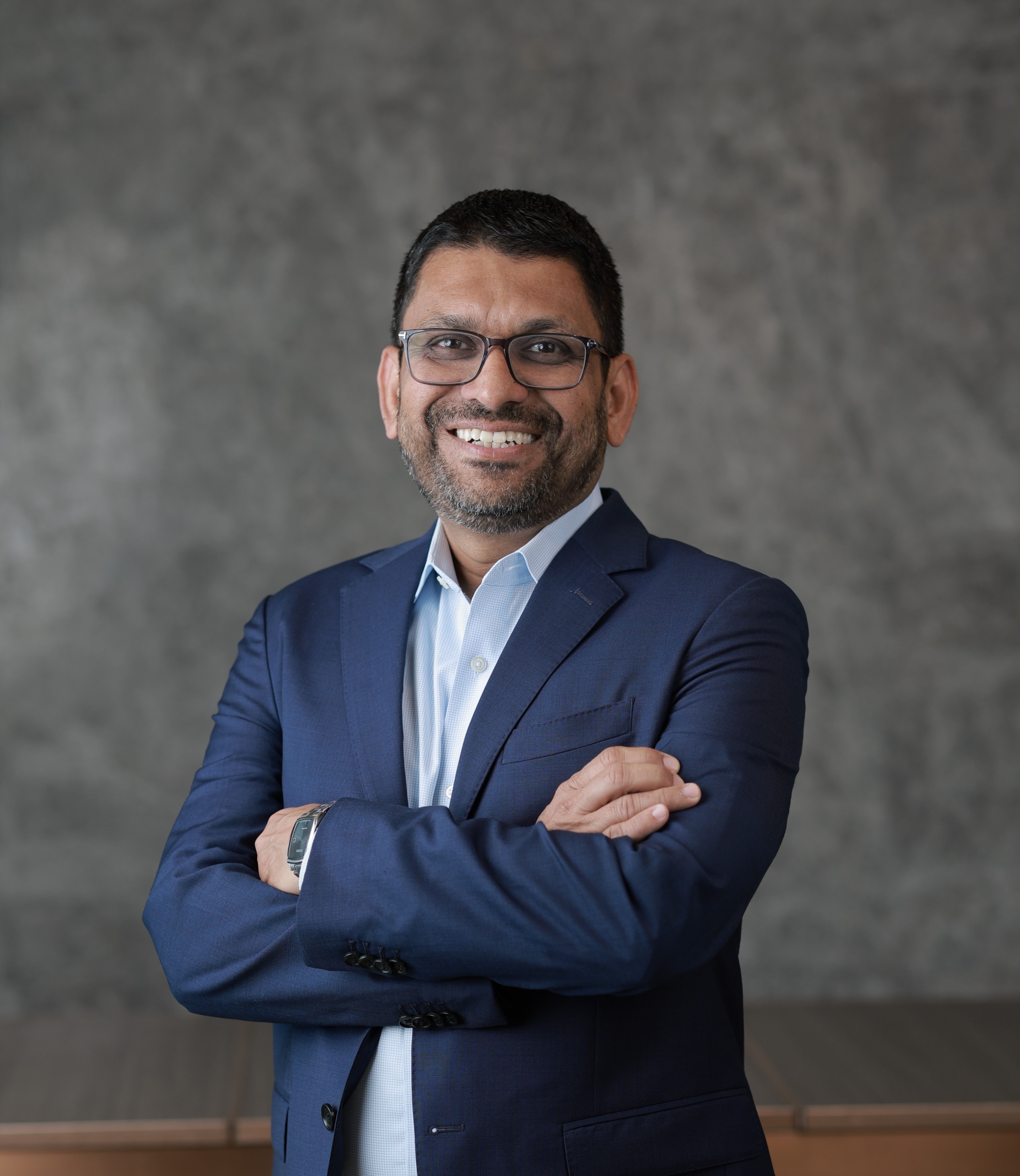
 New IBS Group Consultancy to Tackle Travel Industry AI Transformations
IBS Software's Rahman discusses:
- How to have "nimble" AI transformation
- Keeping a customer focus with AI
- Thinking beyond cost savings
IBS Group, which includes
travel-focused IBS Software, earlier this month launched a new independent
consulting group, Naviq, focused on helping travel companies adopt AI at scale.
With a goal of helping companies move beyond experimentation with AI to delivering
tangible business results, IBS plans "significant" investment in
Naviq over the next five years, with a goal of growing its headcount to more
than 5,000 high-tech professionals in that time. IBS SVP and head of consulting
and digital transformation Moizzur Rahman, who joined IBS a little less than
three years ago after a long career at Capgemini, spoke with BTN executive
editor Michael B. Baker about what he sees as the biggest transformation
opportunities for the industry with AI. An edited transcript follows.
BTN: What drove the launching of this new company?
Moizzur Rahman: AI is coming to reality for most of
our clients. They have been contemplating, discussing, experimenting for a
number of quarters, if not couple of years. The more and more we engage with
our clients, we feel that they need a partner who can actually help them actually
get the benefit out of AI. With our 25-plus years of domain experience and what
we have developed around AI over last two years, building some very specialized
capabilities, we're going to bring these two together. That will be the core
objective of this new company: to actually help clients get the most out of AI
using our domain expertise. We believe that this new company can actually not
just be very successful, but make clients achieve their objectives. That's why
we are doing it now.
BTN: Are there particular client types you are targeting?
Rahman: We are going to be very travel domain
focused. You are aware of all the transformation that travel partners are going
through. As part of our consulting business, we already are very established in
most of our clients—if you look at all top tier airlines, some cruise clients, hospitality,
major [online travel agencies]. So, we already have a very established base
across all four or five verticals of travel industry. We'll continue to focus
on it. We're not going to go beyond. That's actually one of our value
propositions. If you compare with other horizontal providers, they can bring AI
as a tool. They can bring horizontal capabilities as a service. But we'll actually
able to bring that industry expertise. Combining AI, industry and technology is
where we believe will actually change the game. So, we'll stay focused in
travel.
I had an Air France meeting [recently],
and they're like, "Why you? Why not TCS, for example?" I came from Capgemini,
so I know how large consulting companies operate, and they're still very
horizontal. But even if you look at some vertical [companies] that have a good
travel practice, they are still trying to decide…at which industry to focus.
And they very quickly pivot. If travel is down, put it into manufacturing. That
is the value proposition we will have. We
don't have a baggage. We don't have a large infrastructure. We focus on
transformation, and that's where the spend will come.
BTN: What are the key challenges with AI that companies are
facing where you think you can help?
Rahman: There are three broad areas where we
see clients struggling. Most of the clients are saying [what they've got to
get] right is the operational efficiency. With the AI coming in, we want to
really double down on coming up with solutions for our clients, working
collaboratively with them to see how do we really increase the efficiency. The
second is digital engineering, enterprise transformation. Big initiatives like
retail doesn't just require products. It requires a lot of glue around the
product, and it needs a nimble player who can move quickly rather than taking
time to actually build a big governance model. This is the same discussion I
had with a transformation officer at Air France day before [yesterday]. Rather
than building a big data platform and spending two years and then figuring out
how you do it, let's do a quick pilot. Let's move quickly. Let's get the value.
So, enterprise transformation is the second one. The third one, which we are
starting to actually engage with lots of clients is how do you create new value
streams, new revenue streams? How do you drive that end user experience using
AI? What are the new business initiatives you can come up with?
BTN: Would travel management companies be on your potential
client list?
Rahman: Yes. Airline operators, cruise lines,
hospitality, OTAs and TMCs are the primary market segments for us and will
remain that.
BTN: TMCs seem like a clear fit, as we still hear about their
challenges with talent and seeking greater efficiencies.
Rahman: We have couple of clients and they're
actually putting a lot of thoughts into a really AI-first mindset. If you need
to really disrupt that line of business, they're saying, "How do I do it?"
And what … would be the end result on their customer side? What are some of the
advantages that customers will see once you're able to help them do these
transformations? This industry is still very people-dependent industry—a lot of
people, a lot of handoffs. It's just not the self-service, quick decisioning
and quick process completion, but it's also just the quickness of getting the
things done right from booking to check-in to understanding what are my
options, getting different suggestions. And giving to me what I really want,
you know, even if I'm a corporate traveler. You have my data, you have my
history, you know, tell me what I should do. Tell me what airline [I should
take], what hotel I should stay at. I'm a Marriott lifetime platinum member, so
don't send me the hotel suggestion for Hyatt. I think it's the clients are stuck
in this "I don't know who goes first and what do I do first?"
BTN: What's the biggest mistake you think companies are making
in their AI strategies?
Rahman: I don't know if it's a mistake. I
would say it's still taking an enterprise-wide view versus taking a more business
segment, business unit view. AI is coming, my leadership is saying 20 [percent
labor] efficiency. I will be a hero if you give me 30 [percent] efficiency. It's
a labor arbitrage Phase Two rather than saying, "I have a business that
you are currently running for me or a technology infrastructure or an ecosystem.
How do I completely redo it right in a very agile, very nimble approach?" How
can AI help me do it cheaper? I feel most clients are really not capitalizing
on how disruptive this can be and how innovative their business can become if
we really monetize the right way. That's where they will win more. Obviously,
the cost savings is very essential part of the AI transformation, but not a lot
of clients are asking, "Give me a new business idea. How do I make my
customer happy with AI?" That kind of feeds itself into more customer
intimacy, a better customer experience, more span and top line growth.
BTN: Are you seeing a willingness for investment from travel
companies?
Rahman: Obviously, there's an ask for
efficiencies and all, but I'm not seeing them tighten up the wallet when there
is a business initiative involved. I know it may be seen as a struggling
industry, with [geopolitical events], but I'm not seeing that as a huge problem at
this point from our clients and even new clients. They all want to capitalize
on AI. They all want to do new things, and they all want to grow business.