 Credit: BTN 2026 Airline Survey, Sep 16-Oct 15, 407 respondents
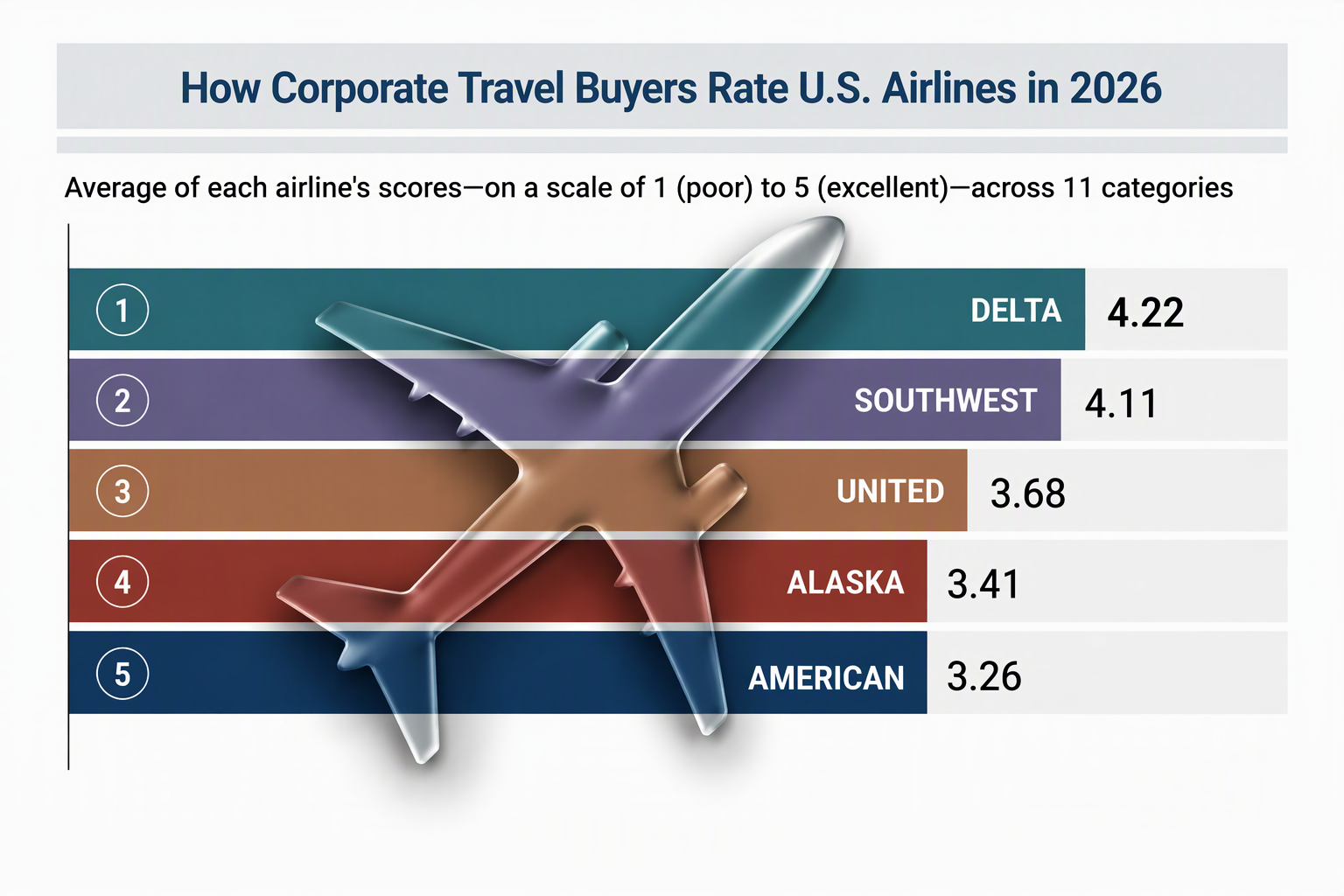
Put 16 candles on Delta Air Lines' celebratory cake as the carrier once again came out on top in BTN's 2026 Airline Survey and Report. Delta also had the highest average score in eight of the survey's 11 categories on which corporate travel buyers rate their preferred airline partners.
Southwest Airlines furthered its own streak, coming in second place for a fifth consecutive year with an average rating of 4.11 compared with Delta's 4.22. Southwest was up 0.16 points, while Delta declined 0.16 points versus last year. The last time the two carriers were this close was in 2024. Dallas-based Southwest also claimed the highest average score for the remaining three rated categories and scored improvements of at least 0.10 in all 11 categories.
The overall average rating this year increased to 3.74, up from what would have been 3.65 if JetBlue was excluded last year's score. The New York-based airline failed to qualify this year after debuting in the survey last year.
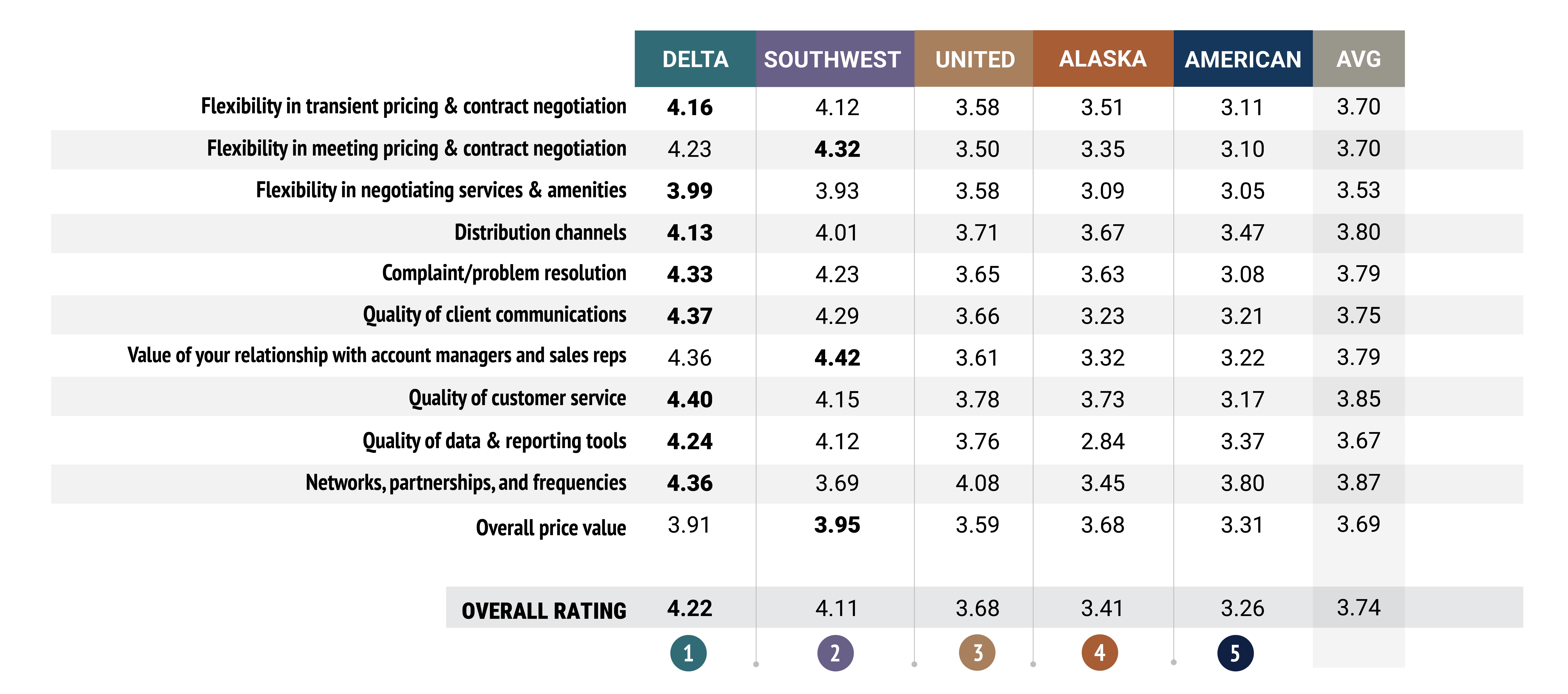
American Airlines influenced the increased average score, gaining 0.51 points from a year prior for an average of 3.26—and also posted increases of at least 0.10 in all 11 categories. The carrier still landed in last place, but that's quite a turnaround from 2024 when its score bottomed out at 2.15.
United Airlines again ranked third with a score of 3.68, down from 3.75 in 2025, while Alaska Airlines qualified for the third consecutive year, coming in fourth with a score of 3.41, equaling last year's average.
Among legacy carriers, "each one has its pluses and minuses, but the market seems to have a clear preference in order of Delta, United and American, and I think that aligns with their overall financial performance," GoldSpring Consulting partner Neil Hammond said.
Partnership Travel Consulting chief strategy officer Bob Brindley noted that respondents also rated Delta's partnerships higher than other alliances listed in the survey. "That's probably because of the Delta halo effect," he said.
Buyers were asked to rate and report their usage of 10 global airline partnerships. The top-rated alliance was Delta/Air France-KLM/Virgin Atlantic at 4.27 with 63 percent of respondents indicating they use it. That alliance was followed in rating by Delta/Korean Air (4.24), Delta/Aeromexico (4.21) and Delta/Latam (4.18). All other partnerships were rated below 4.00. The alliance with the second-highest usage was United/Air Canada/Lufthansa at 55 percent of respondents; it received a 3.85 rating.
Increased Airfares
Higher ticket prices have been a hot topic all year, with fuel prices elevated since the start of the Iran War in late February. In the most recent monthly report from Airlines Reporting Corp., the average price in September for a U.S. domestic roundtrip ticket was $669—the highest since at least the Covid-19 pandemic, and topping the prior peak in June 2026 at $629. Several airline executives on quarterly earnings calls have defended the higher fares, saying that they still are a bargain compared with 2019 fares when inflation is taken into consideration.
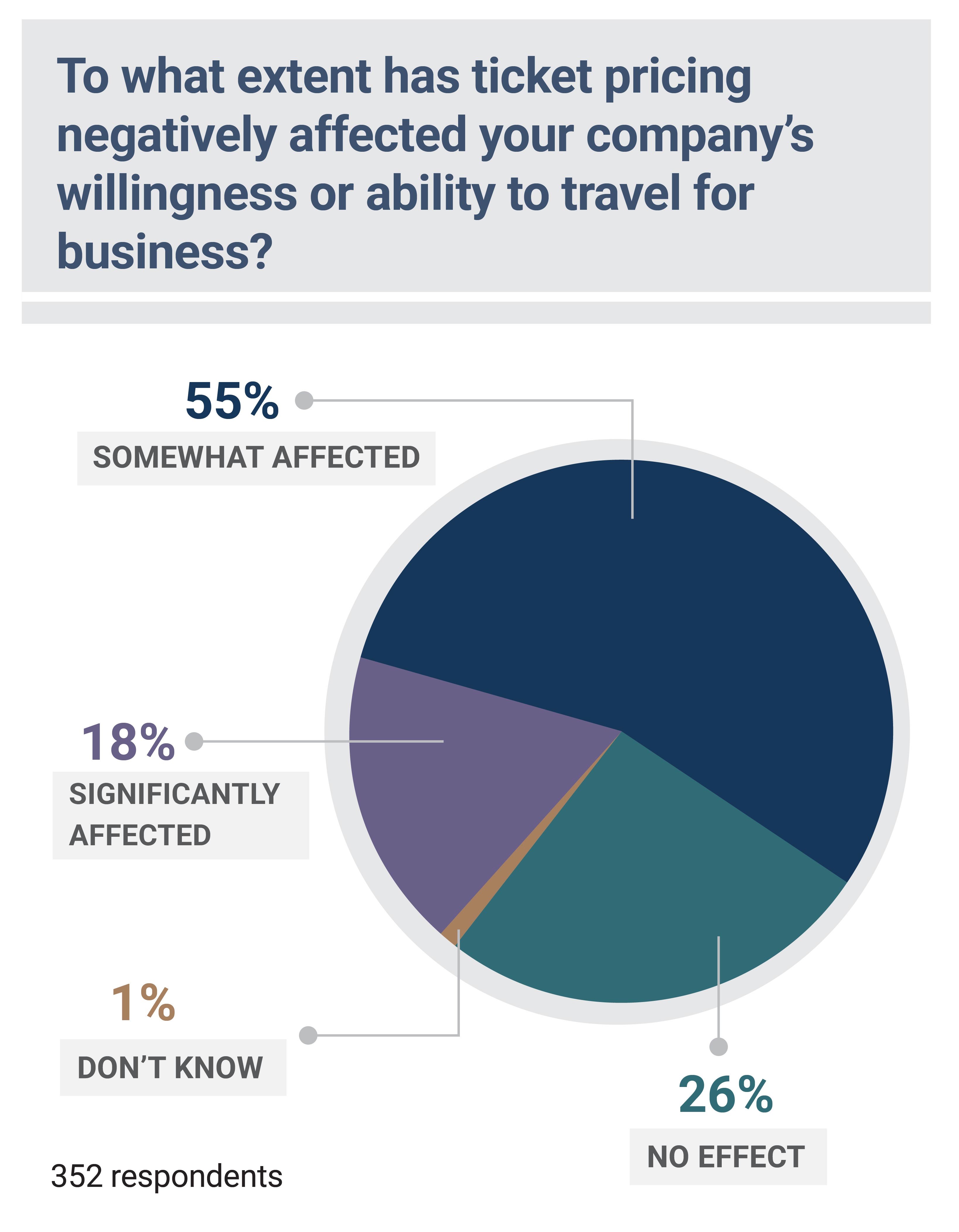
Buyers may not feel the same. About 73 percent of respondents said ticket pricing had somewhat or significantly negatively affected their company's willingness or ability to travel for business, up from 66 percent in 2025's survey.
"There's sticker shock from where prices have gone," Brindley said. "That's primarily driven by the fuel prices, and I think clients understand it, but they still don't like it. What's really interesting is that demand has been pretty resilient to it so far."
KesselRun VP of program management Krissy Herman concurred that even though customers have complained about the higher prices, she hasn't seen any decrease in business travel. "When the early forecasts came out expecting more flat [pricing] for 2027, our clients took a deep breath and said, 'OK, that's good news.' "
Still, some companies are "starting to pull back because they've already spent their budget for the year," Brindley said, noting that as budgets get smaller toward the end of the year, companies ask, "Are these trips really necessary or can they be postponed or combined and instead of sending four people to a meeting, maybe we can only send two?"
If demand does begin to pull back, airlines will "throttle back capacity to make sure they're still able to keep the price point where it needs to be for them," Brindley said.
Airline Satisfaction
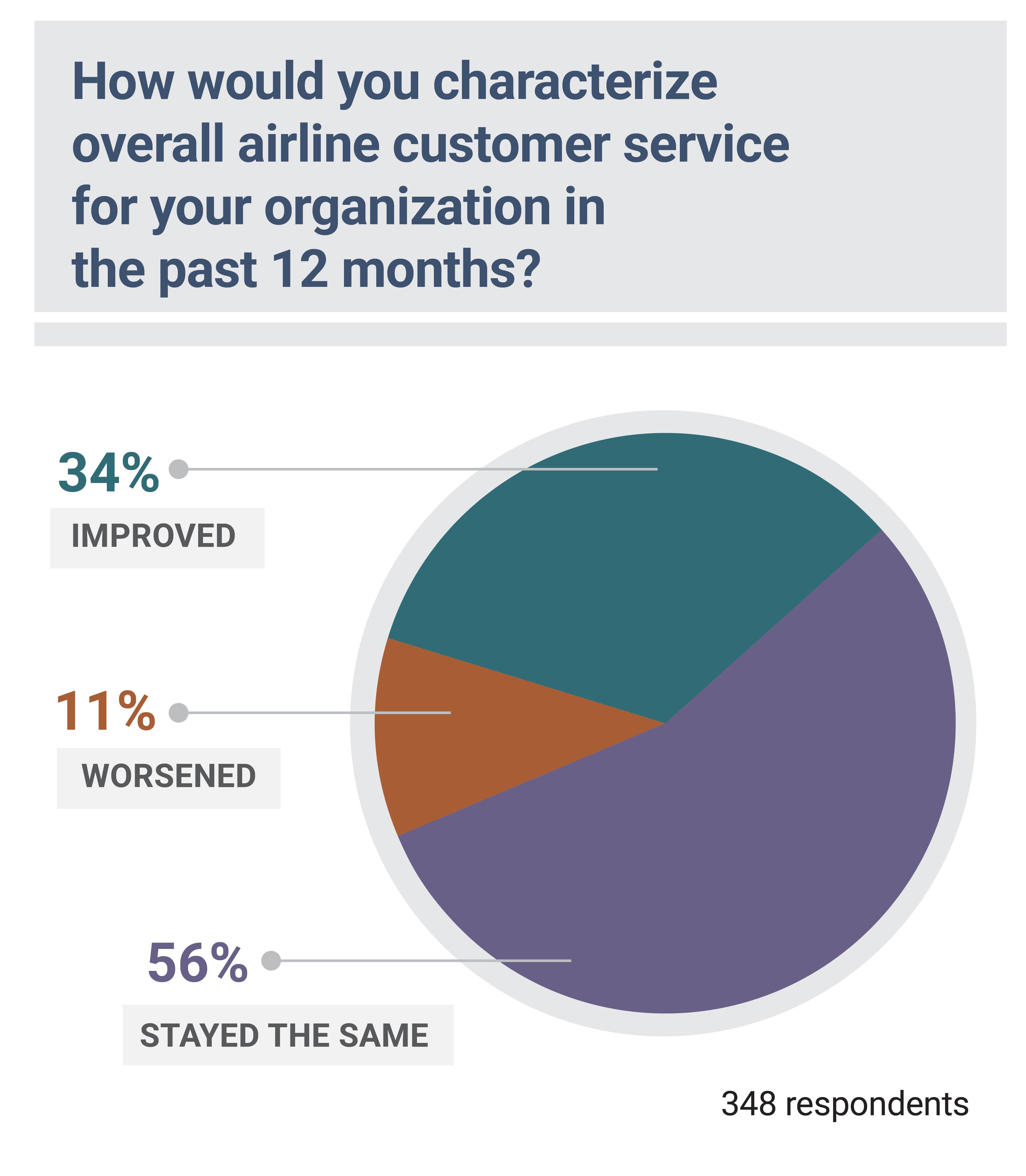
Yet, higher fares haven't negatively affected travel buyers' assessment of overall airline customer service for their organizations. About 34 percent said it had improved in the past year, up 2 percentage points year over year, and 56 percent said it had stayed the same, also up 2 percentage points. Just 11 percent said customer service worsened over the past 12 months, down from 15 percent in 2025.
"By and large, our clients are very satisfied with their air programs," Herman said.
Sustainability
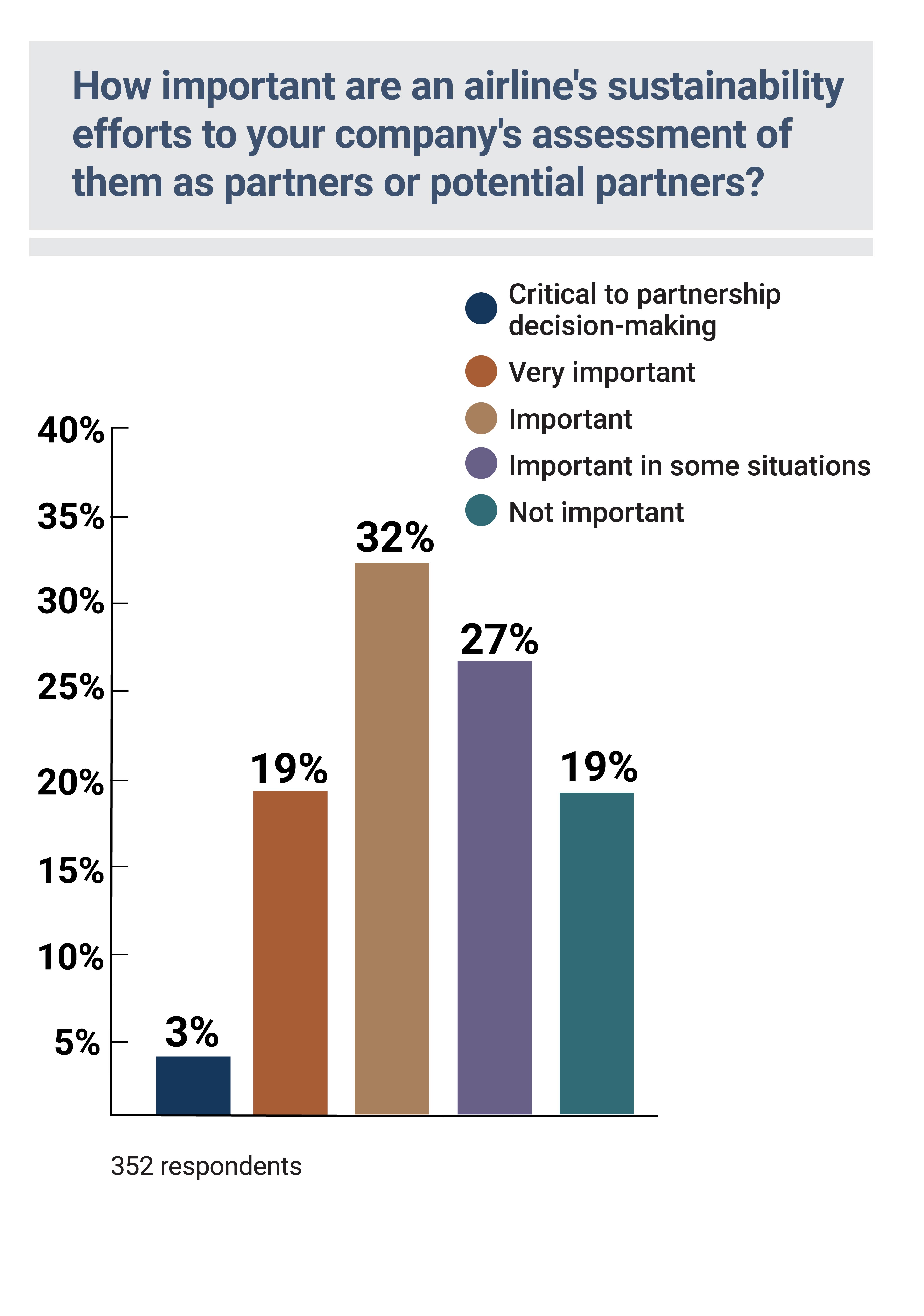
The importance of an airline's sustainability efforts in assessing them as partners decreased slightly from last year, with 22 percent of respondents saying it was very important or critical, down from 28 percent in 2025, while 19 percent said it was not important, up from 17 percent.
"From a U.S. perspective, the trend is that we're kind of moving away from sustainability," Brindley said. "What's really interesting, the rest of the world is not. And I think over time, this pendulum may swing back."
New Distribution Capability
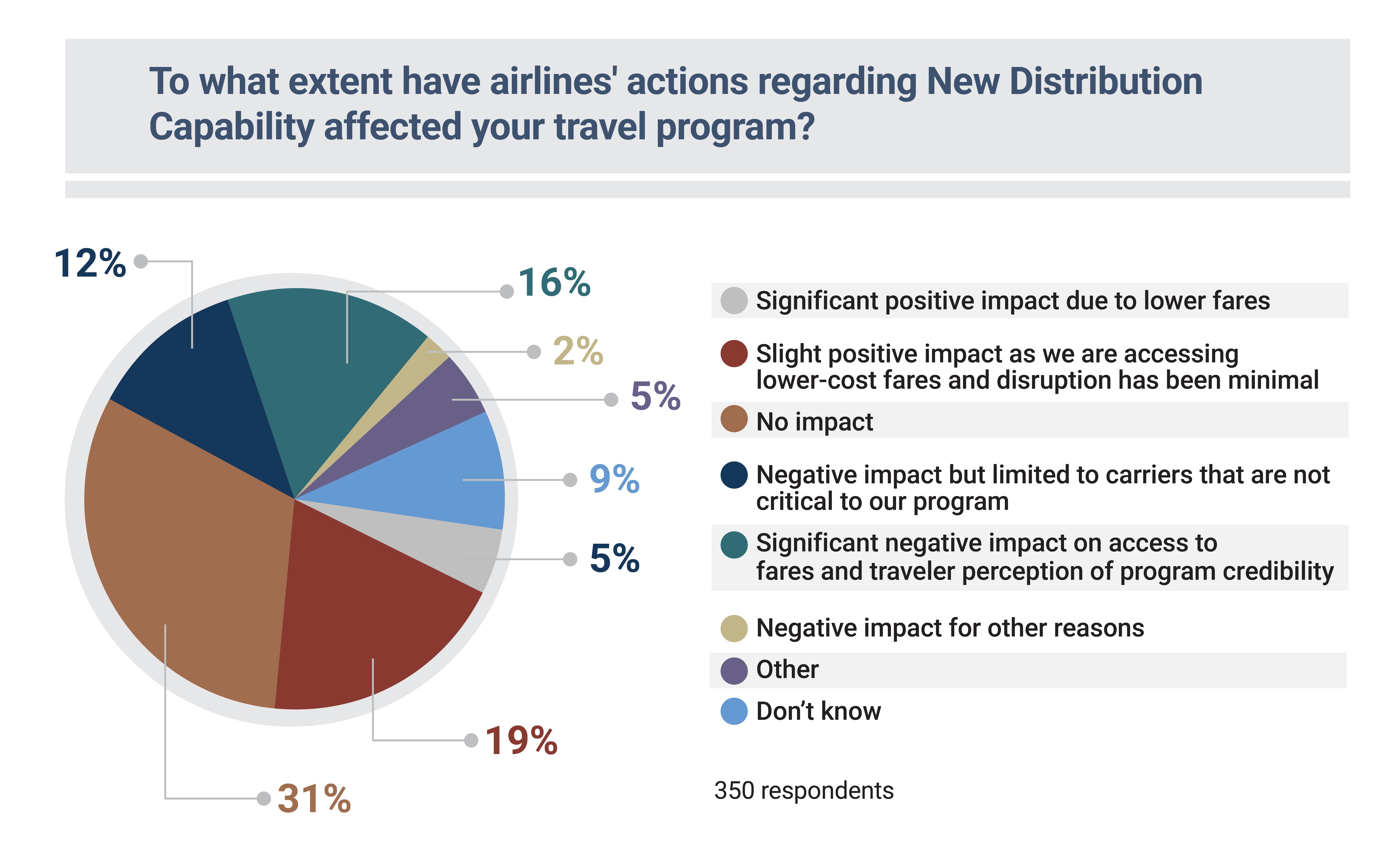
New Distribution Capability perceptions, however, shifted more meaningfully than with sustainability. The share of respondents who said NDC had a significant negative impact on access to fares and traveler perception of program credibility dropped to 16 percent from 26 percent last year. The portion who said it had a significant or slight positive impact increased to 24 percent from 18 percent.
"There's still a mixed bag of responses from the buyers on NDC and dynamic pricing," Hammond said. "The reality is, I think dynamic pricing has helped them. Those who have switched over to NDC haven't had an enormous amount of problems once their [online booking tools] and [travel management companies] have switched on. … The comparisons that we have done on the same accounts when we've run parallel experiments have shown that NDC has vastly benefited clients, and we know it's benefited the airlines too, so it's been a win-win."
Delta has said it will introduce its long-awaited NDC product by year-end. Has that wait helped or hurt them in the industry?
"It's probably 50-50," Herman said. "We have clients that are very passionate about NDC and rolling out the new technologies. And we have a lot of clients too who are opposed to it unless it's done right, meaning full servicing, full post-ticketing capabilities. And that's what Delta says they are working toward. But when you look at the other airlines, they've been working toward that for a very long time as well, and it hasn't precluded them from rolling it out."
Loyalty
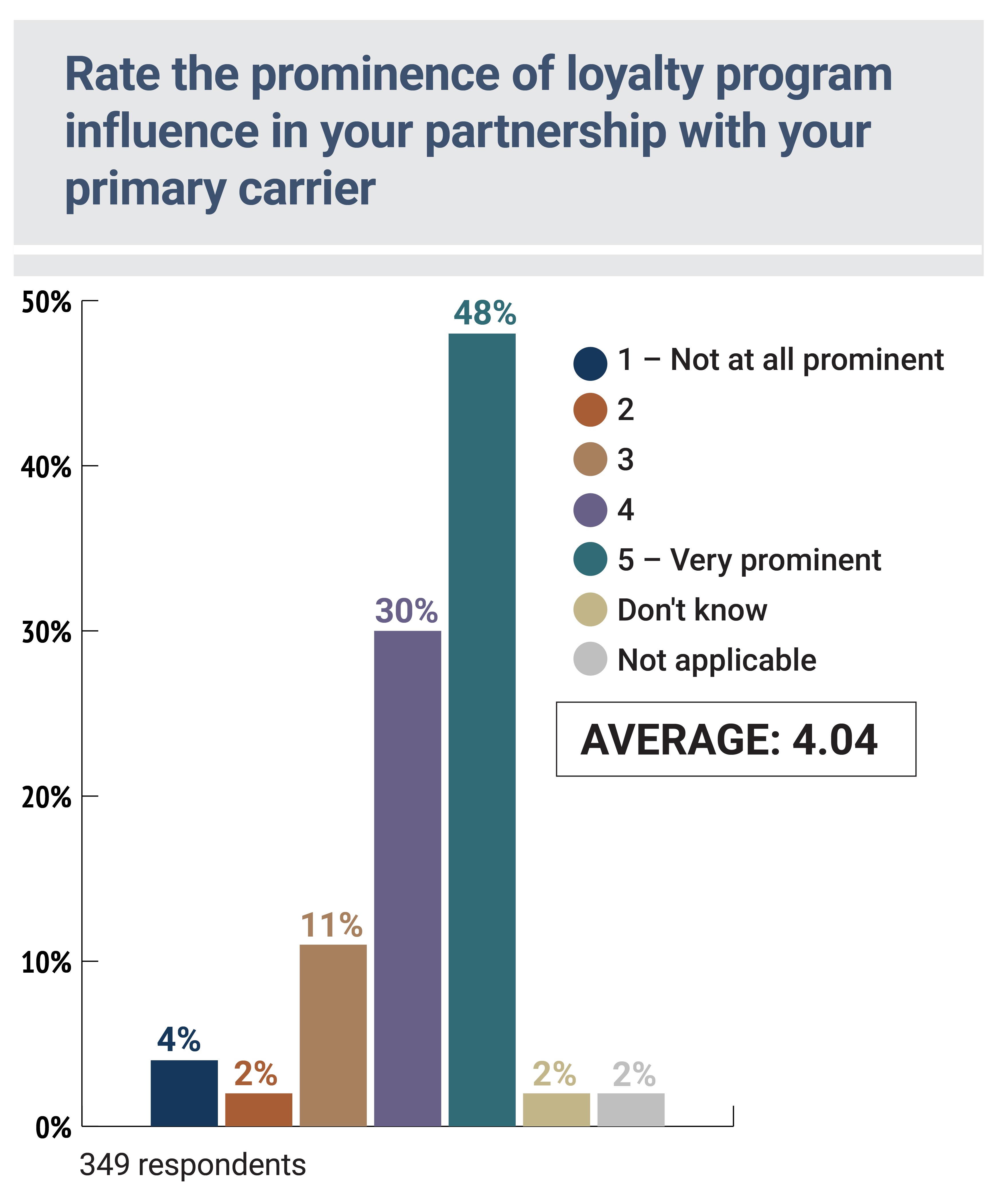
Loyalty is another factor gaining importance in the buyer-airline relationship. Respondents were asked to rate the prominence of loyalty program influence on carrier partnerships from one (not at all prominent) to five (very prominent). Forty-eight percent rated it a 5.0, with 30 percent rating it a 4.0. The average for all respondents was 4.04.
"We have a couple of different theories on loyalty across our client base," Herman said. One camp believes anything airlines give to employees as part of a relationship should be equitable among all travelers. "If one person gets status, everybody should have status," she said.
Another camp wants to focus those benefits on road warriors or C-suite executives. A third camp doesn't know what to do.
"Across policies, our client base generally states loyalty should not drive your purchasing decisions for business travel, but there is a recognition that if a traveler has status, it may get them perks that lower the cost of business travel expenses to the company," Herman said. "So, there's a desire for reasonableness in comparing one airline over another."
In open-ended comments, multiple respondents concurred that loyalty programs have contributed to cost savings for the company, such as with free Wi-Fi for members, free checked bags and improved boarding status. If club access is included, that also saves on meal costs.
Others, though, noted that some carriers have made it harder to earn status, therefore reducing benefits and diluting program value, or that carriers' waivers-and-favors allotments have declined. Some respondents also said that airline partners shifting their focus to support travelers directly through loyalty programs rather than through the corporate partnership undermines the partnership.