Hewlett-Packard during the past 18 months has consolidated
its travel operations into two global call centers using one travel management
company and one global distribution system, implemented other advanced travel
automation and consolidated a variety of payment structures into one
centralized system. As a result, it has reduced travel spending by 40 percent
and staff and program costs by 50 percent, while maintaining customer
satisfaction levels at more than 92 percent.
Not incidental in this process was the integration of
technology services company EDS, which HP bought two years ago. At that time,
EDS had 30 different payment systems and HP had 11. In the past two years, HP
moved expense and payment into the same organization as travel and consolidated
all 41 into one American Express payment system.
"We thought we were consolidated four years ago when we
went to the BTI model," said HP global travel strategist Jeff Kurn
regarding a former HP travel configuration, provided by Business Travel
International, which began as a joint venture between BCD Travel and Hogg
Robinson Group. "They did a great job for us but they weren't really
consolidated, as HRG and BCD didn't share everything, so we went out for a
fairly large bid a couple of years ago when EDS came in. They had been with
Carlson."
Having selected Carlson Wagonlit Travel as its global travel
management company, HP decided to pursue a two-call-center configuration for
the entire world, using the Sabre global distribution system as its technology
platform. It began using that configuration, with one call center in Rzeszów,
Poland, and the other in Vancouver, in November 2009.
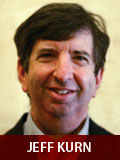 "We did not want local and country call centers
anymore," explained Kurn. "We wanted to consolidate not only centers,
but also tools and technologies, so that everyone was using the same model—a
little bit like GE's been doing over the years—but it's not follow-the-sun. The
intent is that you are calling into this cloud. Now, you are mostly dedicated
to one call center or the other, but we are moving in the direction that you
will be served in the place that has the best set of resources to meet your
needs."
"We did not want local and country call centers
anymore," explained Kurn. "We wanted to consolidate not only centers,
but also tools and technologies, so that everyone was using the same model—a
little bit like GE's been doing over the years—but it's not follow-the-sun. The
intent is that you are calling into this cloud. Now, you are mostly dedicated
to one call center or the other, but we are moving in the direction that you
will be served in the place that has the best set of resources to meet your
needs."
Kurn said that would be achieved by year-end. He
acknowledged that HP had considered going to one global call center as a way of
further reducing costs, but determined that "you always need a contingency
if one goes down."
In looking to reduce costs for a travel program that still
is anticipated to reach $1.1 billion in spending this year, HP not only was
focused on consolidating to fewer call centers, but also where they were. "Vancouver
and Poland turned out to be very good low-cost call center locations because of
language skill sets," Kurn said. "Most of our business is obviously
in English, but the Vancouver site handles Spanish and French Canadian, and the
Europe center handles most European languages. Asia right now is calling into
Vancouver. Japan and China are still in-country. When they go to the cloud,
there is a minimum set of requirements. One is that they are on our common GDS.
Another is they use one of our common online booking tools, GetThere and
Cliqbook. Right now, neither China nor Japan can support that. China will be going
to Sabre for international bookings, but 90 percent are still domestic."
Other objectives of the consolidation, said Kurn, were
speed, consistency and accuracy. He said a lot of front-, mid- and back-office
tools were implemented to ensure that HP travelers would get the right rates.
For example, he said, "All of the reservations are funneled into common
quality-control tools so that we have a 100 percent audit on hotel rates. It
doesn't eliminate rate-loading issues, but it helps alleviate them, because the
next day we can call the hotel and ask why they didn't honor our rate.
Sometimes, in sold-out city locations, you get what you get, even though we
have last-room availability on all of our rates. We used to do three or four
audits a year—wave audits, which are point-in-time audits. "
HP uses the same global tool to ensure its travelers get its
globally negotiated air and car rental rates. "We use a Carlson quality
control product that is part of their suite of tools," Kurn said, "but
they built part of it for us to be able to handle the global-ness of it. We
pushed the bar. They didn't have this in many regions, so they had to build it
for us."
"We looked at the marketplace and the way we worked
with our suppliers to make sure that we are getting up to 45 percent discounts
with some of the major airlines," said Kurn's boss, vice president of
global supply chain solutions Becky Cornett. "We have a system in place, a
quality assurance tool, that makes sure the rates we are getting out of our
agency compare to the lowest rates and the discounts that are offered by the
major providers. We take a run at that on a daily basis and roll it up on a
weekly basis to ensure that we are getting the best deal. A lot of companies
slice good deals but they don't have any mechanism to see if they are getting
those deals or not. That was part of a big effort around compliance, to ensure
that we do get it. That is laid over the booking tool."
HP also installed tools to make use of unused nonrefundable
tickets, she said.
Another tool HP put in place in the past 18 months, a
pre-trip reporting mechanism that sends passenger name records to mid-office
technology providers GDSX and TRX on a daily basis, had an unexpected payoff
during the volcanic ash crisis this spring.
"With this, if the manager sees there is a difference
between the booking and the lowest possible fare," said Kurn, "the
next day she can say, Book the lower fare please, or even, Why are you going at
all? Before, we didn't have that type of visibility. Because we had that
visibility for business control purposes, we also had it during the volcano."
Despite having that tool in place, Cornett said HP learned
from the experience and further refined its operations. "We had our own
contingency plan and Carlson Wagonlit had its own contingency plan," she
said. Immediately following the crisis, she said, "We put the two together
and we've added one of the Sabre tools, which is an excellent tool to track
travelers, so if there is a strike in Bangladesh, we know about it immediately
and how many travelers we have there at any point."
Cornett said HP also learned that it needed to capture the
cell phone numbers of its 150,000 travelers so they can be contacted in
emergencies.
When the effort began, Cornett said, "We looked at how
we could improve the supply chain not just in one area but how we could be the
best in every single link of that chain and how we could improve pieces through
automation or eliminate them to make it more efficient than it was before. From
a purely project standpoint, what we wanted to achieve, what we outlined 18
months ago, we have completed."
Not content to rest on those laurels, however, Cornett and
the travel team have set ambitious goals for the next couple of years, during
which time they intend to consolidate to one booking tool, integrate HP's Halo
videoconferencing and Palm personal digital assistant tools into corporate
travel, achieve an end-to-end travel and expense solution, elevate the
management of HP's meetings expenditures and add emerging markets to the 62
countries the travel program currently covers, which account for more than 90
percent of its spending.
"HP is also working to expand its presence in 50-plus
emerging countries and how we take our systematic approach to this program and
make sure we have the infrastructure so that we are ready to roll when HP does
penetrate into those are additional elements of that transformation,"
Cornett said. "We will never stop transforming because there is always
something that we can do better than the leading edge and above and beyond what
the industry is doing."
This report originally
appeared in the Sept. 6, 2010, issue of Business Travel News.