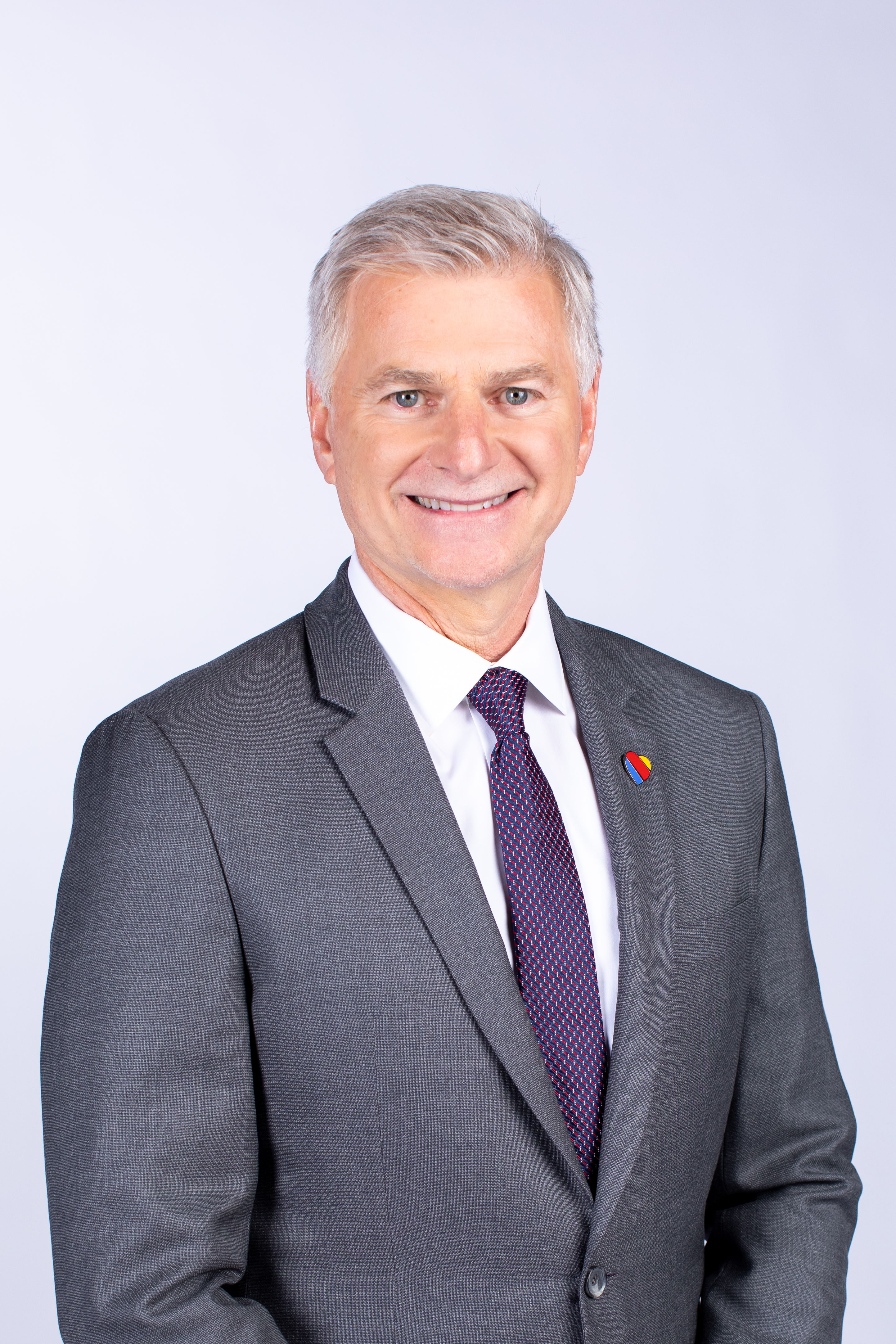
"It is very exciting to confirm that Bags Fly Free is here to stay! Our research reinforced that this policy really sets us apart from other airlines and our customers love it, and we are keeping it."
So said Southwest Airlines president and CEO Bob Jordan in a Sept. 27, 2024, briefing, one day after the company's investor day presentation in which it announced several changes that the carrier would make, such as adding assigned seating, an extra-legroom cabin and its first international partnership with Icelandair. (And as of mid-December 2025, Southwest now has five additional international airline partners: China Airlines, EVA Air, Philippine Airlines, Condor and Turkish Airlines.)
Fast forward to March 11, 2025: Southwest announced that the days of "two bags fly free" would be over beginning May 28. That major about-face came a month after the carrier announced it would cut 15 percent of its corporate workforce, about 1,750 positions—a first in Southwest's 53-year history.
Jordan oversaw those decisions and all the other "transformational initiatives" at the carrier, even if pressure to make them came from shareholder Elliott Management, which in 2024 had become an activist Southwest investor—and earned mention in BTN's 2024 Most Influential list.
On a second-quarter earnings call, two months after the baggage charges went into effect, the carrier estimated that the new fees would result in about $350 million of earnings before interest and taxes for full-year 2025, or a run rate of $1 billion of EBIT had it been in place for the full year.
That's a number that's hard to argue with, even if some customers grumbled about the fees and how the carrier is losing what made it different from other airlines.
But corporate travelers are not known for being bag-checkers, and, more importantly, are a segment of Southwest's customer base who had been pushing for the other changes, particularly assigned seating, which goes into effect Jan. 27, 2026, and extra-legroom seating, which already is available on some aircraft.
Those two features are expected to net Southwest $1 billion of incremental EBIT in 2026 and approximately $1.5 billion in 2027, Jordan said on a third-quarter earnings call.
The carrier also on Oct. 24 started to offer free Wi-Fi for Rapid Rewards members, following other major airlines that have done the same for loyalty members, and Jordan hinted at further changes to come. "While we don't have specifics to share today, we're actively looking at continued changes to widen our product offering," he said, adding that those included "things like premium seating, airport lounges and long-haul international destinations served by Southwest Airlines."
As the Sinatra song says, "The best is yet to come."