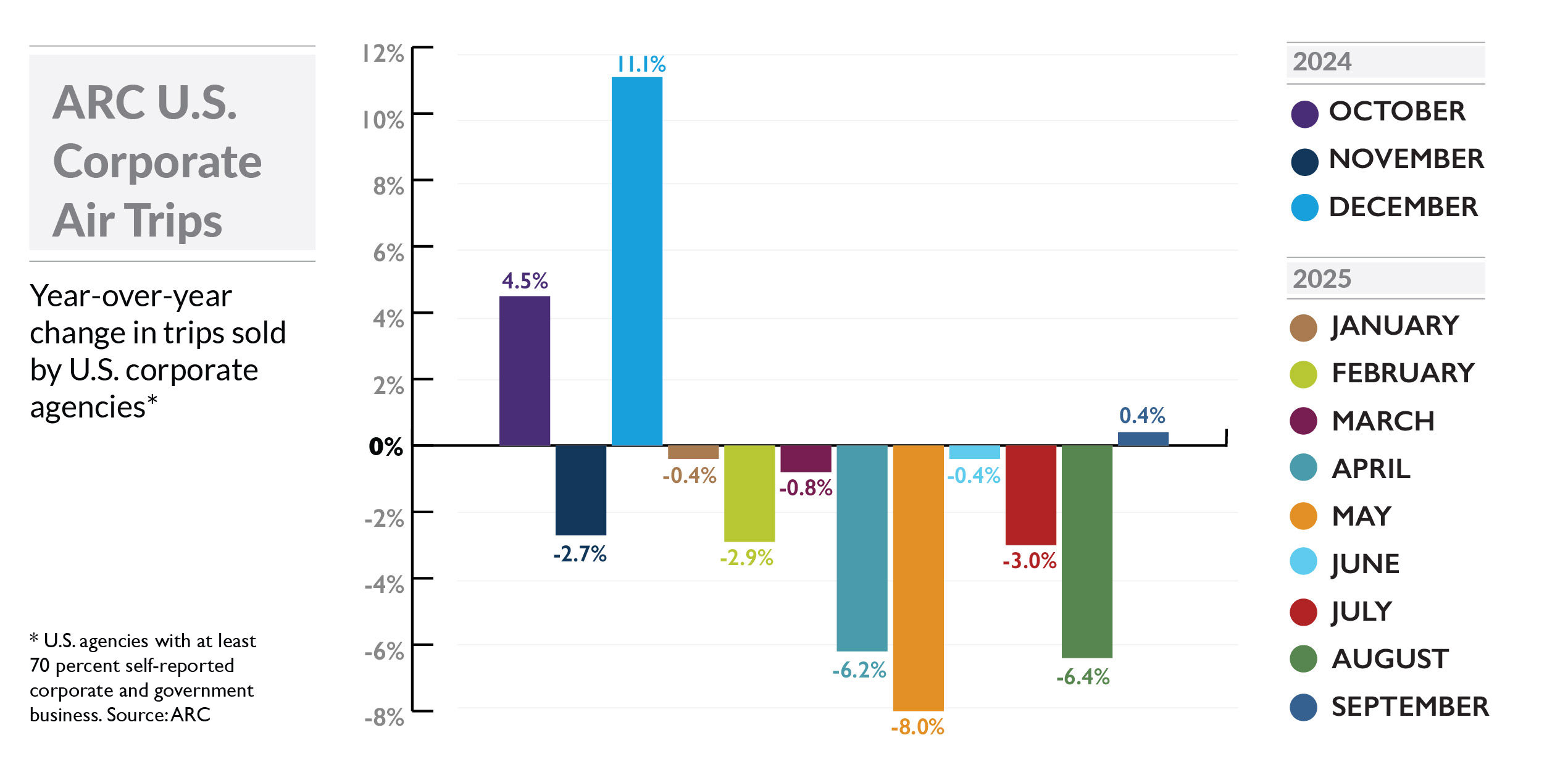
It wasn't exactly a truckload of good news, but after a spring and summer marked by business travel sluggishness and uncertainty, any sign of green shoots of demand growth will be greeted by the industry. So it was in September, which featured not only a turnaround in a key Airlines Reporting Corp. metric but also testimony from several U.S. airline executives that they were seeing corporate travel demand rally.
The number of air tickets sold in September by U.S. corporate travel agencies and settled by ARC increased year over year for the first time in 2025. That increase was only 0.44 percent year over year, and such trips can be tricky to quantify, but it nevertheless was in the black for the first time since December 2024.
Total September U.S. air ticket sales settled by ARC were nearly $8.7 billion, an 8 percent increase year over year.
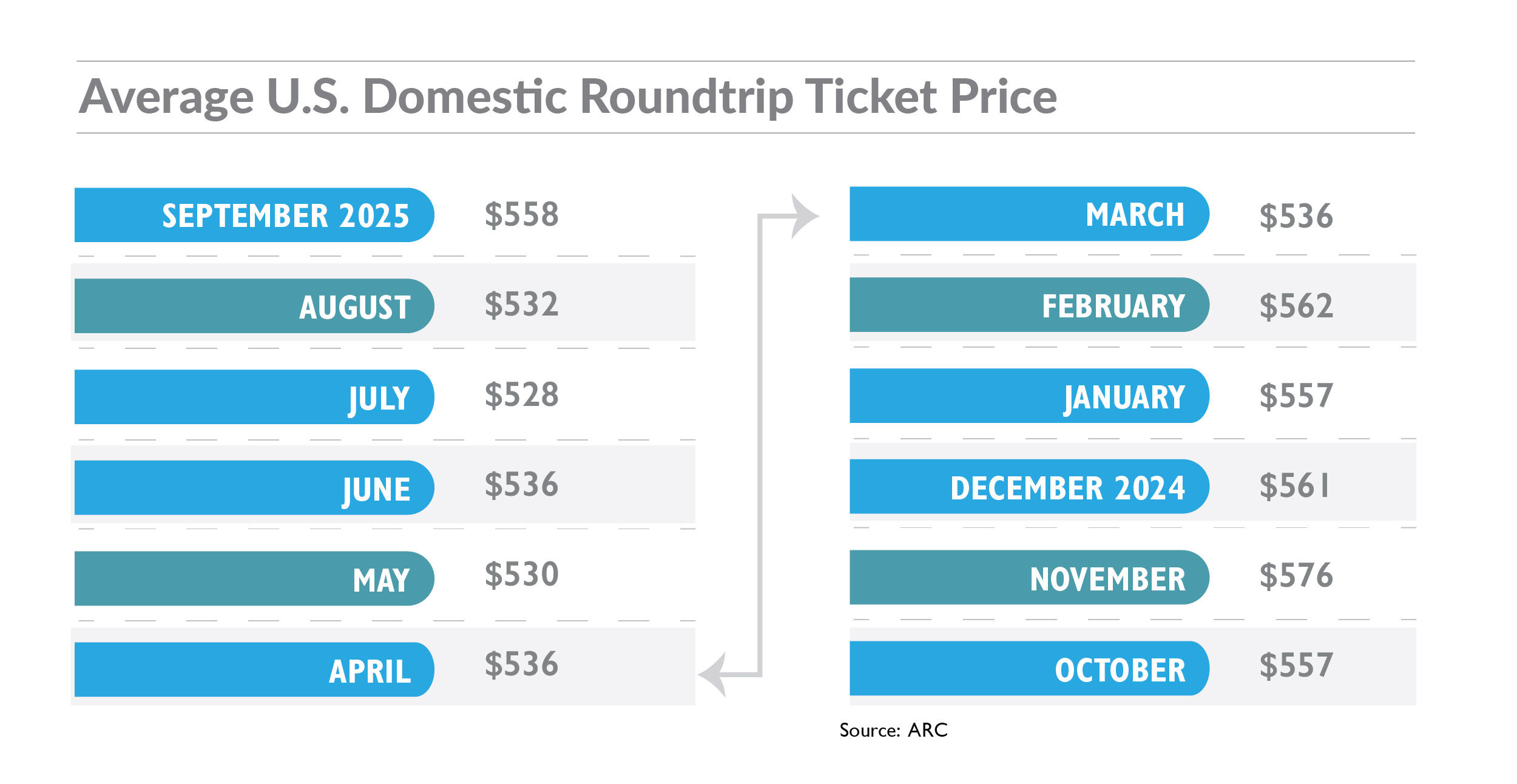
The average U.S. domestic roundtrip ticket price in September increased to $558, up from $532 in August and the highest level since February. It's also higher than the $547 recorded in September 2024.
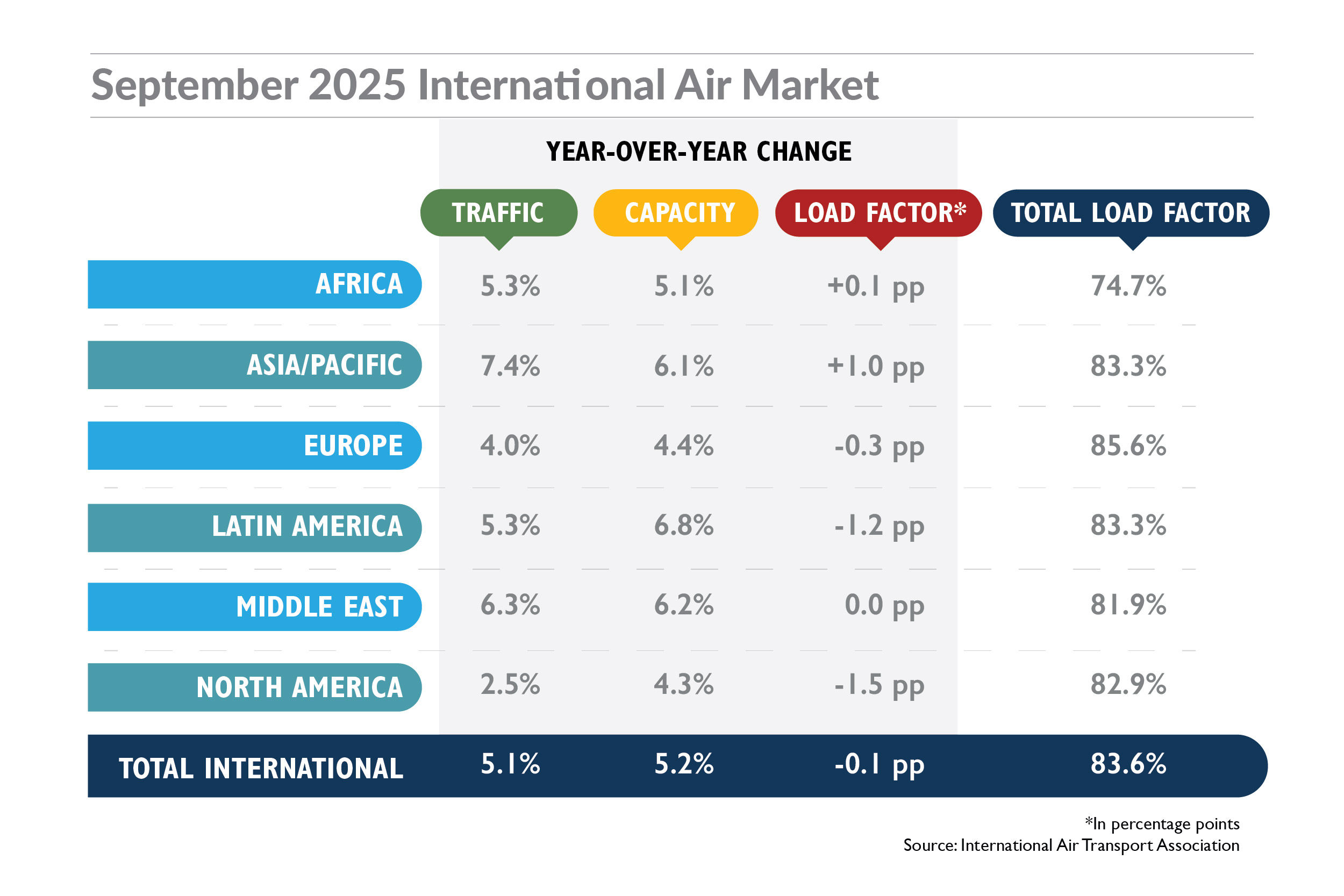
Global air demand remained sturdy in September, up 3.6 percent year over year as measured in revenue passenger kilometers, according to the International Air Transport Association. That figure was led by international demand, which increased 5.1 percent and which IATA director general Willie Walsh in a statement called "solid."
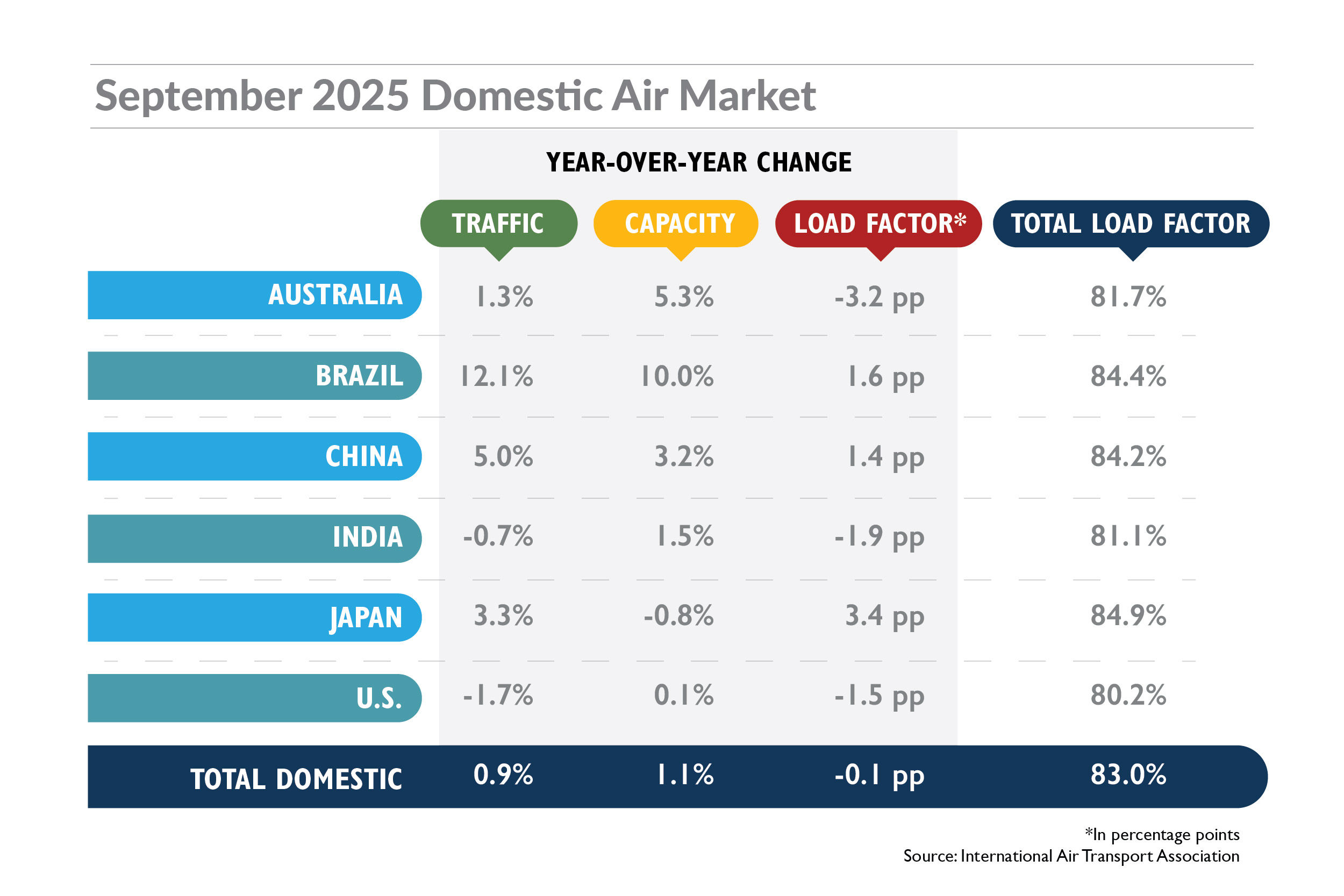
U.S. domestic demand, however, was a different story. September such demand dropped 1.7 percent year over year, the second straight month of decline after a dip of 0.2 percent in August. The U.S. load factor also dropped 1.5 percentage points to 80.2 percent, the lowest of the major domestic markets IATA measures.
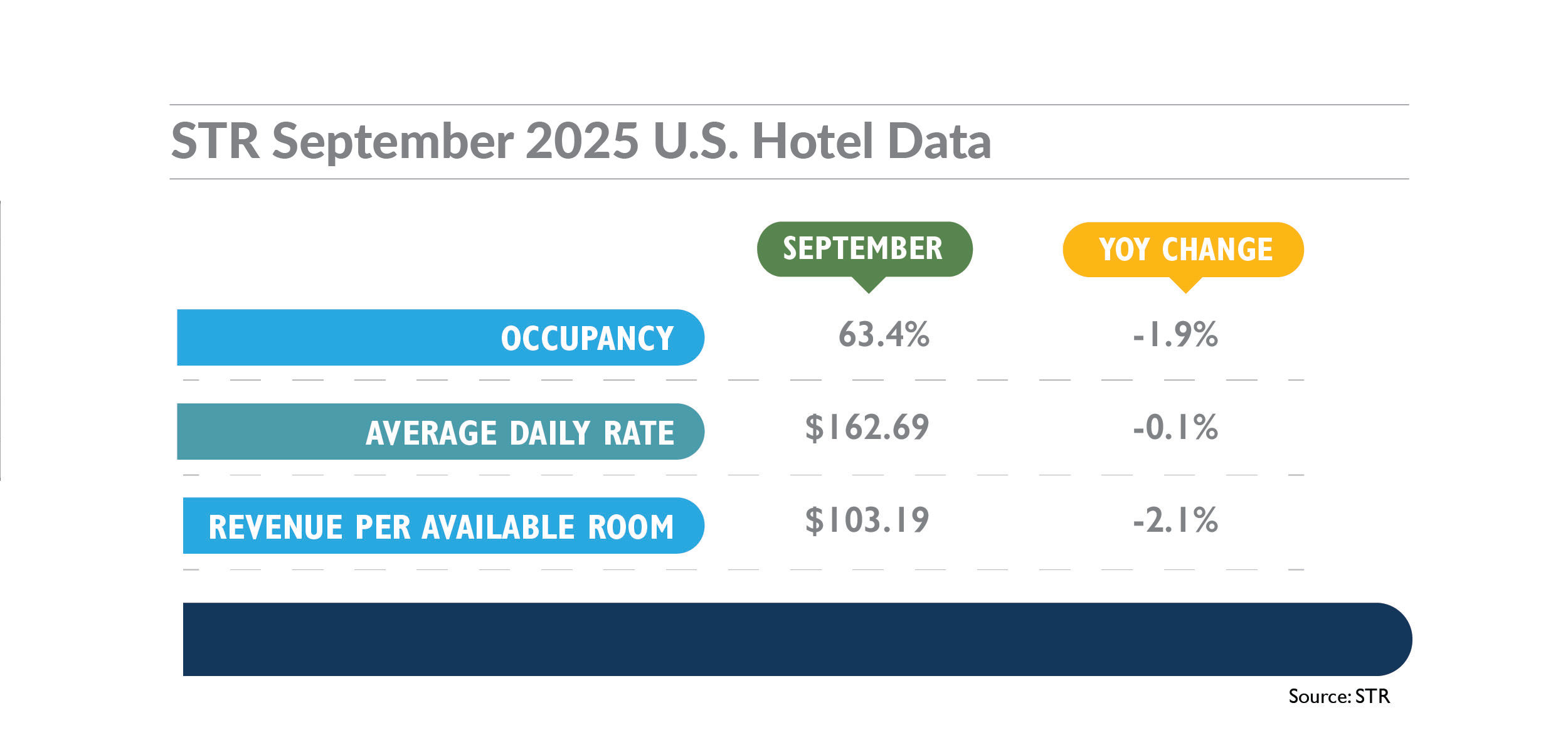
The U.S. hotel market in September didn't offer suppliers much in the way of good news either. For the seventh consecutive month, occupancy declined year over year, this time by 1.9 percent. Revenue per available room declined 2.1 percent, the sixth straight month of decline. Average daily date fell only 0.1 percent, reflective of hoteliers' continuing focus on maintaining rate discipline even in the face of declining occupancy.