.png "The Signal November")
The U.S. federal government shutdown that began Oct. 1 continued through Nov. 12. The effects of the shutdown became more wide-ranging in November, after the U.S. Department of Transportation and U.S. Federal Aviation Administration mandated 10 percent capacity cuts at 40 "high-traffic airports." The capacity cuts were reversed in the days following the budget deal, but they undoubtedly had an effect on November's business travel demand and performance figures while they were in place.
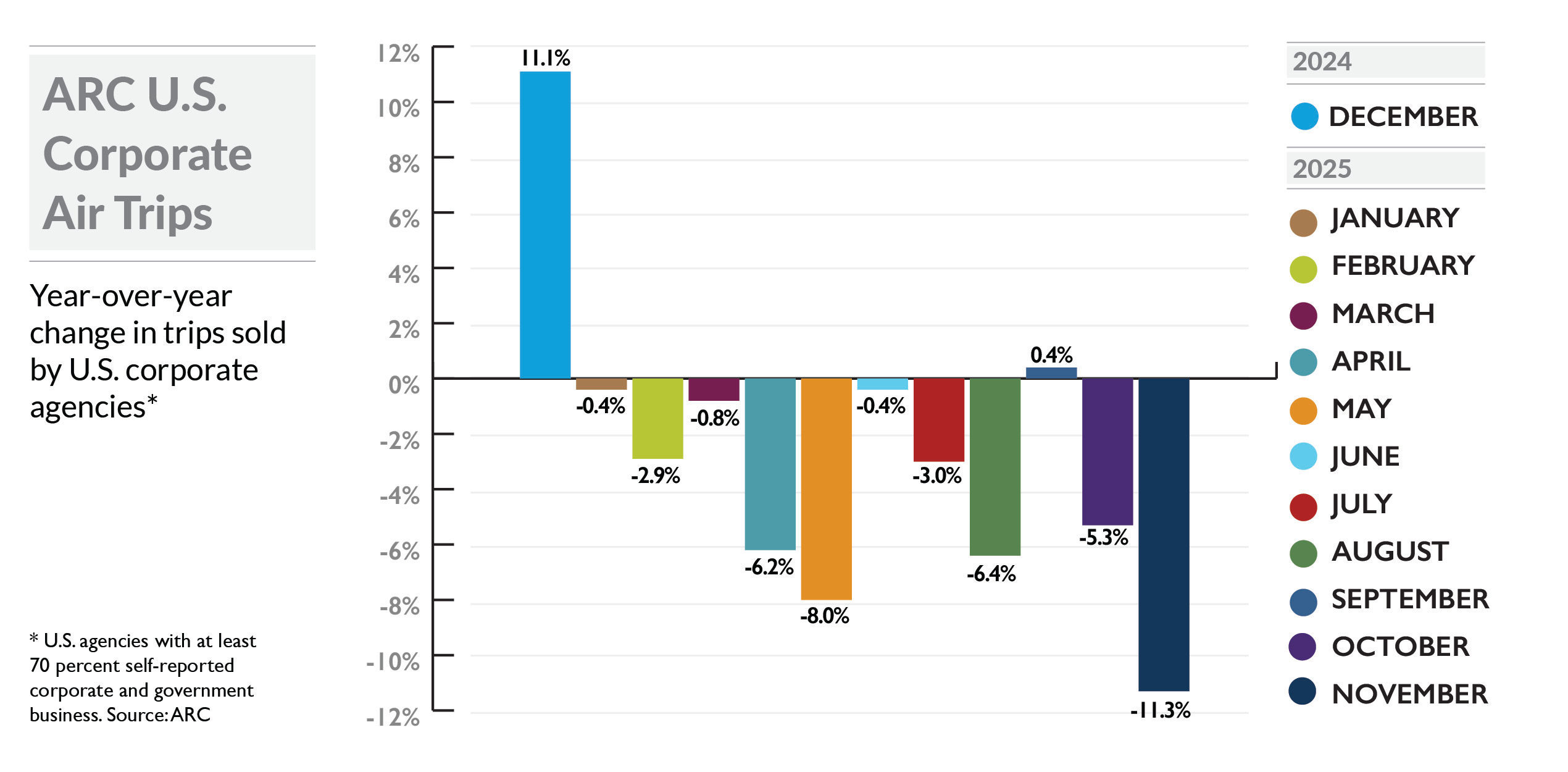
The number of air tickets sold in November by U.S. corporate travel agencies and settled by ARC dropped 11.3 percent year over year, the steepest drop of any month of 2025 and the 10th month out of 11 in the year in which that figure dropped (excepting September).
"The November results show the impact of both the U.S. government shutdown and mandated flight cuts on agency air ticket sales," ARC chief commercial officer Steve Solomon said in a statement.
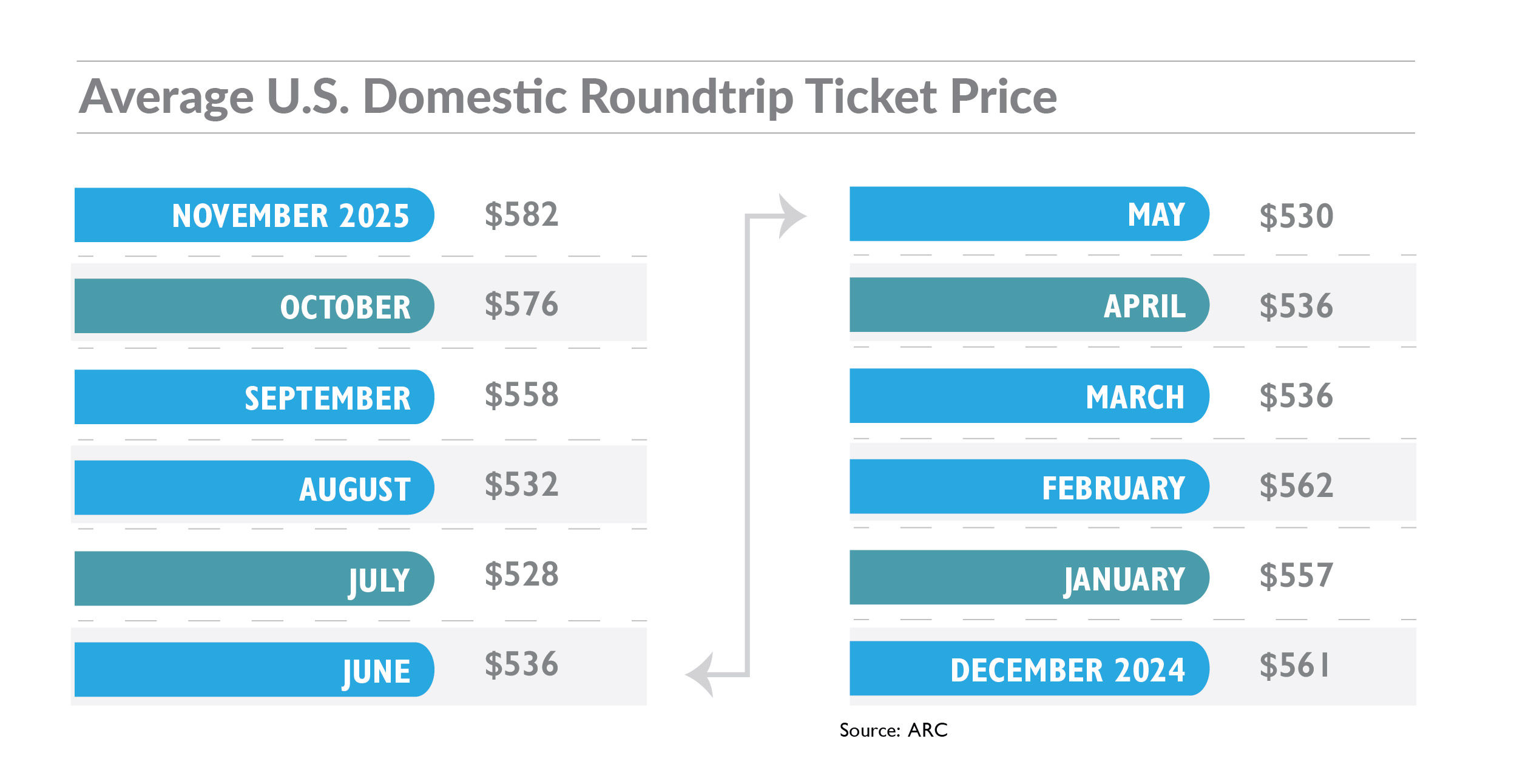
Domestic airfares, however, increased. The November average price for a U.S. domestic roundtrip ticket was $582, up from $576 reported in each November 2024 and October 2025. The November average fare was the highest monthly figure reported by ARC since June 2022, when it was $605.
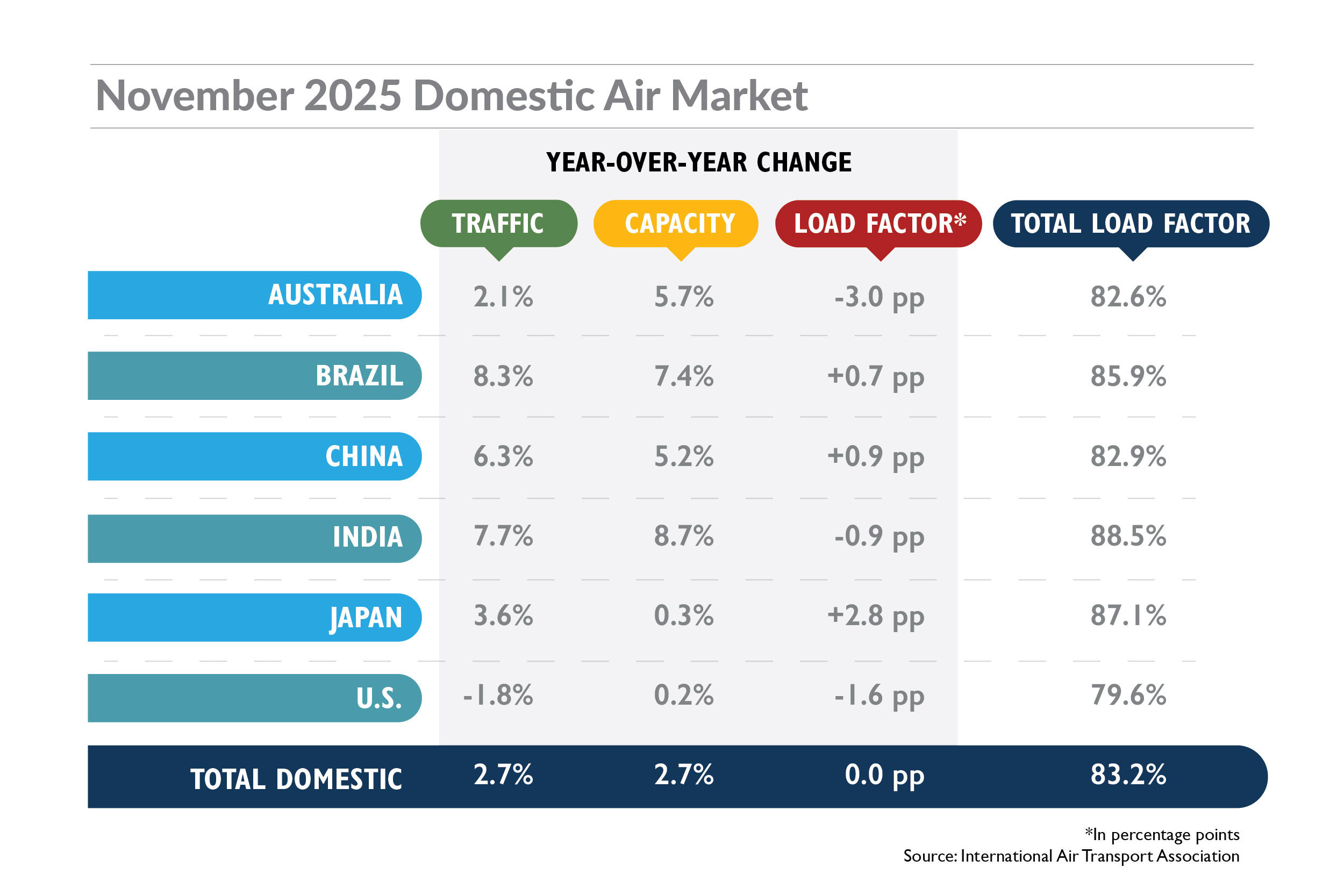
U.S. domestic air traffic, as measured in revenue passenger kilometers, declined 1.8 percent year over year in the midst of the mandated capacity, reversing the increase from the prior month, according to the International Air Transport Association. It was the only nation of those publicly tracked by IATA where traffic declined. U.S. capacity, as measured in available seat kilometers, actually increased by 0.2 percent, and load factor declined.
Overall domestic demand and capacity each increased by 2.7 percent.
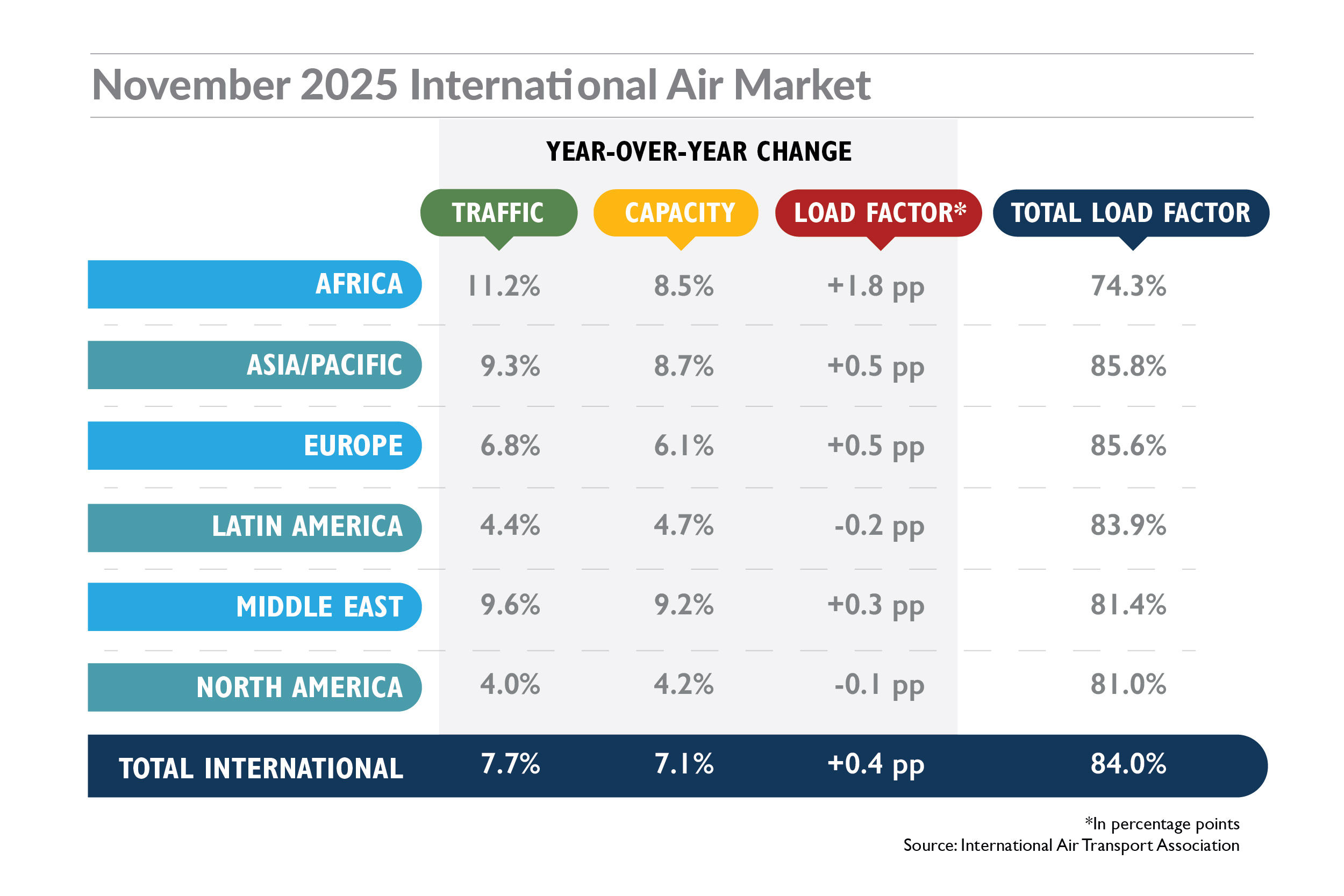
International traffic in November increased strongly, up 7.7 percent year over year. That includes a 4 percent increase on traffic on North American carriers, a rate albeit lower than the increase in other regions. IATA director general Willie Walsh said in a statement called the results "strong," noting increasing load factors—up 0.4 percentage points on international routes—even as supply increased.
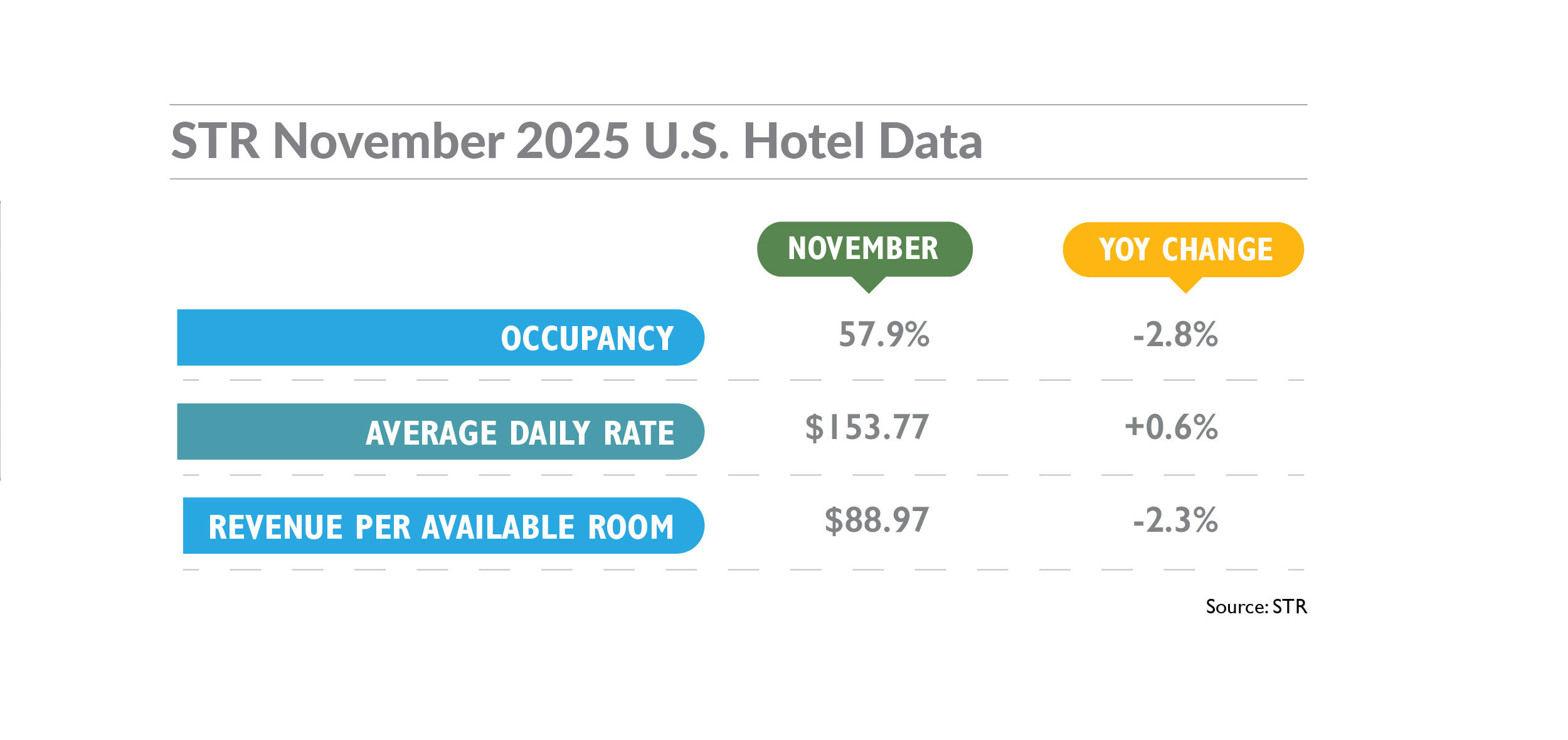
U.S. hotel occupancy in November dropped 2.7 percent year over year, a notable weakness after a similar decline in October. That said, year-over-year occupancy comparisons are affected by the hotel stays of displaced residents and relief workers associated with hurricane Helene and Milton, which struck the U.S. in 2024.
Nevertheless, November marked the ninth straight month that U.S. occupancy declined from prior-year levels.