Corporate trip volume in July continued its growth streak, but other indicators showed a more subdued demand environment as the U.S. market began to normalize after the conclusion of the 2026 FIFA World Cup.
Overall U.S. hotel rates again rose, though some World Cup cities in the first half of the month noted some business travel shifted to other locales for the duration of the tournament.
Trips sold in June by travel agencies with at least 70 percent self-reported corporate and government business and settled by Airlines Reporting Corp. increased by nearly 7 percent year over year, according to ARC. It's the sixth straight month that figure has increased year over year, immediately following a stretch when it declined for 11 out of 14 months.
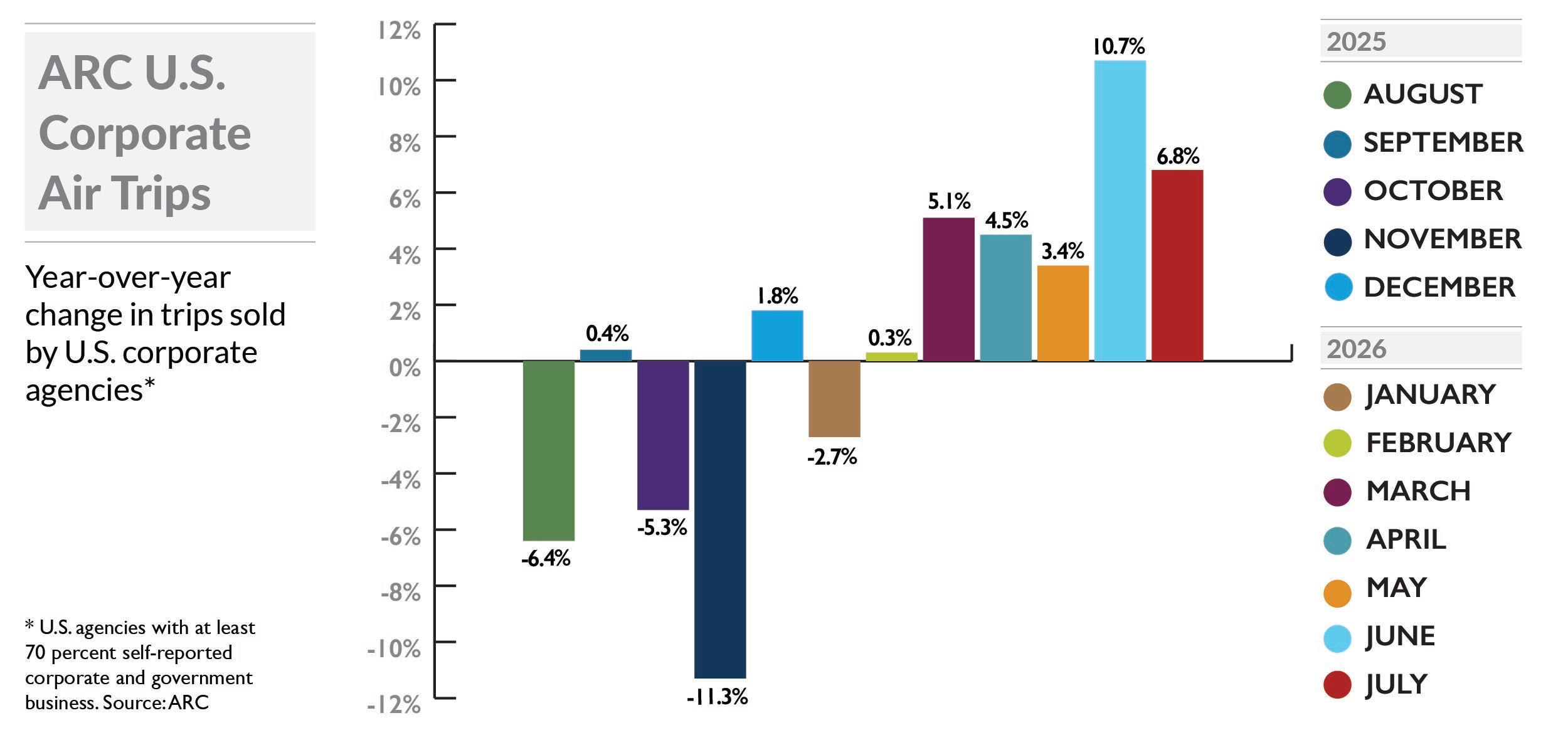
Total passenger trips sold were up 4 percent year over year in July, per ARC, with domestic trips up 3 percent and international trips up 5 percent.
"The increase in the number of domestic and international trips for both the month-over-month and year-over-year periods shows the air travel industry remains strong and steady," ARC chief commercial officer Steve Solomon said in a statement.
Sales by U.S agencies in July totaled $9.6 billion, up 18 percent year over year, the discrepancy illustrative of the rising cost of travel in 2026 compared with the prior year, due in part to rising airfares triggered by higher fuel prices following the outbreak of war in the Middle East.
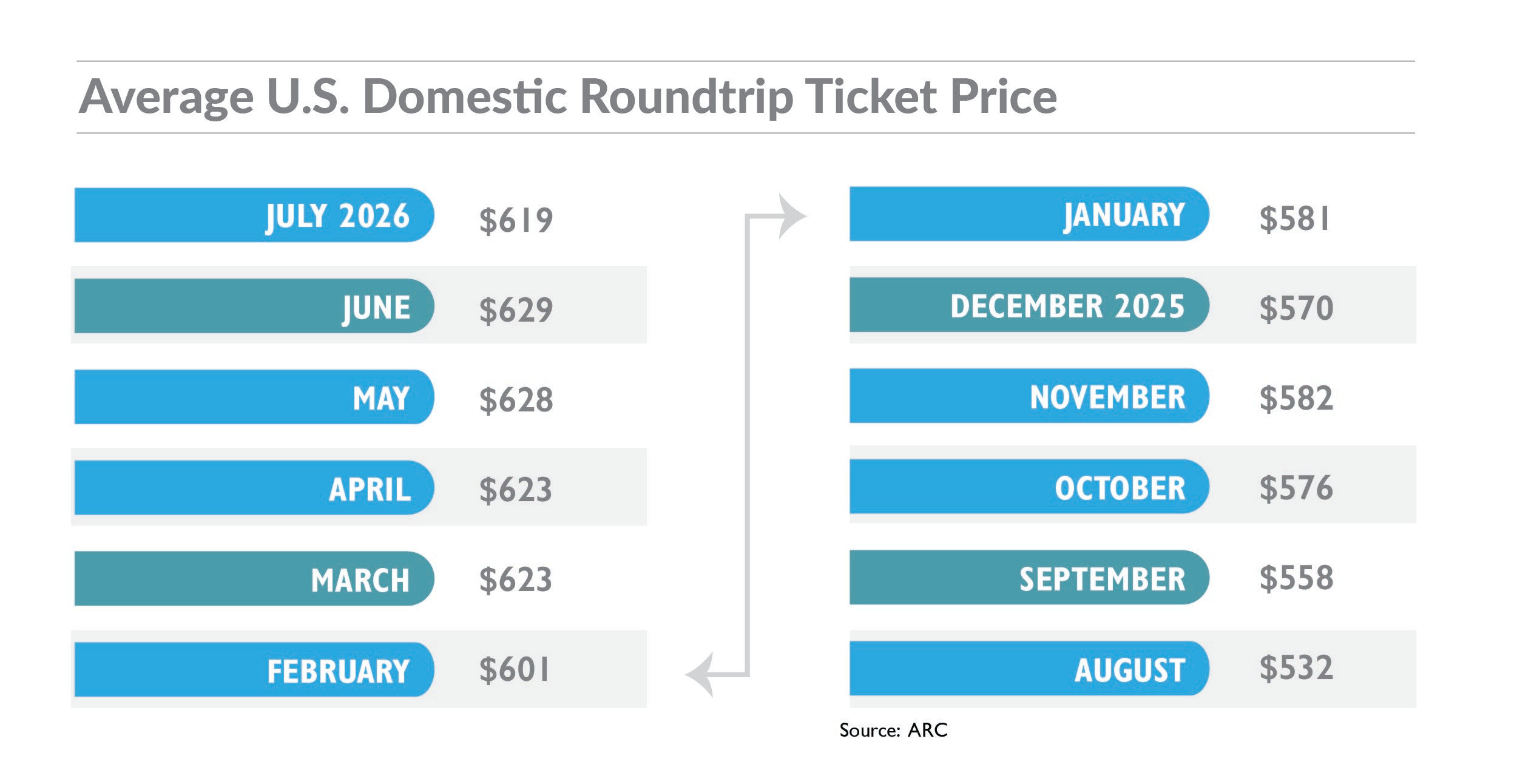
To wit, the average U.S. domestic roundtrip ticket price in July was $619, up from $528 in July 2025 although down a bit from $629 in June. The average price of a U.S. domestic economy-class and premium-class ticket was up 17 percent and 12 percent year over year, respectively, to $565 and $1,415.
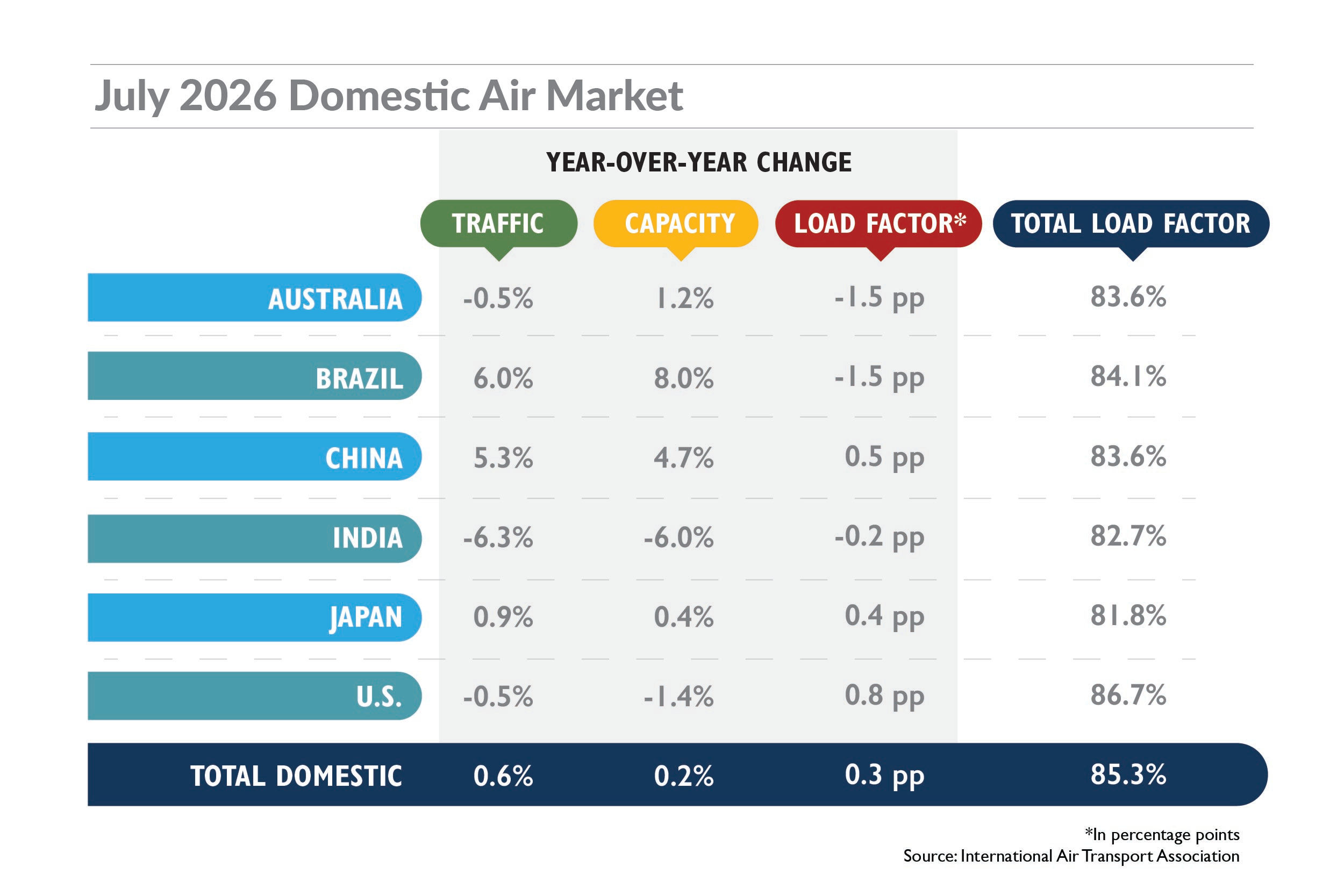
Still, demand indicators for flights actually flown in July were more restrained. U.S. domestic air demand in July, as measured in revenue passenger kilometers, dropped 0.5 percent year over year, according to the International Air Transport Association, marking the fourth straight month of decline. Capacity, as measured in available seat kilometers, dropped as well.
The U.S., though, was a bit anomalous, as overall July domestic demand increased 0.6 percent year over year, according to IATA. An increase in domestic demand in China may have been spurred by a reduction in fuel surcharges for domestic travel on July 5, according to IATA.
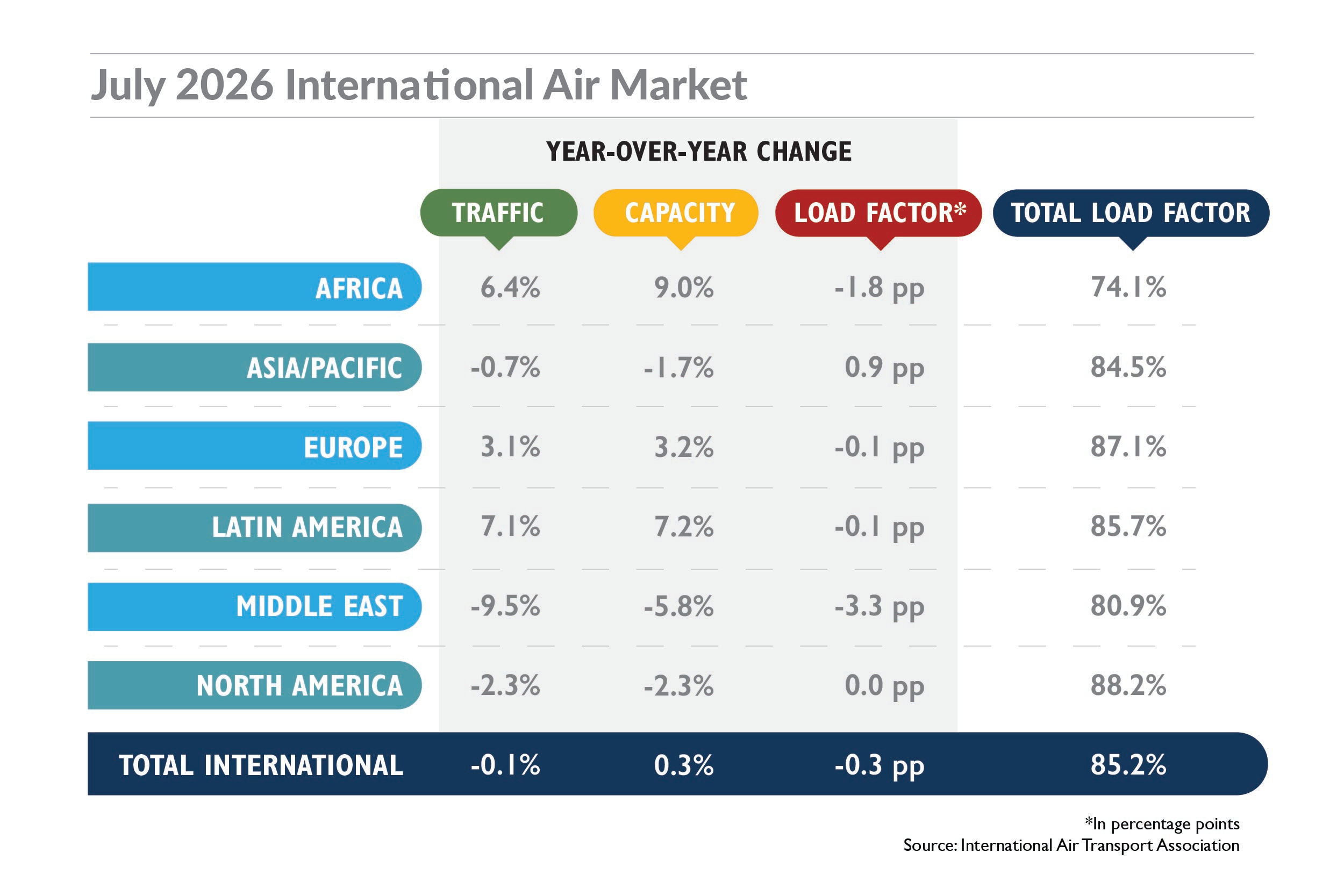
The increase in domestic traffic helped overall July traffic increase from year-prior levels for the first time since March. International demand in July declined 0.1 percent year over year, but grew 1.5 percent outside of the Middle East, according to IATA.
However, July international demand on North American carriers dropped 2.3 percent year over year, as did capacity. "Traffic on the transatlantic corridor, by far the largest international route area serving the Americas, dropped by 2.2 percent year over year in July after recording marginal growth in the previous two months," according to IATA. "Traffic from several key European source markets fell, including the United Kingdom, France and Spain."
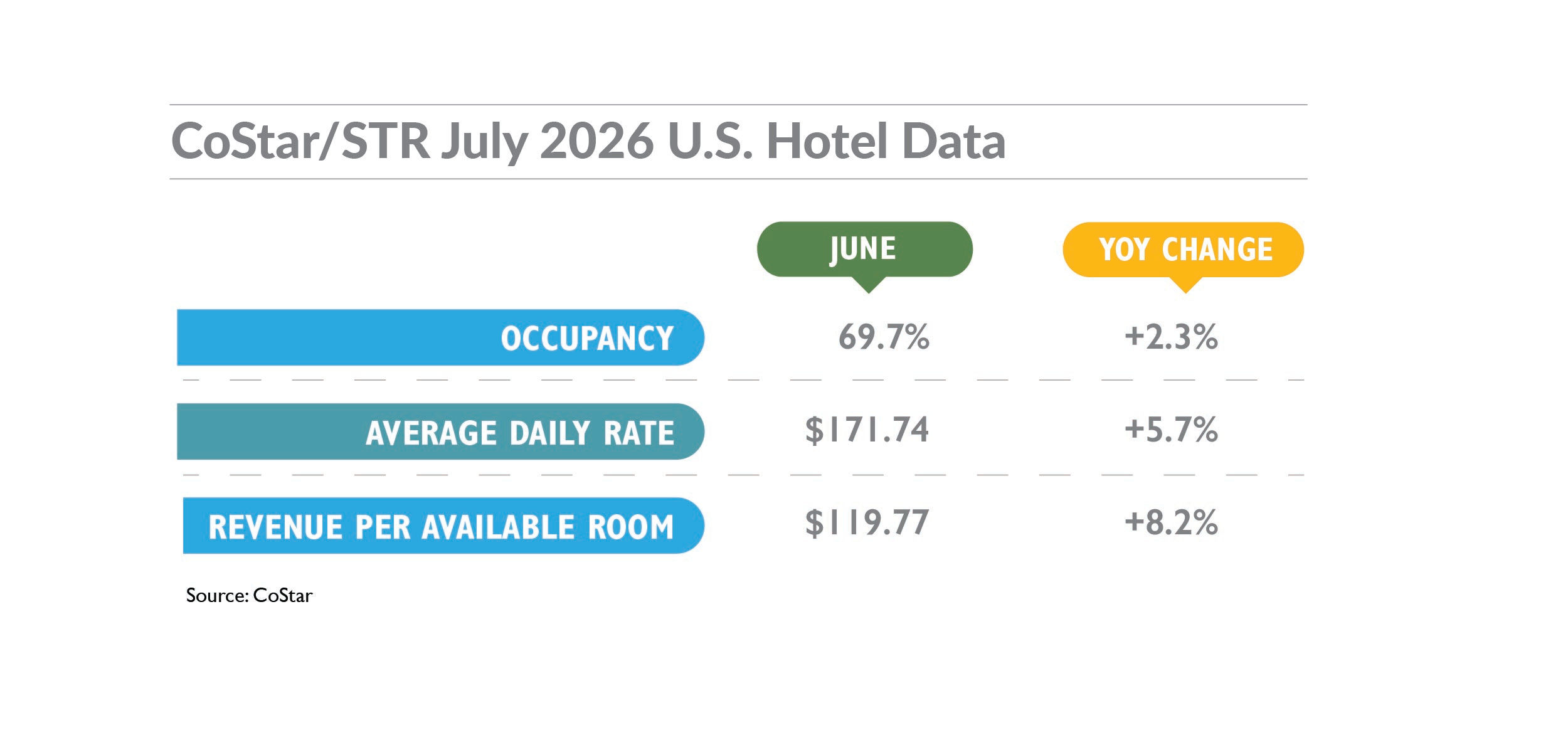
One month after their strongest year-over-year performance in more than three years, U.S. hotels had another formidable month, led in part by the World Cup, according to STR data from CoStar. As the tournament entered its knockout stage and the number of host sites dwindled, the business travelers who had avoided those locales started to return, according to STR.
STR pointed to Seattle as an example: In the weeks the city's Lumen Field served as a host site, "occupancy averaged 73.9 percent, which was 6.9 percentage points below the same period in 2025," according to analysis by STR's Cole Martin and Isaac Collazo. "In the first full week following the tournament, occupancy rebounded to 90.5 percent, up 3.3 percentage points year over year."
Additionally, according to STR, group demand in Seattle at luxury and upper upscale properties, typically favored by corporate groups, increased 41.5 percent, "suggesting that many groups delayed or redirected travel during the tournament rather than eliminating it altogether."