.png "The Signal December")
December capped a sluggish year for the U.S. hotel industry, which wrestled with factors like stagnant business transient travel demand, less government travel even outside of the autumn federal government shutdown and lower inbound international demand.
In fact, full-year 2025 U.S. hotel occupancy and revenue per available room each declined year over year for the first time since 2020, according to real estate data provider CoStar, the parent company of hotel analytics firm STR. Outside of the pandemic, occupancy also dropped year over year in 2019.
Business transient demand at U.S. hotels didn't pick up much in the fourth quarter, either, particularly in the midst of the shutdown. Most large U.S. hotel companies reported Q4 business transient RevPAR dropped a few percentage points year over year.
Hoteliers expressed some optimism for 2026, though, on the hope that macroeconomic turbulence would settle and corporate confidence would grow. CoStar and travel data company Tourism Economics projected 2026 U.S. hotel occupancy, average daily rate and RevPAR would hold relatively steady year over year.
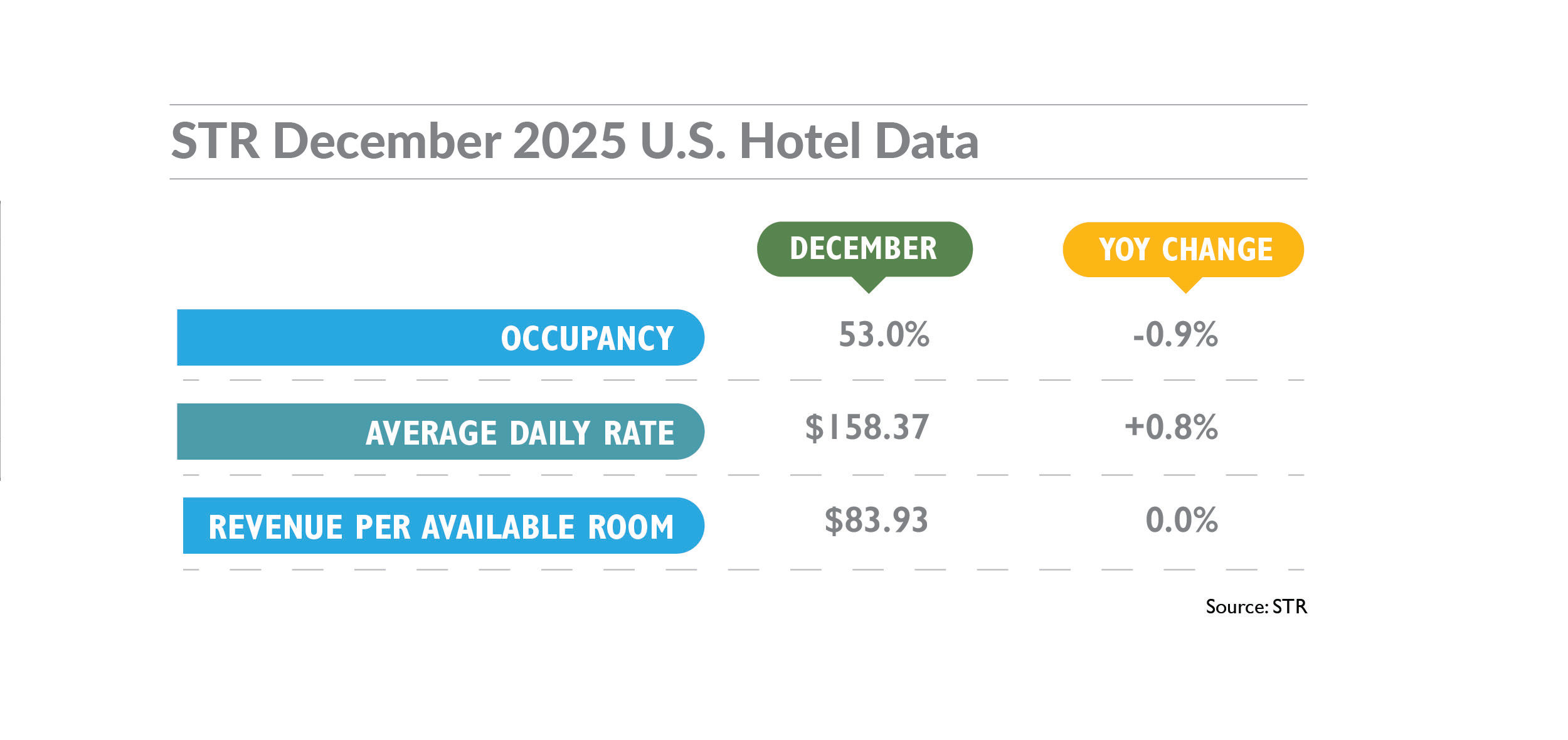
In December itself, occupancy again declined and was down even more in CoStar's top 25 U.S. markets, at 1.5 percent.
On the other hand, December airline flights sold by travel agencies with at least 70 percent self-reported corporate and government business and settled by Airlines Reporting Corp. increased 1.8 percent year over year, only the second month in 2025 in which that figure increased.
"After a strong December finish, the air travel industry has momentum heading into 2026, with global events and major celebrations expected to translate into air travel growth across both international and U.S. markets," ARC chief commercial officer Steve Solomon said in a statement, noting that U.S.-based travel agency air ticket sales settled by ARC in 2025 topped $100 billion for the first time.

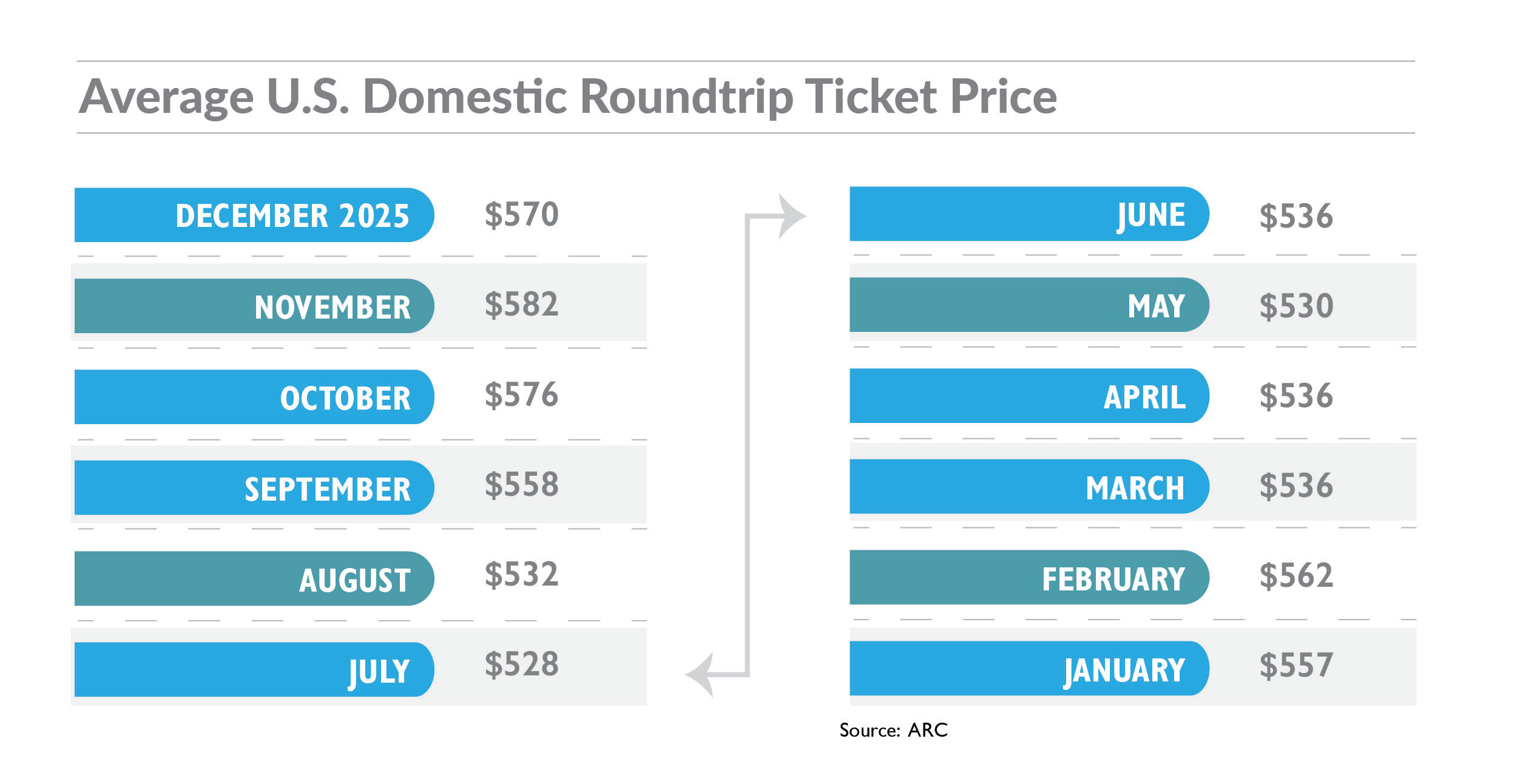
Meanwhile, the average December ticket price for a U.S. domestic round trip receded a bit from November's high, which was the highest figure in more than three years. The average price for a premium-class ticket was up 5 percent year over year to $1,370.
Full-year 2025 air traffic, as measured in revenue passenger kilometers, was up 5.3 percent compared with 2024, according to the International Air Transport Association, with international up increased 7.1 percent and domestic demand up 2.4 percent. Full-year 2025 capacity, as measured in available seat kilometers, increased 5.2 percent with international capacity up 6.8 percent and domestic capacity up 2.5 percent.
The 2025 demand growth for air travel "returns industry growth to align with historical growth patterns after the robust post-Covid rebound," IATA director general Willie Walsh said in a statement.
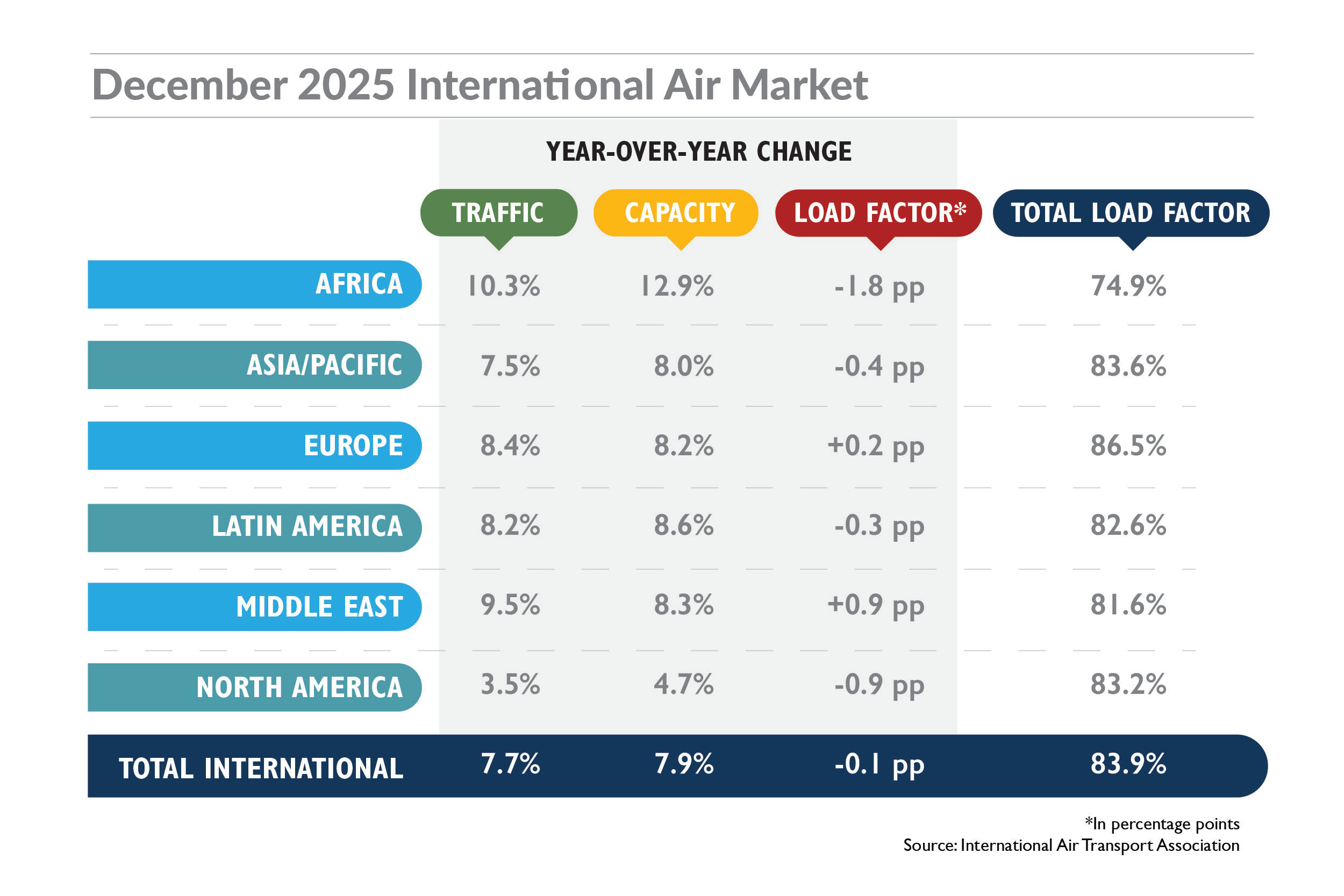
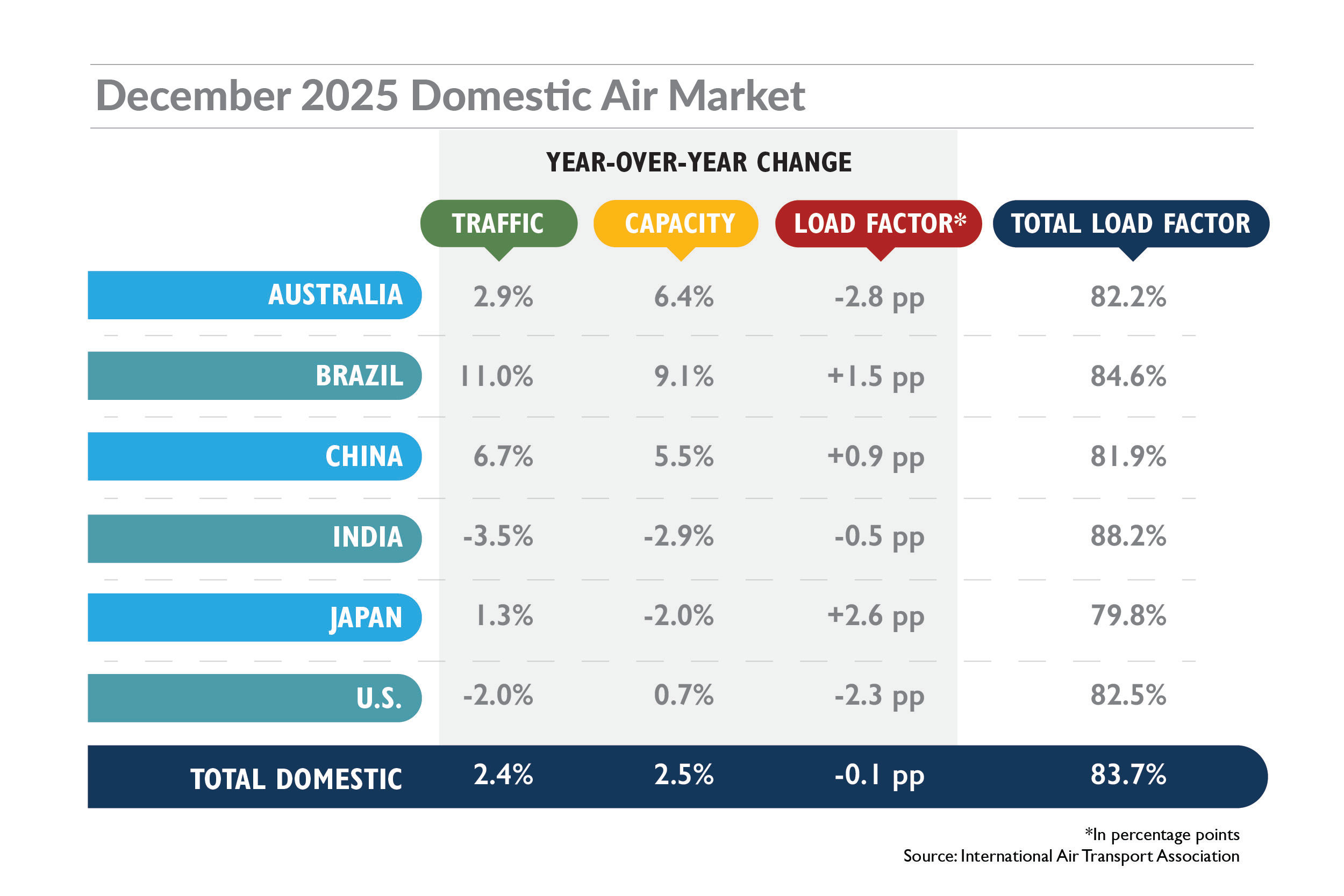
For December, overall traffic and capacity increased. Domestic traffic in the United States, however, dropped 2 percent.