Reader Response, July 17
Dear BTN,
This story presents a misguided and distorted look
at the airline customer experience. The survey weighs
claims processing and food, comfort and crew as equal to on-time performance
and completion factor, which wildly misunderstands the customer experience. Consider this choice and consider how a given traveler might
choose after flying each airline for a year.
Airline 1:
- On-time
performance: 70 percent (3 out of 10 flights are delayed more than 15
minutes)
- Completion
factor: 92 percent (8 percent of all flights are canceled)
- Time
to pay a claim for expenses incurred while disrupted: 5 days
- Food, comfort
and crew: 9 out of 10
Airline 2:
- On-time
performance: 84 percent
- Completion
factor: 99 percent
- Time
to pay a claim for expenses incurred while disrupted: 20 days
- Food, comfort
and crew: 6 out of 10
Which airline would people choose? With Airline 1, how many
unplanned nights were spent away from family, how many business meetings were
missed and how many trips in vain? It's my view that most people who fly would
say Airline 2 offers a vastly superior passenger experience. But, according to this survey, claims payment and food,
comfort and crew neutralize the profound impact of delays and
cancellations. This survey hides underperformance for underperforming
airlines, and it obscures the high performance of airlines who perform where it
matters: on-time performance and completion factor.
Sincerely,
Kevin Willoughby
As corporations pay more attention to the employee experience, their travel programs are considering not just dollars and cents but also the cost of negative travel experiences on employee productivity and mind-set. Airlines are trending upward on the American Customer Satisfaction Index, released April 30 and based on data and interviews with 30,000 customers. Airlines collectively reached 74 on the 100-point ACSI scale, but they still rank below hotels' 75. Thus airlines present a prime opportunity for corporate travel programs to mine for improved travel experiences.
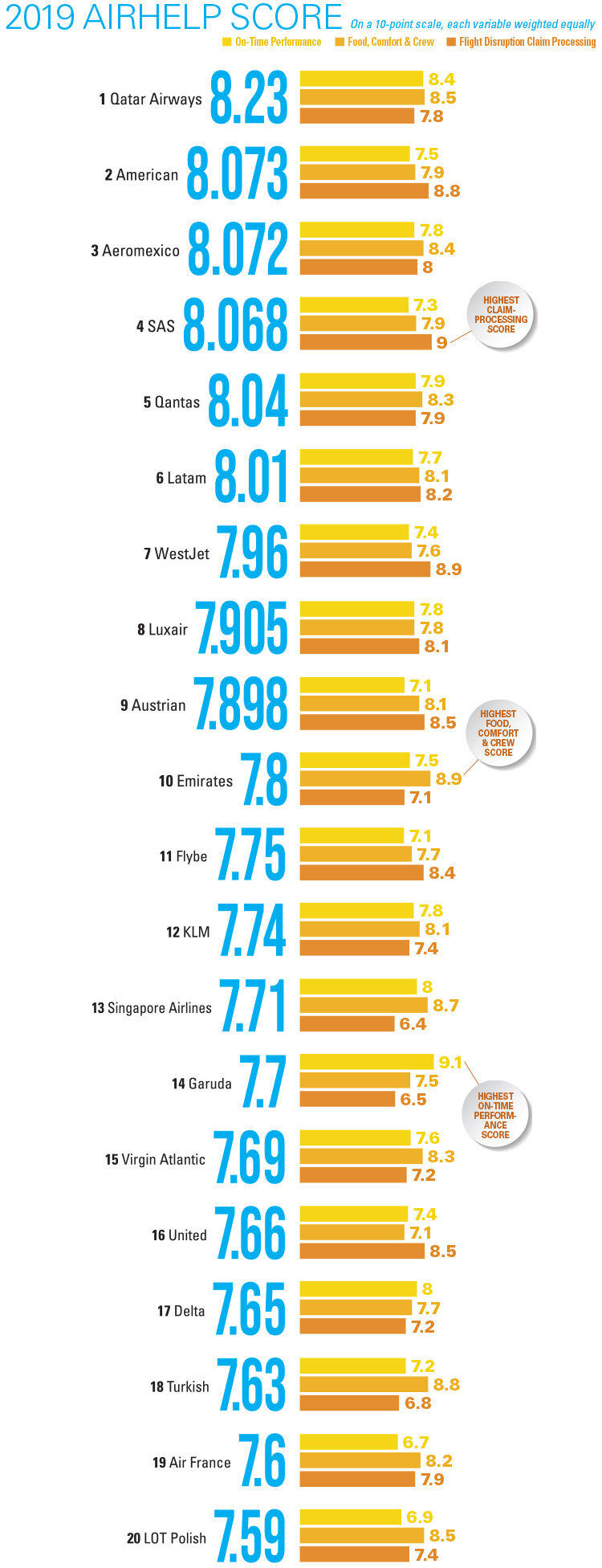
AirHelp aims to help. It has studied 72 well-known and -flown airlines to find those that provide the best passenger experience, based on on-time performance from multiple sources; surveys of 40,000 people in 40 countries about the airlines' food, comfort and crew; and its own data on percentage of flight disruption compensation claims ignored or wrongfully rejected, the time it took for each airline to acknowledge and approve a claim and time to pay out.
AirHelp weighted each of those variables equally, a methodological decision influenced by the flight disruption compensation company's own services, but it contends that how an airline treats passengers not just during regular operations but also when things go wrong says a lot about the airline's attitude toward its customers. "Airlines are dealing with a new type of traveler: educated, increasingly aware of her needs and rights, and able to choose between a broad range of air carriers," said AirHelp co-founder and CEO Henrik Zillmer. "It means that even those airlines which cannot keep their punctuality high have a chance to keep passengers connected to their brand by providing a positive after-flight service when their travel plans go wrong."
See the results below.