Competition among travel management companies, supplier programs
and even online travel agencies is fierce when it comes to small and midsize business
travel. By American Express Global Business Travel’s accounting in a March
investment report the unmanaged business travel segment is worth $834 billion
globally. Amex GBT defines SME business as anything less than $20 million in
annual air spend. That’s higher than BTN’s limit, which is less than $24
million in travel spend annually (about $14 million or less in annual air
spend), but the point is still taken.
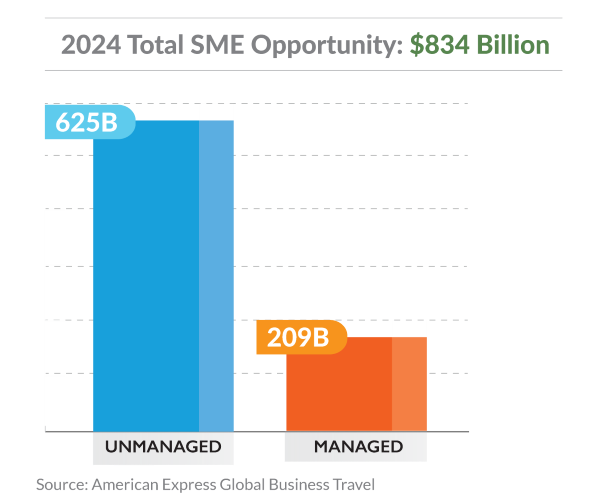
Only about a 200 billion of
that total SME spend falls under management, so suppliers view the segment as a
huge green field on which to grow their client base. But not only is the unmanaged
field wide open, the managed SME business travel segment is actively shopping
for new developments in the TMC space, according to BTN data.
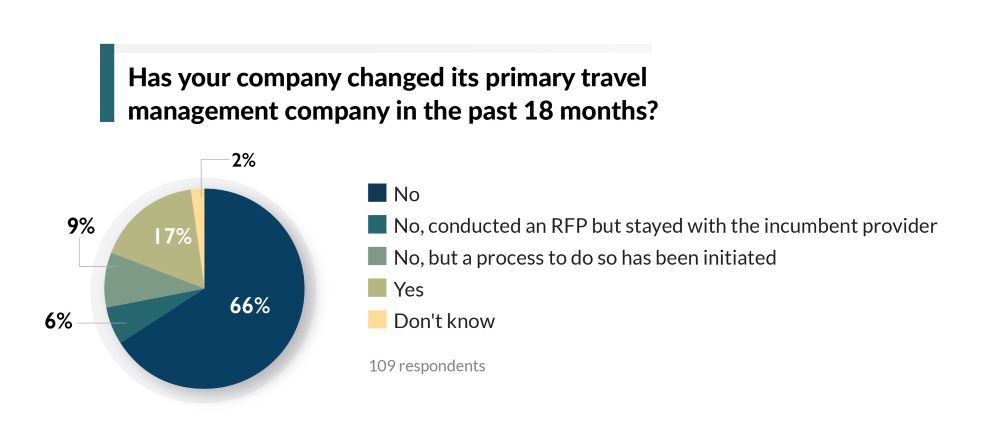
More than a quarter of SME buyers
surveyed by BTN Intelligence in February, had active bids in the market or had
changed their TMCs in the past 18 months. Another 6 percent had initiated a TMC
bid but stayed with their incumbent provider. The restlessness towards TMC
partners is even more palpable in SME companies that have annual spend above
$10 million. A full 40 percent of that survey respondent cohort either had
changed TMCs in the past 18 months or had an active bid in the market.
 Source: BTN Intelligence 2025 State of the Industry Survey, Jan. 15-Feb. 15, SME-only results
TMC service and account management
was among SME buyer’s biggest pain points underscored by open-response comments
in BTN’s survey. While such issues are sometimes difficult to tease out a root
cause—whether technological or service driven—travel buyers surveyed by BTN
noted challenges like “getting actual service from our TMC. We have to ‘open a
ticket’ just to ask questions.” Others cited “lack of innovation” in the TMC
tech stack and trouble activating New Distribution Capability content within
their programs: “accessing NDC fares needs improvement, even though we’ve
implemented it.”
Changing a TMC partner is a big
endeavor. In the SME market, in particular, it’s not just switching out a
service provider. In many cases it’s also switching out a technology stack. But
change is in the air: “We are launching a new TMC after two decades of being
with the same provider,” wrote one buyer.
 Source: BTN Intelligence 2025 State of the Industry Survey, Jan. 15-Feb. 15, SME-only results
Fewer SME travel managers
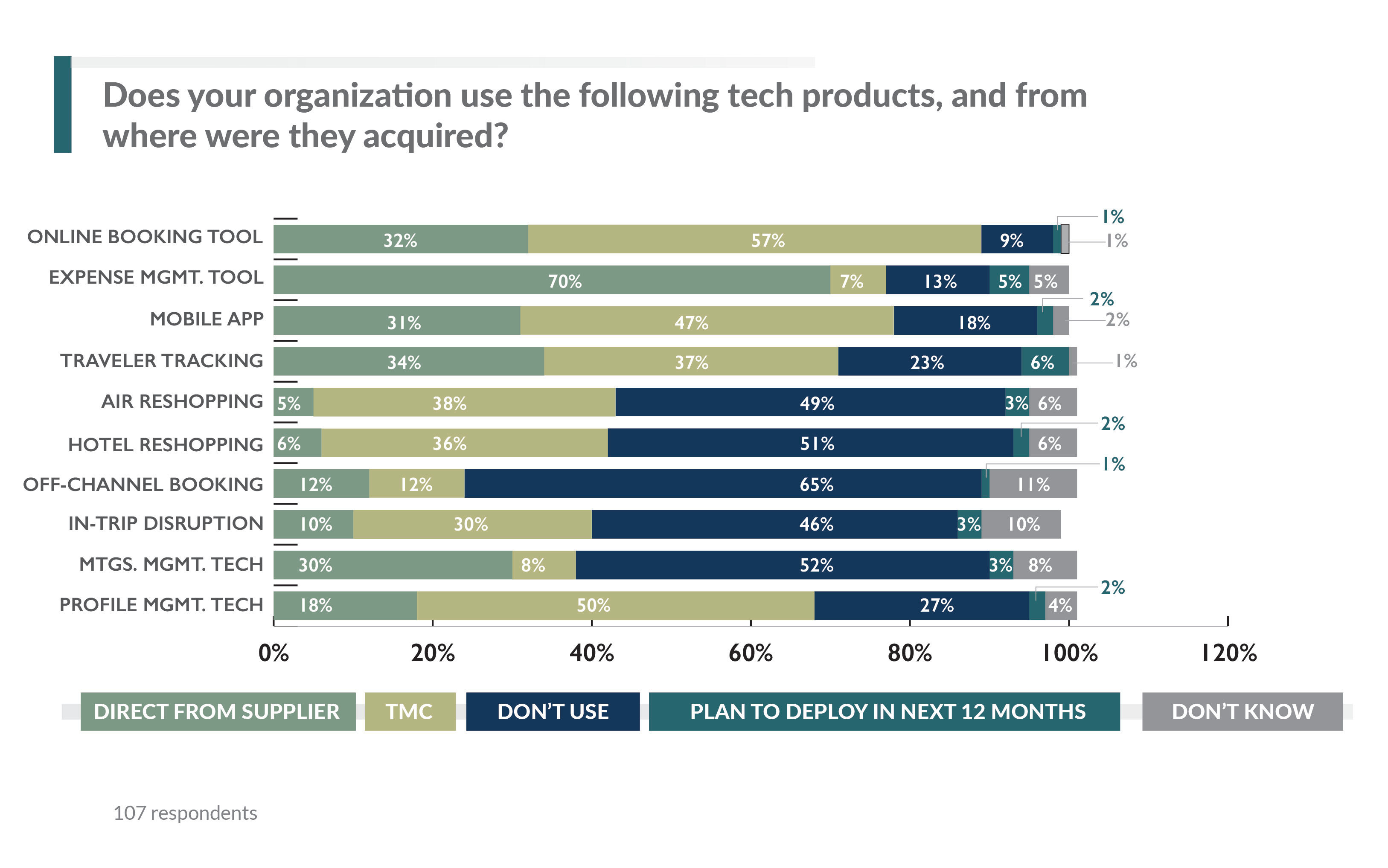
have the bandwidth to source much of their technology stack directly with 3rd
party providers. Fifty-seven percent of SME travel buyers source their online
booking tool through their TMC. That’s a larger number than the industry as a
whole, though not hugely so. Traveler tracking and duty of care technology are
much more often sourced through TMCs by SMEs than we see by their large-market
counterparts, and while SMEs are less likely to source such niche tech like air
and hotel reshopping tools and off-channel data capture via the TMC when
compared to the market overall, the shift isn’t to source those directly from a
supplier. Rather it is towards not using such technologies at all—likely because
they are not included in the package of technology and services provided to the
SME segment by their TMC partner. That can be a problem.
The one area where sourcing
third party tech is truly the norm is with expense systems, and it’s a process often
led by finance, not travel. Seventy percent of SMEs go direct to their expense
reporting provider for that relationship. Though more companies like Navan, Mesh,
Ramp, Brex and Emburse have come into the space with travel and expense
solutions.
Changing a TMC Isn’t Always a
Slam Dunk
The good news for SMEs, according
to BTN data, is that TMCs are hungry for their business. Survey respondents indicated
the TMC market was the one category where SME buyers seemed to be gaining power
in negotiations. Forty percent of SME respondents to BTN’s survey said they
felt they wielded more leverage in their most recent TMC negotiation. Only 14
percent felt they had lost leverage.
There’s some truth to that
confirmed AmTrav CEO Jeff Klee, who pointed first to “the giant blue ocean” of unmanaged
travel and the heated competition to reach that market. Secondarily, he said, “as
corporate negotiated rates have become a bigger thing—and it’s pretty much
universal that there aren't any supplier incentives or commissions on most
corporate negotiated rates—the larger the client, the lower the margins. So the
idea of SME business where maybe they don’t have their own negotiated rates and
can use the agency negotiated rates … is commercially much better for the
agency.”
Goldspring Consulting partner Neil
Hammond threw some water on the “more power in negotiations” concept, however,
especially for midmarket programs that need multinational or global solutions.
“We’re seeing TMCs really picking
and choosing between the accounts that are going to be more profitable for them—more
profitable, more convenient and simpler to configure.” So if midmarket buyers
feel stymied, and if they continue to get no bids from potential partners, they
can rest assured they aren’t the only ones, he said. “We are seeing the no bids
out there.”
Hammond added that many such programs
land with a mega TMC because they need a global solution but often feel lost because
the agency “is busy looking at bigger things.”
Other buyers have told BTN that a
number of TMCs have gotten very aggressive in offering low fees to attract SME
business. As high travel costs continue to bear down on programs, buyers are
feeling pressure to move toward these solutions and may feel like they’ve
achieved a win. Some such buyers have regretted their decisions in the face of
poorly trained or ill equipped agents and account management. A number of
buyers have disclosed to BTN that they regretted the choices even before
implementation was complete.
"Ultimately, the buyers will
give up discounts in other ways,” one buyer advised.
The Argument for TMC-Driven
Tech Integrations
While there’s something of a
trend across larger companies to move toward independent technology contracts
to stay agile and “control their own destiny,” one experienced SME travel buyer,
who has worked on both the buyer and TMC sides, told BTN that in her view SMEs
are taking the smarter route by keeping the two sides of that coin tightly
connected in the sourcing process.
She is currently out to bid
for a TMC and she’s telling candidates to come to the table with their best integrated
booking tool. Because, she says, when the service and tech are sourced
separately there’s too much gray area for fingerpointing when the technology or
service levels fail.
“I cannot stand the situation
I have with Concur and my TMC right now, or with Deem or any tool that isn’t
sourced as part of the TMC process,” she said. “I don’t think it’s productive
to take in your preferred booking tool and ask your TMC to support it. They may
say ‘yes’ but it may not be a good integration. You have to go to the TMC and
say, ‘what’s your most integrated tool; bring me a full solution.’ Because then
when something fails—and it inevitably will because things happen—but when it
does, they can’t point fingers and say, “well that’s your tool, so you’ll need
to take care of it separately.”
That said, the same buyer
also wanted the option for API integrations because her company has built proprietary
technology that she will need to integrate. “Asking for a full tech and service
solution and wanting to integrate pieces of technology that you choose shouldn’t
have to be mutually exclusive,” she said. “If you are the kind of buyer that
wants to bring technology to the table (see Part 5. Tech Innovation), ensuring
your TMC is open to that and not running an entirely closed shop is really
important. You also need to be prepared to invest in what you want.”
Three Case Studies
Service for Sage Dining
Karyn Harris, global marketing director for Sage
Dining, took on travel management a year ago. The company went with World
Travel Inc. on the strength of its tight-knit culture that matched family-owned
Sage. World Travel sent its executives in person to the Sage headquarters from the
get-go, rather than proposing virtual meetings. That investment of time and
resources, in addition to the company’s reputation and clear communications, demonstrated
that partnership was a core value.
Harris
sourced her Concur booking tool independently from the TMC because “she
wanted to be able to change TMCs more easily if the time should ever come.” Plus,
Sage had a prior relationship with Concur for expense and it was a
natural development to extend that into travel. Nonetheless,
Harris relied heavily on her partnership with World Travel Inc. to configure
the tool.
“World Travel helped guide us
through the technology configuration to facilitate the program in areas that we
hadn’t really considered,” she said. In addition to setting up traveler profiles, World Travel helped Sage benchmark hotel rates for its key travel markets and clarify air policies so they could be configured into the Concur tool. But Harris was wary of going too far with restrictions and cost control right out of the gate.
"The last thing we wanted to do was to create friction; these are well-traveled individuals used to booking on supplier sites and apps. The easier we could make the transition, the better."
Harris has learned a lot about travel with the help of her agency. She has become wise to direct-booking deals, New Distribution Capability and
the many "exceptions" that fragment content. She has been upfront with travelers in acknowledging content and experience
differences in the TMC and OBT channel compared to direct booking.
"When travelers found discrepancies, I encouraged them to bring them to me and we would go to the TMC to figure out why. Usually it was a tweak to the booking tool, but sometimes it was fares and rates that suppliers just didn't offer except on their own sites," she said. That was frustrating, but Harris said she sold the tools to her 120-person travel population by stressing the importance of one-channel, one-itinerary booking. It took about three months to gain good compliance and smooth out some residual resistance.
"Now I have the data and I can begin to look at year-over-year increases or savings," she said, noting that her first instincts are always to be cost conscious, but she also knows that taking it too far will alienate employees. She has noticed through the data that travelers have migrated to a certain hotel company, and it's not one she would have expected. "Based on the data, though, I think it might be time for us to try to negotiate a partnership with that brand."
Tech-Forward Trip Up for Discord
In January 2024, Discord travel manager Sean Parham struck a deal with tech-forwarded TMC Spotnana. Backed by Concur co-founder Steve Singh and part of the Madrona Ventures portfolio, Parham knew he was linking up with the cutting edge tech builders in the industry.
It was a good fit for the online community facilitation platform provider. "Spotnana is an amazing tool. The technology is definitely there, it is first-class stuff. But when it came to the servicing of the account and agent support, the relationship just fell short," said Parham.
"I think like some other providers out there, they are leaning so heavily into the technology, which is great, our industry desperately needs that. But, you know, regardless of artificial intelligence, regardless of everything else, travel is still a personal commodity, and there's still that touch that needs to be that human factor."
While Spotnana has operated as a stand-alone TMC, the company also provides its open architecture tech platform to other TMCs. It has agreements currently with JTB Travel, Goodwings and others playing in the midmarket space. That includes Direct Travel, which Singh and an investor group bought last year and now are equipping the venerated TMC with a new tech platform.
Discord is headed to Solutions Travel, Spotnana's first TMC partner headed by former Orbitz for Business leader Mark Walton. Solutions wraps traditional TMC know-how around the tech-forward platform.
"I may have pulled the trigger too soon on the Spotnana choice, but you have to remember this was 2023 and American had pulled its content out of EDIFACT channels; we needed an online booking solution that could flex against those dynamics, and we got that. Now, we are looking at the best of two worlds as we start to implement with Solutions."
Correcting a Massive Conflict of Interest
"I had a couple of small airline agreements in place; my policy was set; I had put together the elements of a travel program that I knew would work. And they do work, you have to trust the process sometimes. I was ready to operationalize my program."
The travel buyer and company for this SME case study needs to remain anonymous due to sensitive information.
"In hindsight, I might have done a Corporate Travel Department [so I could create my own ecosystem], but I wasn't sure my company had the appetite to do that. And I didn't think I had enough of my own corporate reputation for people to be able to trust me to do that. I had only been there six months."
As the buyer initiated a data exercise to go out for a TMC bid, she was still running transactions through the current program. "I had a gut feeling, like something was very wrong." Her airline contracts were in place, but the data indicated something with the program was not working." The spend was too high. The buyer wanted to be more strategic and lean more into the data; the company made the transition to a new TMC last year as one piece of that puzzle. After looking at a year of data, with trip volume at very nearly the same level as the previous year, the company saved $8 million in airfares.
"I question the number to this day, but I've checked it; I've had third parties check it. Our former TMC was completely ripping us off because they knew the company wasn't minding the store, we weren't looking at the data. I almost fell out of my chair."
Fragmented content, New Distribution Capability and variable fees as well as incentives driving bookings per distribution channel and per point of sale are about to hit all travel managers full force, including SMEs. As a result, deep data reviews and clear analysis strategies will be more important than ever. Stories like last one above cast a pall on TMCs, the majority of which deal fairly with their customers. With new complexities shaping up, however, fee transparency and revenue disclosure are vectors of friction for TMC relationships moving forward.