SME Travel Managers Talk Shop
- Setting strategic
meetings management program goals
- Meetings management
maturity
-
Service configurations
that work for SMEs
Strategic meetings
management isn’t just for large enterprises. Small and midsize enterprises can
benefit from the rigor of formal SMM, though SMEs often have little to no
budget to get started. BTN’s JoAnn DeLuna spoke with Dart travel services
manager Cheryl Benjamin, GameStop director of meetings Judy Payne and
Informatica global travel manager Rick Wakida to hear about their motivations
and approach to establishing strategic meetings management programs.
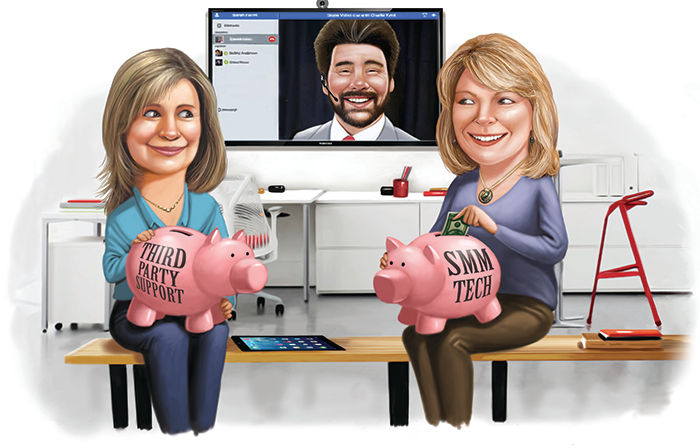 Left to right: Judy Payne, Rick Wakida & Cheryl Benjamin Credit: Scott Pollack
BTN: How did you determine that your SMEs could
benefit from an SMMP?
Rick Wakida:
The procurement organization wanted to gain more visibility and control over
meetings spend through contract review and [purchase order] approvals. They
hired Marjan Ghaffari [as senior procurement analyst for meetings, events and
travel]. She went through the meetings sourcing processes and determined that
there was money to be saved and that it would be beneficial to consolidate meetings
and put in a formal SMMP.
Cheryl Benjamin: We asked the small group of our sales team if they’d be interested in
the service, and the floodgates opened. There’s a big interest in [knowing] the
liability of who’s signing contracts, what they’re agreeing to, and making sure
the company’s best interests are the foremost considerations. I’m not saying
those who were sourcing meetings weren’t doing that, but SMMP is just taking a
different look and understanding how they’re being sourced. Then, the cost savings,
as well.
Judy Payne: I
saw a lot of overlapping meetings that were in the same cities or they had the
same attendees going a day or two apart to the same location. If we
consolidated our meetings and piggybacked off the location and the contract, I
was able to prove that we would have saved a lot each year, so much that I was
able to hire another head count to manage the program for me.
BTN: As SMEs, what do you want to accomplish with
your SMMPs?
Wakida: The
top three things are visibility into the meetings and the data, savings and the
cost avoidance. Risk management is another goal: the contracting process and
knowing where people are. Where it differs [among travel programs] is in the
degree of emphasis or maybe in the ranking of importance, which varies by
company culture, industry, size, etc.
Benjamin:
We’re all looking for the same thing. Our top three are cost savings, making
sure that the contracts are reviewed by the legal team so we know what [we’re]
committing to and then the risk management.
Payne: Risk
management, cost savings and taking that responsibility of meeting planning and
those contract negotiations away from our field attendees so they can
concentrate more on our company sales and goals.
BTN: How do you place value on those goals?
Wakida:
Marjan came up with an estimate of 15 to 25 percent in potential savings from
consolidating meetings on a global basis. We’ve added other preferred dining
and preferred catering programs that could add a couple percentage [points in
savings]. The visibility and the data goals are harder to put a number on. It’s
more intangible benefits. The risk management process—you’re avoiding
potentially millions of dollars in liabilities and losses by having a program
in place.
Benjamin:
We’re in the beginning stages, but those intangibles are the things that we
know we’re going to realize right from the start and we know the cost savings
will come. We just haven’t put a real number against that yet.
Payne: Our
first two to three years, we saw an annual savings of between $50,000 to
$100,000 dollars off our program. That was small meetings alone. We were able
to get over 90 percent of the contracts to go through my team on the first two
years. Now we’re seeing 100 percent pickup on all meetings and events.
BTN: Is pursuing SMM harder or easier for an SME?
Wakida: From
a resource perspective, it’s tougher for the smaller companies that want to do
this. However, with the cost-neutral mode [in which commissions from meetings
venues are how Informatica pays American Express Meetings & Events for
sourcing those venues], there’s no out of pocket. It’s much easier to get
senior management buy-in and support going forward with the program, rather
than saying we need X amount in the budget to launch an SMMP.
Benjamin: I
agree. It’s the resources that have been the biggest issue: finding the time to
devote to this and doing the research internally. Getting the buy-in is not an
issue.
Payne: It’s
always just the resources. Buy-in is always easy. Of course, they want to streamline
and see the efficiency and the consistencies with the contract. Launching the
program is the hardest. Once it gets up and running, it goes a lot smoother
than the launch.
BTN: What were your first steps in pursuing an
SMMP?
Wakida: The
initiative was to hire Marjan to look into this and start collecting data,
sourcing meetings, as well as review contracts and approve POs. It was both
[grass roots and top-down support]. It started with procurement, then
grassroots with the individual stakeholders and then came up to get senior
management support.
Benjamin: I
took a step back and looked at the process of planning a meeting to identify
the time or cost savings of having a formal program, defining what we consider
a meeting to be, the number of attendees, a dollar threshold and is there a
hotel contract. We’re leaning towards [having] a list of [items] that if you
answer yes to any of them, then it’s considered a meeting that will likely come
through us. I saw it as an opportunity because it wasn’t even on anyone’s
radar. As we started talking about this, the support was automatically there
and is listed as one of our goals for the year.
Payne: The
primary starting point was my goal: What was I trying to accomplish with the
SMM program? Then I pulled together a task force of different participants who
usually book the most meetings to help develop all of our meeting request
forms. We really made sure what we wanted was successful from the get-go. We
also developed our own intranet site as a one-stop shop for all meetings to
pull the forms and easily submit it to a group e-mail address where we could
all tackle the requests.
BTN: What is the service configuration for your
program?
Wakida: It’s
a hybrid model. We use a third-party [company] and their technology for
sourcing, negotiation services, registration, approval flow and reporting. For
the noncommissionable venues, sponsorships and trade show registrations, we
work on those in-house. The hybrid/cost-neutral model facilitates scalability.
At some point, bandwidth becomes an issue. We needed a scalable solution, and
that’s provided by having a third-party involved.
Benjamin:
Ours will likely be a hybrid. We have one meeting a year that is larger and is
managed by the division that puts it on by working with a third party. It works
very well, and I would never consider disrupting that. A lot of [meetings] we
will manage in-house, but there will certainly be others that will take on a
third party.
Payne: My
team [of four] manages 100 percent in-house—all site selections, sourcing,
contract negotiations and the planning—because we fight more than anybody else
for our best interests and for what we want in our contracts.
BTN: What kind of data are you looking to
collect, and what do you want to do with it?
Wakida: We’re
looking to collect [the cities where meetings are being held], venues, types of
meetings and events, sponsorships and trade show registrations for sourcing and
negotiation to leverage our volumes and also to get a good idea of [the cities]
where we’re going. We also want the [names of] senior executives attending any
of these events for risk management purposes.
Benjamin: We
also want to track the venue that was used, the size of the meeting and whether
it was a good fit for us, so we can put some preferred [suppliers] out there so
when someone starts to plan a meeting, there’s going to be a resource of
properties that we have used and have had a successful event with a good
attendee experience and is within budget.
Payne: We’re
currently analyzing the data as it comes in every year and trying to decide
what really needs to be a meeting and what can just be a Web conversation.
BTN: What’s your next SMM step?
Wakida:
Rolling the program out on a global basis, region by region, in the later part
of the year. We also will continue to integrate it with the individual travel
and corporate card programs, as well as the dining and catering programs.
Benjamin:
Developing and getting the guidelines approved that we would like to see around
the program—things like who has the authority to initiate our contact, what
would our meeting services group provide versus what we expect businesses to
provide—and defining what the meeting is. I need everything ready for executive
approval by the end of October.
Payne: We’re fine-tuning as we get feedback from our field
executives.