Meetings Mavens Talk Shop
- Mobile app relevance
to SMMP
- Managing app
resources
- Controlling the app
experience
-
Next steps with
meetings data
Spend is one thing, but content security, brand experience
and attendee engagement also fall under the rubric of strategic meetings
management. Mobile meetings apps touch all these areas and, as a result, should be part of a holistic view of a strategic
meetings management program. Recent and promised advancements in mobile data
collection, integration and reporting may bring this relevance into sharper
focus as they open a channel to a meeting’s return on investment. BTN
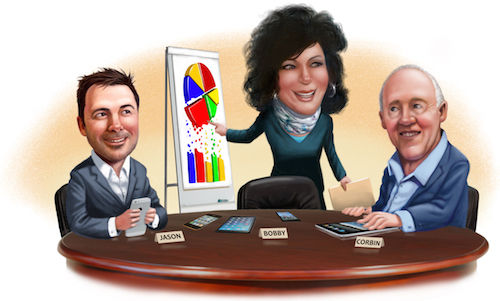
editor-in-chief Elizabeth West spoke with meetings technology consultant Corbin
Ball, Siemens’ director of event management services Bobby Badalamenti and
Schneider Electric’s event solutions and digital operations manager Jason
Askew.
BTN: What’s the penetration of mobile apps for
meetings and events?
Ball: I’ve seen estimates that 85 percent of meeting
planners are currently using mobile meetings apps or plan to use them in the
near future. If you look at it across the broad swath of events, it’s going to
be a little bit lower than that, but I’d say it’s above 50 percent and that
number is rising rapidly.
BTN: I can see that level of penetration for
consumer-facing events, but do those numbers apply for internal corporate
meetings?
Ball: The larger the event, the more likely it has a
mobile event app. Small corporate events are not as likely to have an app, but
the availability of the multi-event app over the past two years is changing
that. Corporations are finding that it’s cost effective [to] build out an app
for their company, and then they add on dozens or hundreds of small events. In
that case, it’s simple, easy to set up and it provides a means of
communication.
BTN: Bobby, that’s what you did at Siemens. Why
was it important to approach this from a strategic-platform perspective, rather
than a one-off approach for your company?
Badalamenti: We have global approval for one app,
rebranded it and ensured that noncompliant functionality is turned off. We have
very, very clear directions from Siemens’ security departments to limit our
exposure. We also comply with Siemens “Brandville.” The visuals, everything has
to be compliant with our brand guidelines.
BTN: Is this the same at Schneider Electric? Have
security and branding requirements prompted adoption of an approved app?
Askew: Security is always a concern in any
corporation, as is branding. We want to make sure [meeting owners] stay within
their brand guidelines, but it’s not as tight as Bobby describes at Siemens. We
have yet to see adoption at our Tier One events, so until there is wide
exposure of the brand via the mobile app, we may not see it quite as
standardized. Overall, we’re still in the early phases of adoption, and what
I’ve found is that a lot of the businesses had used multiple vendors.
Everything from SpotMe, QuickMobile, DoubleDutch and even internally we
considered building our own meetings app.
BTN: Interesting—I want to come back to that
thought in a minute. Bobby, you mentioned that certain functionalities are
disabled on Siemens’ approved app. Tell us what features the company allows and
what is off limits.
Badalamenti: Siemens doesn’t currently allow any type
of sharing with Facebook, Twitter or social media and does not allow event-only
sharing features. If it’s a social media-type feature, it is disabled. You have
to remember that this is a globally approved app, so we comply with strict
standards in Germany, where we’ve had adoption at the largest scale and for
some quite large meetings.
Critical for us right now [are] polling, surveys and
gamification features. We use the push notification and alert, which is great
for communicating, and the attendee-to-attendee meeting schedule with keyword
search. Clearly the basic features for the agenda: posting speakers, bios,
content schedules, sessions, etc. [Because we use] a single-source technology
platform, all of that information transferred [to the app] as you build the
registration website, so that helps reduce resources that might otherwise have
to populate content in the app.
BTN: Does Schneider limit app functionality?
Askew: We’re executing specifically in North America,
so we’re not locking down as much. I hand over the tools to our business
verticals and leave it up to them to decide what they’re going to turn on. We
have a cross section of attendees, from IT professionals who are savvy with
apps to electrical contractors who are still getting familiar with smartphones.
So the businesses have to decide what is right for their audiences.
For some of our senior management, being able to interact
with one another, to message directly or schedule meetings, even the polling
aspect has been well-received. Just having the ability to post photos and share
viewpoints helps people adopt these tools. That’s the importance of keeping it
open with understanding that there may eventually be things that aren’t
allowed.
BTN: Let’s go back to the idea of resources. … It
takes some time and know-how to tailor an app to an audience. How configurable
are the tools?
Badalamenti: In the U.S., Siemens doesn’t have
dedicated resources that create or input content into mobile apps, although
there are colleagues who “do it
themselves.” We offer mobile apps as a hybrid [of] DIY [and] outsource. If it’s
not an easy self-service tool, outsourcing the content creation attaches
expense [to the app] over the purchase. At that point, you have to see if you
have budget for [outsourcing] and if the app still offers value.
Askew: The ability to manipulate the back-end content
management system in the app is important. The easier it is to manipulate, the
better adoption I have seen with [meeting owners]. If apps are heavy with
setup, they just don’t have the time to do that. That’s one reason we
considered building our own, but [off-the-shelf] apps have gotten more
user-friendly and smarter in how they acquire information.
BTN: What about maturity in knowing when to
deploy app features strategically to enhance the event versus distracting from
the event, especially for different audiences? It seems like an emerging skill
set.
Badalamenti: We are developing digital etiquette
guidelines for meetings and events. We’ll be doing lunch and learns and posting
information on our meeting and event portal to educate [meeting owners]. The
app itself [enables] meeting owners to give attendees all the information they
need in advance of the meeting. Then,
there’s an expectation set that during the meeting there’s less need to engage
with the app. Of course, we want [attendees] to use the app to set meetings and
network, but that’s why we need the guidelines about how to manage it.
Askew: It’s an interesting dilemma. It also has to be
controlled at a software level. It’s hard to get people to stop engaging with
their phones, especially when you are offering them an app. Plus, you add
gamification, where people compete to have the most points for different
interactions, so it could be confusing. The vendors could allow the customer to
enable and disable functionalities on the fly to help manage that. But you
really do have to understand your audience. Millennials are really used to
second-screen interaction, and they thrive on the social-sharing aspect. It’s
not a problem for them.
Ball: If you find attendees interacting more with the
app than with other attendees, perhaps there are some issues with the app
itself. But also, you have to have goals associated with whatever you set up on
these apps. For example, at South by Southwest, they use decent technology
where attendees put their specific interest areas into the app, and they are
notified if people with a similar set of interest areas come within range. To
have an app assist you in that process is extremely valuable. For gamification,
at the Consumer Electronics Show, you got a badge every time you went into a
different exhibit hall and a prize when you got through all of them. The goal
was to have people explore more exhibit halls than in the past. So part of this
is the planning, part of it is how the apps are maturing and [becoming] easier
to use.
BTN: The interactions will ultimately produce the
engagement data, which has been something of a holy grail for the meetings and
events industry.
Ball: That’s one of the real values of bringing these
tools in. Companies will capture data that ties into what their [attendee]
activity is, and they’ll be able to track [that data] in a way that it’s far
better than it has ever been before.
Badalamenti: Siemens currently partners with a CRM
company that will have an “elegant” integration with Cvent by the end of the
summer, versus the limited integration available today. I can’t speak to
results, but it is certainly our intention to utilize that functionality and
integration to centralize data and make it more robust.
Askew: Schneider is on schedule to integrate mobile
event data with Marketo. I look at it like two train cars coming together. What
I see on the other side, I’m not really super excited about because I see the
[event] data that comes in on the back end of Marketo and I’m sure it’s the
same with others, but what do you do with it? What does it mean and how do you
dissect it? That’s the big question mark. We have ideas, but there’s still a
lot of work to be done.
BTN: It seems like we need key performance
indicators for engagement. They could be different with every event, but there
must be some commonalities. Is this an area where vendors could help?
Badalamenti: If you are a supplier, that should be
the first thing in your head. You’re not
going to build it for just for the sake of building it. You’re going to build
it because you’re offering solutions that didn’t exist before. Each company
might do it a little differently, but clearly, the impetus is on the supplier
as much as it is on the corporation to come up with advantages for using the
data.
Ball: Data analytics is becoming a huge area. A lot
of it is up to the technology providers to connect the dots, what DoubleDutch has
done, for example. They’ve had ties to Marketo and now they are reaching out to
Eloqua. Watson Analytics is an interesting tool, too. It’s a free tool that you
can upload 100,000 rows, 50 columns wide, of data and has natural-voice queries
of that for free. That’s a drop in the bucket in terms of actual Big Data, but
it’s a start.
In the bigger picture, we are talking about the
true digitization of the business process. It’s all part of strategic meetings
management. It will help us dig into ROI and improve the attendee experience,
which also improves ROI. We have never had the tools that can do this for
meetings and events. Now, you see the links with CRM tools and with mobile
event apps and with all the data points coming through. It’s an exciting time.
CORRECTION: The print version of this article incorrectly identified Bobby Badalamenti's title at Siemens. The online version has been corrected. BTN regrets the error.