This week, small meetings booking technology Bizly will
introduce a messaging platform designed for more complex bookings, as well as a
management app for enterprise clients to manage approvals and track both booking
activity and small meetings spend. The platform allows clients to input
preferred properties and rates, where applicable, and to implement requirements
for and track competitive offers.
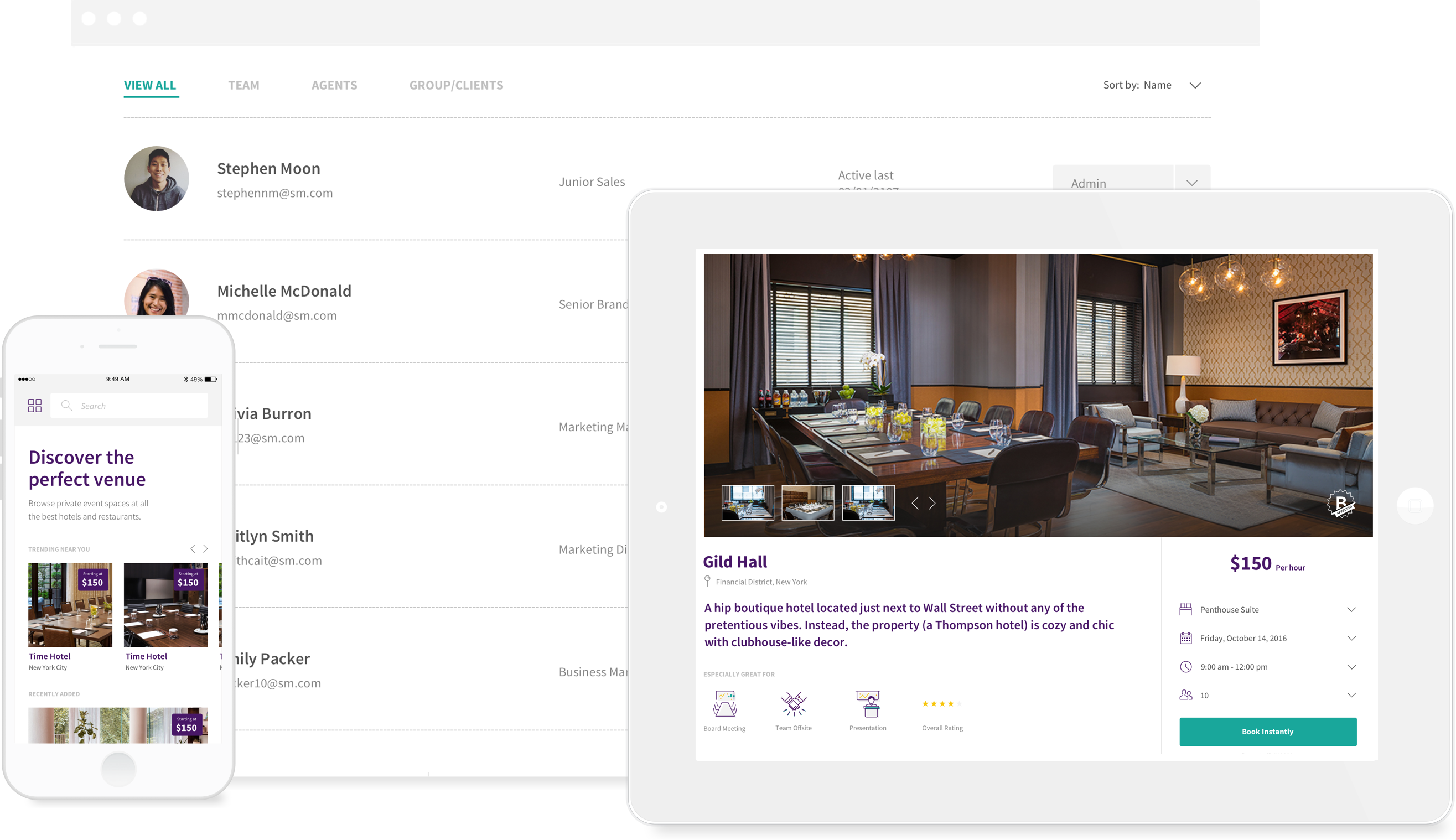 Bizly Mobile Interface
Founder and CEO Ron Shah told BTN that Bizly has focused its
sights on corporate contracts rather than growth via individual user adoption.
After analyzing the early data, Shah said, "We had a couple of big companies do a
lot of repeat business, and so we started to talk to them." What Shah
didn't find was repeat business from individual users. "A general consumer
doesn't need meeting space every day, so by the time you market to them and
they're like, 'Oh wow, this is great,' you still have to keep marketing until
they actually need it. And then by the time they use it, they just don't need
it again for a while. So, the repeat rate and the marketing cycle just weren't
very attractive."
To
grab the corporate customer, though, Bizly had some work to do. First, it had
to grow its content base a lot. Shah said Bizly has done that, moving from 300
curated venues on the platform to more than 10,000. It also plans to launch
content in international markets by year-end. Meanwhile, Bizly had to
incorporate management tools in order to capture and then feed back to the
client all the small meetings and events spend that gets lost on corporate
cards when ad hoc meeting organizers "do their own thing," said Shah.
That meant beefing up reporting tools and administration interfaces. Bizly now
integrates a meetings calendar, approval routing and preferred rates at hotel
properties and can slice and dice data per meeting organizer, per department or
team and per date range.
Yet the platform maintains its consumer feel, and none of
the admin levers are required. "We want to focus on adoption first with a
great user experience; then the administration piece can fall in line,"
Shah said. Bizly claims the content is still "curated" by
on-the-ground planners, though Shah also claimed it will represent "basically
every high-quality hotel, restaurant, bowling alley with full service …
vineyards, beachside resorts … all of the relevant inventory three to five star
and above." Unlike global distribution system and website content, Bizly
requires venues to show all group spaces. It tags each venue and space by
lifestyle descriptions like "modern" or "charming." Shah
said "deep-search" capability allows users to input detailed
parameters like "hip venue for high-end dinner for 10 in New York City,"
and the platform will return relevant results.
Above all, Bizly is not an RFP platform, and that is key to driving
end-user adoption, according to Shah. "Literally no one enjoys using RFPs," he said.
"Hotels waste billions of dollars responding to RFPs with a less than 1
percent conversion. Customers don't hear back from the venues they really want.
It's a really painful process."
Instead,
adding to its original "instant book" capability, Bizly's new
messaging platform enables meeting planners to message hotel staff directly so
they can build customized small meetings and events collaboratively, without
the RFP. The venue contact can share packages and images and negotiate the deal,
and the two parties can come to an agreement. Bizly's offering supports guest
room bookings direct with the properties. "It's all tracked on the
messaging thread," where
venues create "shopping carts" for customers as they work through
details, said Shah.
Competing carts can live in the system until the meeting planner accepts one.
Though
Shah bills Bizly's new capabilities as "the meeting industry's first
messaging platform," the function sounds similar to that offered by small
meetings technology firm Groupize, which introduced "magic
email"
last year. Like Bizly, Groupize offers two meeting planning tracks. First, on
its booking engine for events with less than 10 guest rooms, meeting organizers
message the target hotels to negotiate deals, exchange attachments, etc.
Groupize's second track is more of a sourcing tool for meetings with more than
10 guest rooms. Unlike Bizly's curated approach, Groupize draws content largely
from the GDS. Another difference is that Bizly generally focuses on hospitality
events like day meetings, dinners and entertainment. Shah previously
told BTN
that "companies are fairly well situated in how they handle
room nights" and that Bizly didn't want to insert itself in that process.
But things change quickly for startups, and Bizly is working hard to
keep up with its new strategy to focus on the enterprise client. Groupize's clean
integration with Concur is a competitive advantage, but Bizly's hospitality
approach and slick user interface that offers up sophisticated, short-turn
meeting and event space may serve just enough of a niche to segment the market.