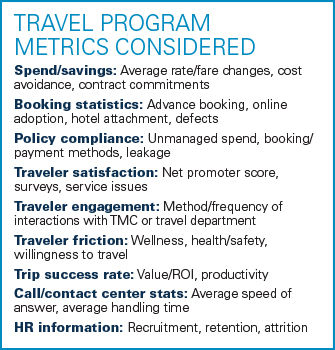
Companies may not be using the right criteria to evaluate
the success of their travel programs, warn the Association of Corporate Travel
Executives and BCD Travel, which surveyed more than 300 travel managers around
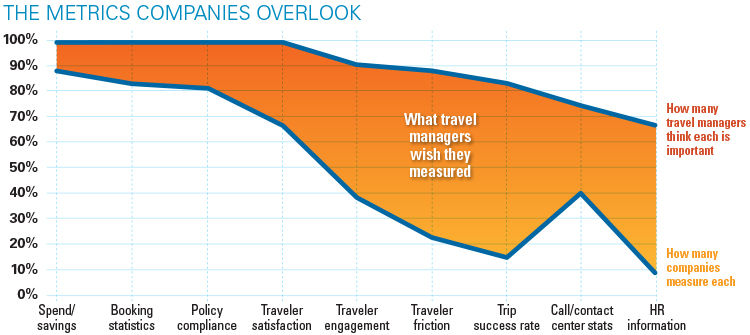
the globe. They found some stark disconnects between the factors travel
managers said were important to assess and those their companies are actually measuring.
Here’s what ACTE and BCD found.
Why Don’t Travel Programs Measure Them?
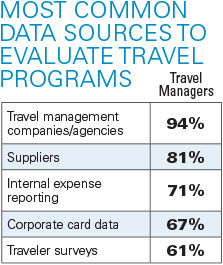
Many companies rely too heavily on third-party sources rather than on qualitative feedback from travelers themselves. Directly engaging travelers to measure satisfaction is an effective—and often overlooked—method of evaluating the success of a corporate travel program. But the engagement should occur in real time and happen through travelers’ preferred channels. Both requirements are fulfilled particularly well by leveraging mobile communication, noted Miriam Moscovici, senior director of research and corporate innovation for BCD Travel. “You don’t want to wait until after a trip to ask travelers how they feel about it. The best time to gather that information is in the moment, and there’s no better way to capture traveler experience and sentiment in real time than though mobile.
Most corporate travelers are well-versed in delivering feedback via mobile from their experiences as consumers, so mobile communication with travelers increases response rates and reliability of feedback, she noted. Meanwhile, real-time mobile feedback also supplies travel managers with a steady stream of information that may be important and actionable in the short term. For example, one traveler experiencing a problem with a particular hotel could signal a larger issue with that property. Getting that feedback in real time enables travel managers to flag the issue and react accordingly to resolve the problem or rebook other travelers, Moscovici said.