Canada now requires carriers to compensate passengers for flight disruptions within the carriers' control. The Canadian Transportation Agency's Air Passenger Protection Regulations are similar to the European Union's Flight Compensation Regulation EC 261/2004 and follow months of drafting and public consultations.
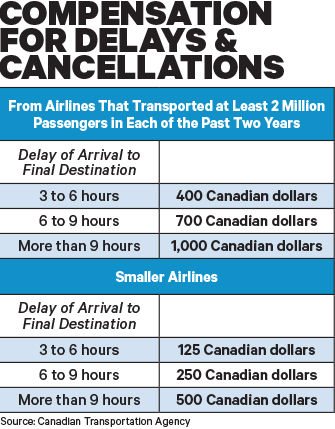
They apply to all flights to, from and within Canada, including connecting flights. Compensation for denied boardings will begin July 15. The regulation requires compensation of up to $2,400, based on how late the traveler reaches his or her destination. Compensation for delays and cancellations begin Dec. 15, though airlines are exempt if the delay or cancellation is meant to ensure passenger safety. Under the regulation, passengers can choose between money or an alternative form of compensation, such as a voucher, though the alternative must be of higher value than the required monetary compensation and must not expire.
A contentious issue at the time of rulemaking was whether airlines should be exempt from compensation for delays and cancellations due to mechanical malfunctions. AirHelp chief legal officer Christian Nielsen, whose firm helps travelers reclaim flight disruption compensation, opposed the exemption, worrying that airlines would exploit it. Ultimately, the exemption made its way into the finalized regulations, which define a mechanical malfunction as "a mechanical problem that reduces the safety of passengers, but not one identified during scheduled maintenance." This puts mechanical malfunctions within airlines' control but exempts them from compensation in the name of passenger safety.
RELATED OP-ED: Should Flight Disruption Compensation from Airlines Go to Travelers or Their Employers?