
September was the hottest months in years in terms of U.S. hotel demand, although that strength didn't extend to domestic U.S. air passenger traffic. Still, the hotel figures illustrate what appeared to be a solid month for business travel volume.
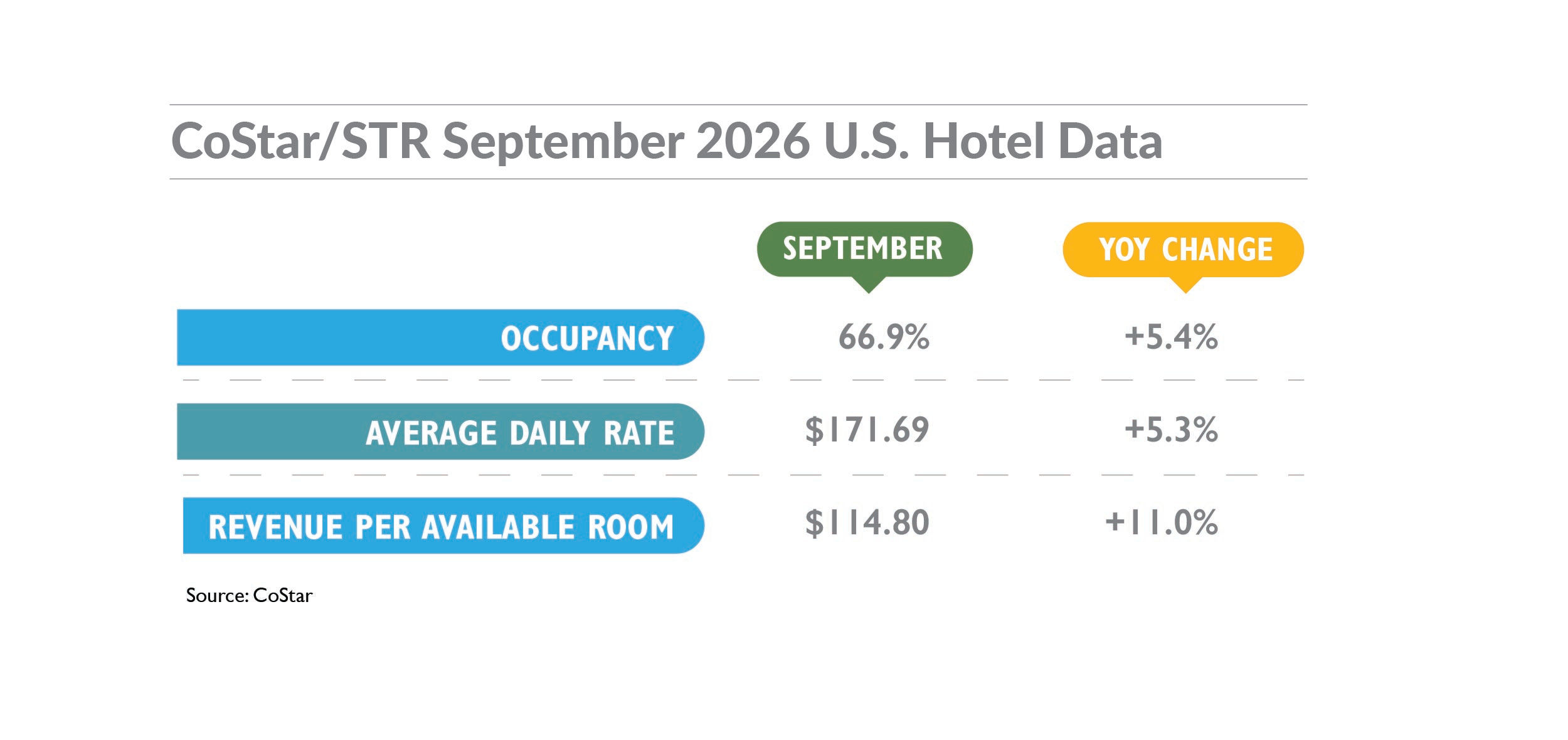
September U.S. revenue per available room increased 11 percent year over year, the highest growth of any month since February 2023, according to CoStar and STR. It's not just a function of higher rates, either: September occupancy was up 5.4 percent year over year.
September strength was driven by weekday business travel and group travel, according to STR. The week of Sept. 20-26 featured a 17.2 percent year-over-year increase in RevPAR in the Sunday-through-Thursday period, "nearly doubling the pace of weekend growth, according to STR. Sunday-through-Thursday demand often is viewed as a depiction of business travel
During that week, "every weekday recorded double-digit RevPAR growth, led by Tuesday and Wednesday, which each exceeded 21 percent," according to STR. It should be noted that a calendar shift of the Jewish holidays of Yom Kippur and Rosh Hashanah likely affected results.
The surge in hotel demand didn't fully correlate with the domestic air market, though, as indicators there weakened again.
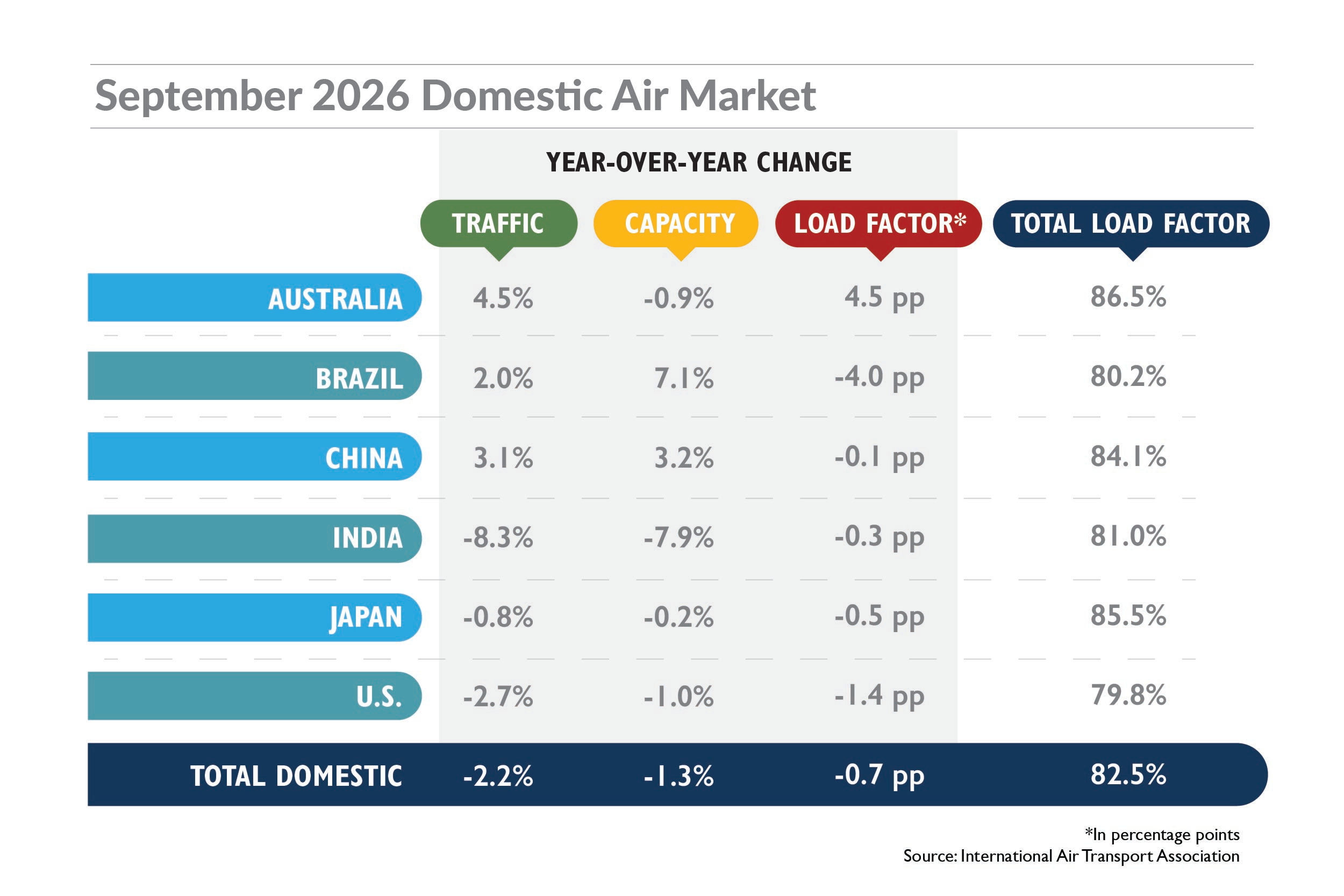
U.S. domestic air demand, as measured in revenue passenger kilometers, in September declined 2.7 percent year over year, according to the International Air Transport Association, marking the fifth consecutive monthly decline. Capacity, measured in available seat kilometers, fell 1 percent, with demand’s steeper drop pushing load factor down 1.4 percentage points to about 80 percent.
"The continued weakness coincided with subdued consumer confidence in the U.S., potentially weighing on discretionary travel demand," according to IATA.
The soft domestic demand wasn't restricted to the United States. Overall global domestic traffic declined 2.2 percent year over year in September, according to IATA, including an 8.3 percent decline in India, amid “a backdrop of higher fuel prices and softer macroeconomic conditions.”
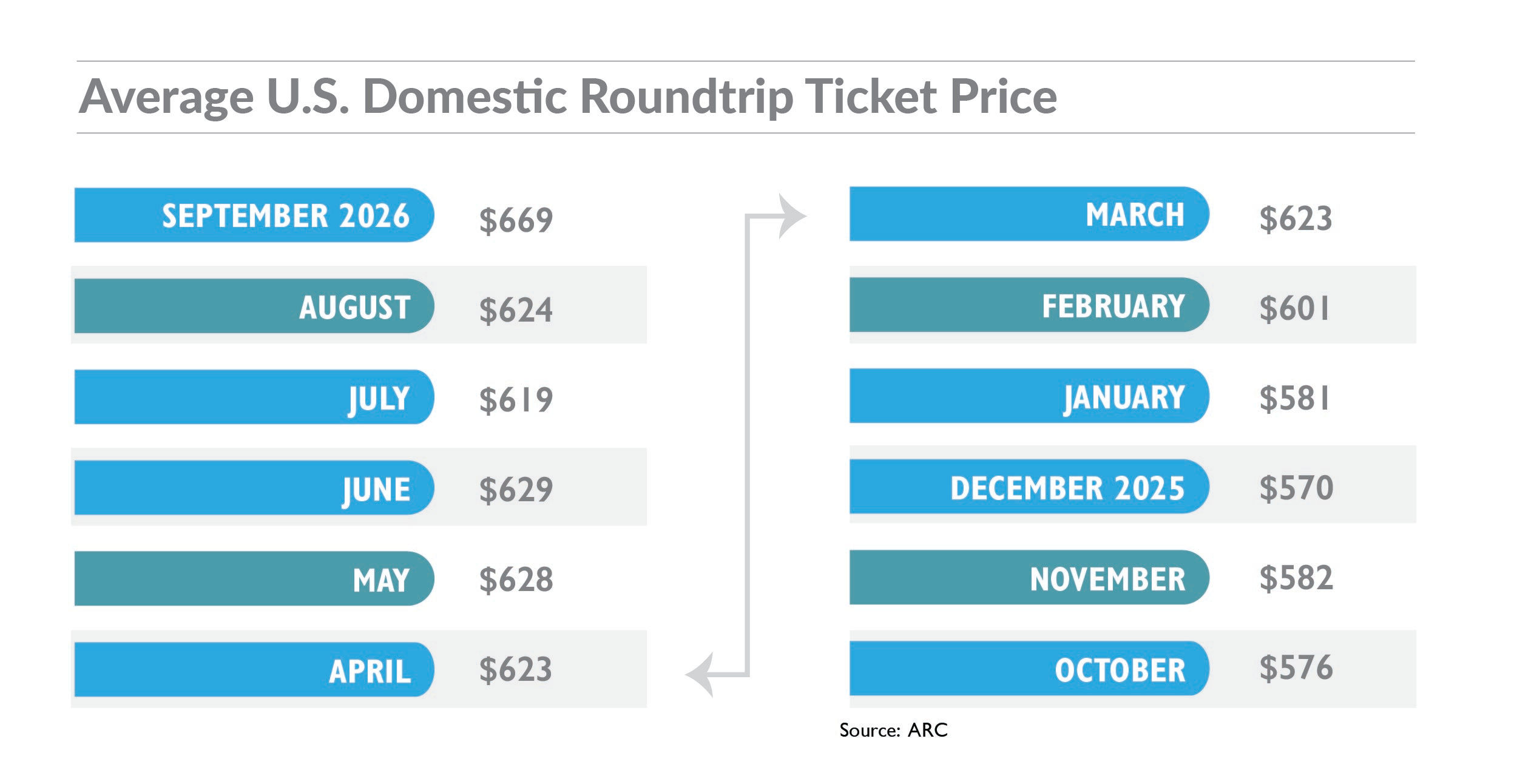
Despite the softer demand, U.S. air ticket prices remained elevated. The average price in September for a U.S. domestic roundtrip ticket was $669, compared with $558 in September 2025 and $624 in August 2026, according to Airlines Reporting Corp. In fact, that ticket price is the highest monthly price recorded since at least the Covid-19 pandemic, as far back as ARC could confirm.
The average price of a U.S. domestic economy-class and premium-class ticket in September was up 21 percent and 14 percent year over year, respectively, to $608 and $1,562, per ARC.
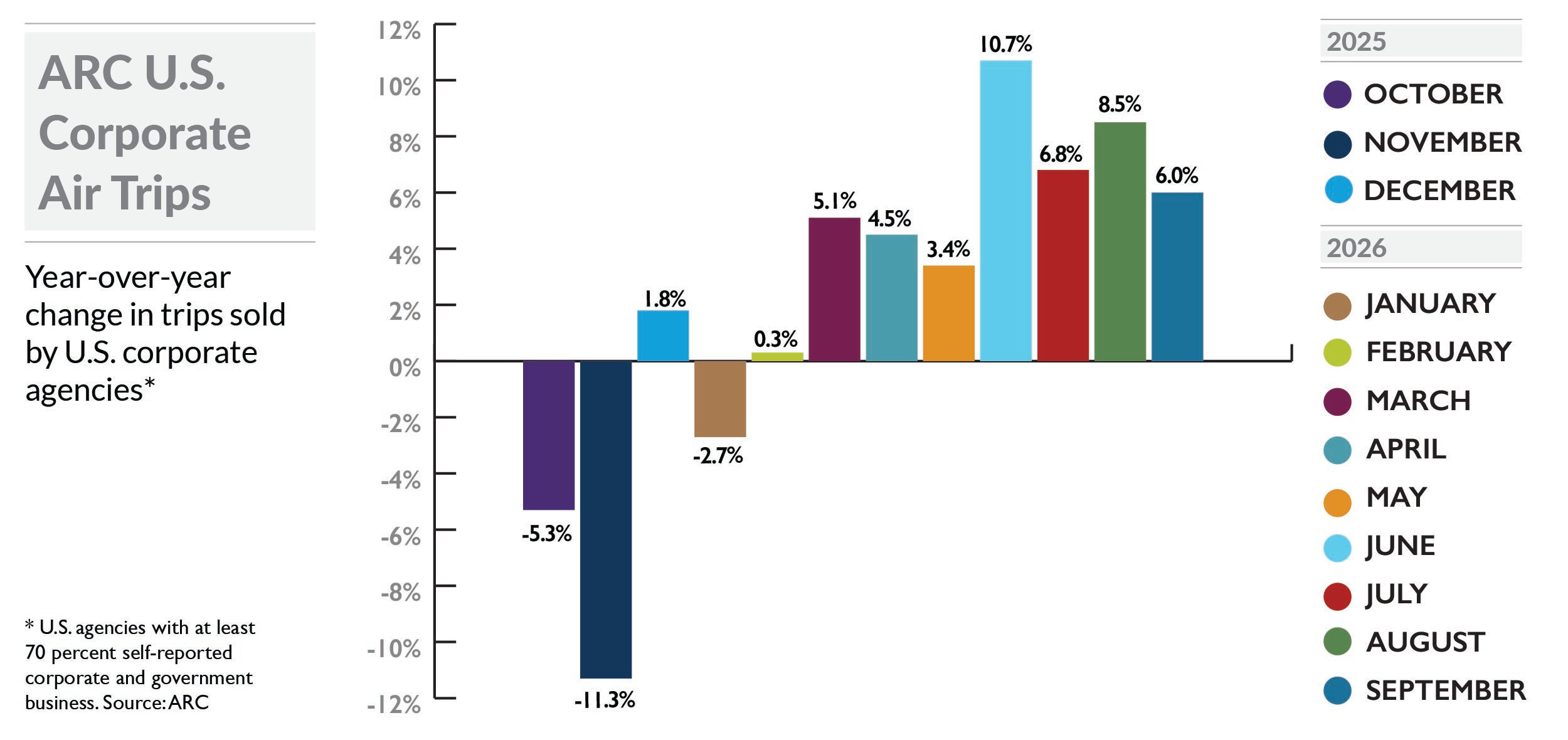
Meanwhile, even with the elevated fare prices, trips sold in September by travel agencies with at least 70 percent self-reported corporate and government business and settled by ARC increased 6 percent year over year, according to ARC, the eighth straight month that figure has increased year over year.
Total passenger trips sold were up nearly 2 percent year over year in September, per ARC. Domestic trips sold were up more than 2 percent while international trips sold were up 1.3 percent.
"Demand for travel remains strong despite geopolitical uncertainty and inflationary pressure, with over 77 million airline trips ticketed through travel agencies in the third quarter," ARC chief commercial officer Steve Solomon said in an email.
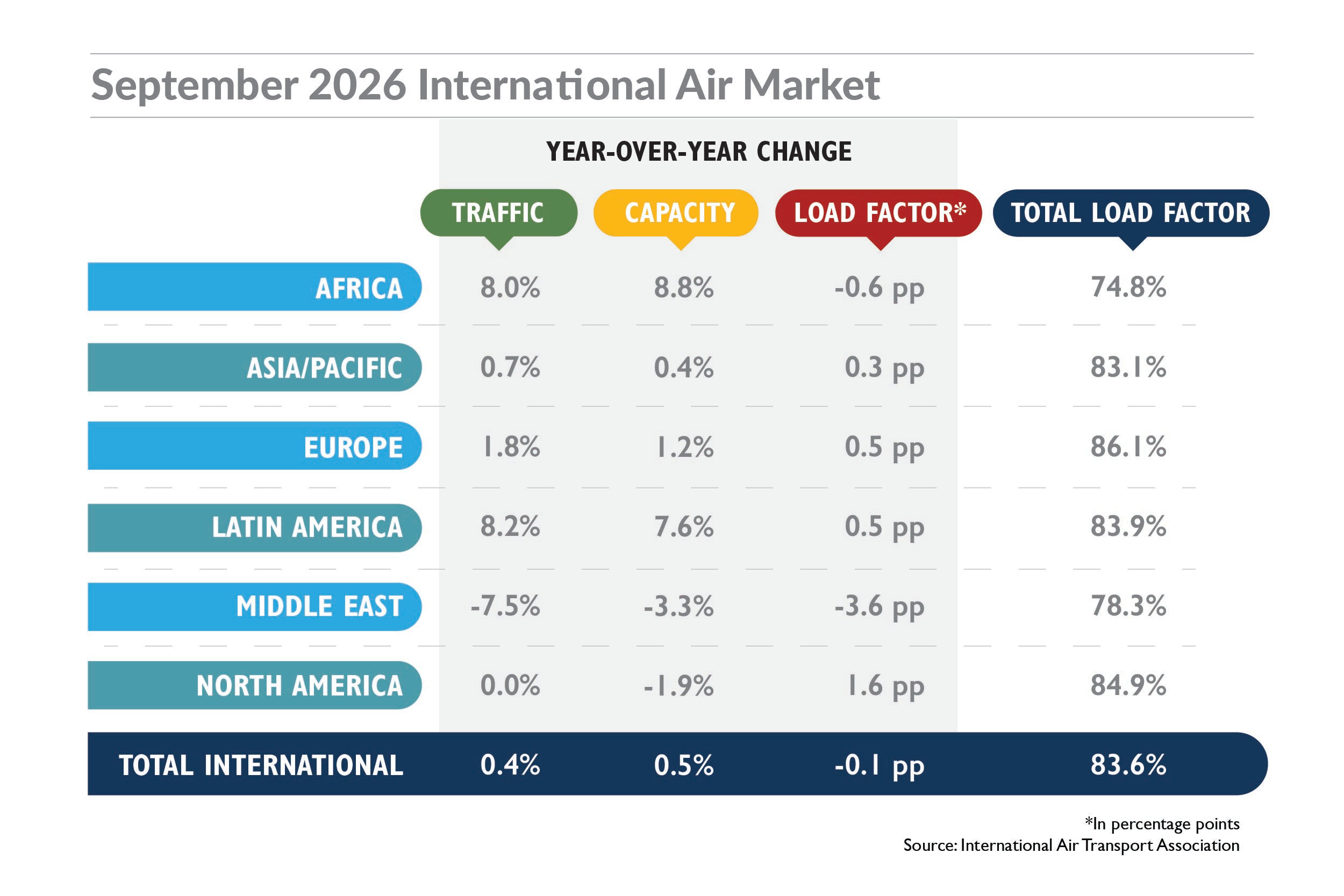
September international demand on North American carriers held steady year over year, while capacity dropped nearly 2 percent, per IATA.
Overall global air traffic in September fell 0.5 percent year over year, "reflecting weaknesses in the Middle East and North America," according to IATA.
"Nevertheless, this was an improvement from August, with a welcome return to growth in most international markets," IATA SVP of sustainability and chief economist Marie Owens Thomsen said in a statement. "These patterns have more-or-less repeated themselves throughout much of the year, and we can expect this to continue amid geopolitical uncertainty and volatile fuel prices."