.png?n=2044 "June 2026")
The beginning of the 2026 FIFA World Cup in June boosted domestic travel activity and pricing in the United States, particularly but not exclusively in the tournament's host cities, causing business travelers and corporate event organizers to look elsewhere for the few weeks of soccer's premier tournament. Elsewhere, though, some international air travel again softened.
June year-over-year growth in average daily rate and revenue per available room at U.S. hotels was the highest for any month since March 2023, thanks in large part to the World Cup, according to STR data from CoStar.
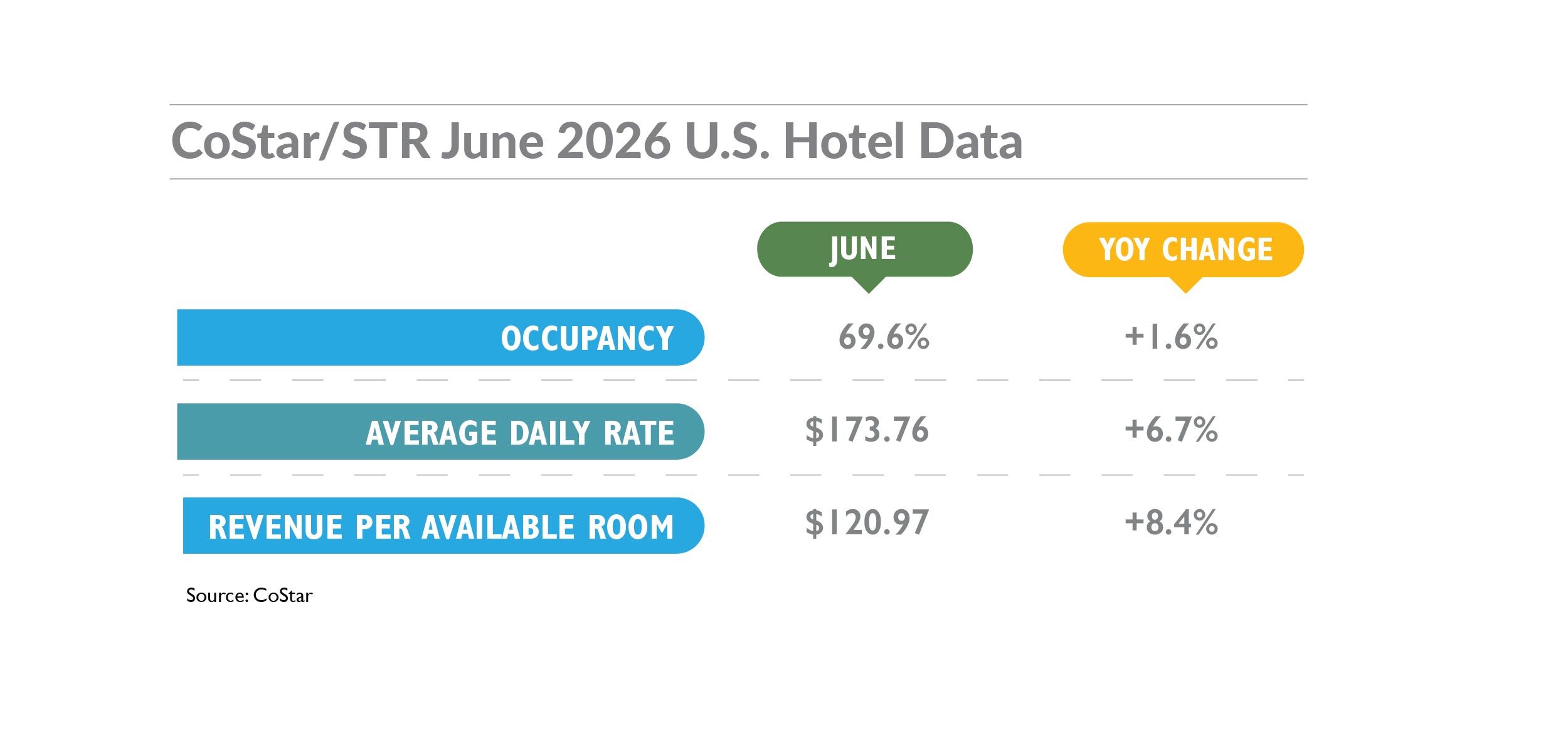
June also marked the fifth consecutive month of ADR, occupancy and RevPAR growth. In fact, according to STR, industry reached all-time highs in RevPAR and ADR for the week of June 21-27. While ADR growth in host cities was "extraordinary," per STR, the tournament's effects reached further, especially regarding business travel, which the firm suggested was being displaced to non-host cities.
"Luxury and upper-upscale hotels in host markets saw group demand fall 20.5 percent [in the week of June 21-27], while comparable properties in non-host Top 25 markets recorded a 9 percent increase," according to analysis by STR's Cole Martin and Isaac Collazo. "These major non-host markets are likely benefiting from business travel that may otherwise have occurred in tournament cities."
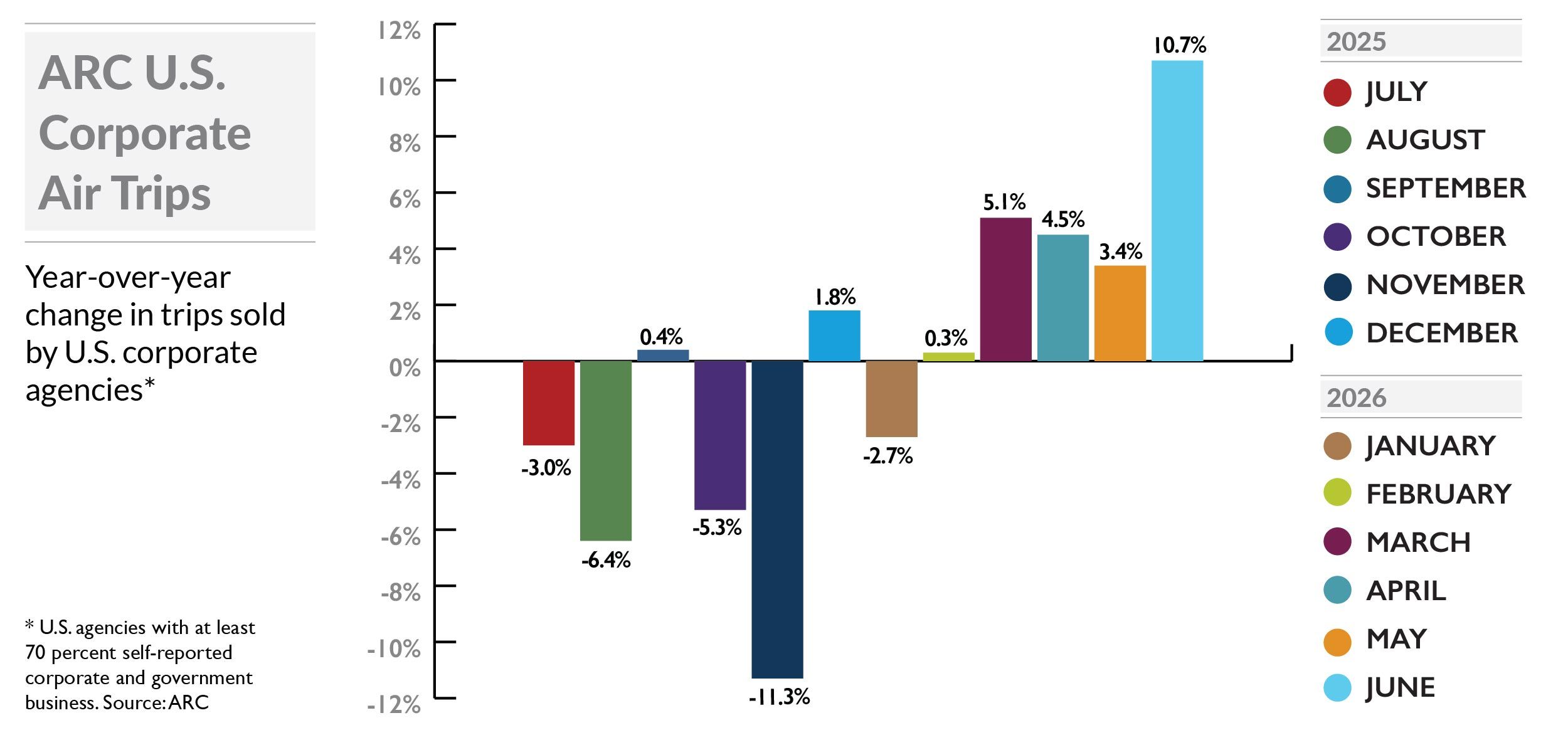
Meanwhile, trips sold in June by travel agencies with at least 70 percent self-reported corporate and government business and settled by Airlines Reporting Corp. increased by more than 10 percent year over year, according to ARC, the highest such increase since December 2024. (ARC has resumed providing that monthly figure to BTN.)
Overall trips settled by ARC increased 4 percent year over year in June, while overall travel agency air ticket sales increased 19 percent. from June 2025.
That discrepancy points to what persistently in 2026 has been the rising cost of travel, thanks in part but not exclusively to rising airfares triggered by higher fuel prices following the outbreak of war in the Middle East. (Higher hotel ADRs, though, show that explanation is not comprehensive.)
Addressing demand in the first six months of the year, ARC chief commercial officer Steve Solomon in a statement said that "the record-breaking mid-year 2026 totals reflect continued strong demand, with travelers adjusting to higher ticket prices and planning trips."
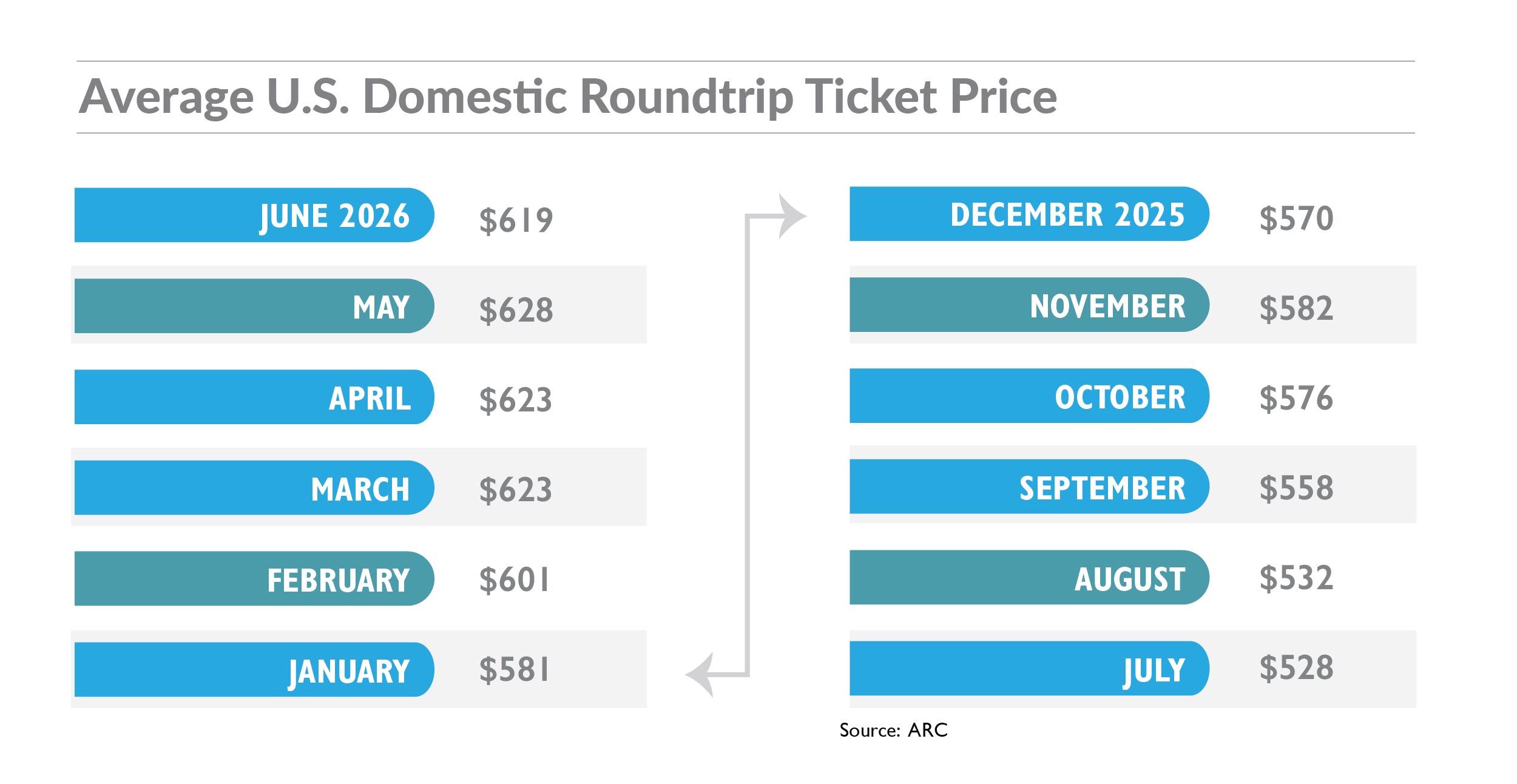
In fact, the average U.S. domestic roundtrip ticket price in June was $619, up from $536 on year prior. Still, that figure was down from May's peak of $628—the highest monthly figure in four years—and marked the lowest price since February, the last month before the U.S. and Israel attacked Iran.
The average price for a domestic economy-class ticket in June increased 1 percent from May and 20 percent year over year to $573, while a domestic premium-class ticket was up 14 percent from June 2025 to $1,423, steady from May.
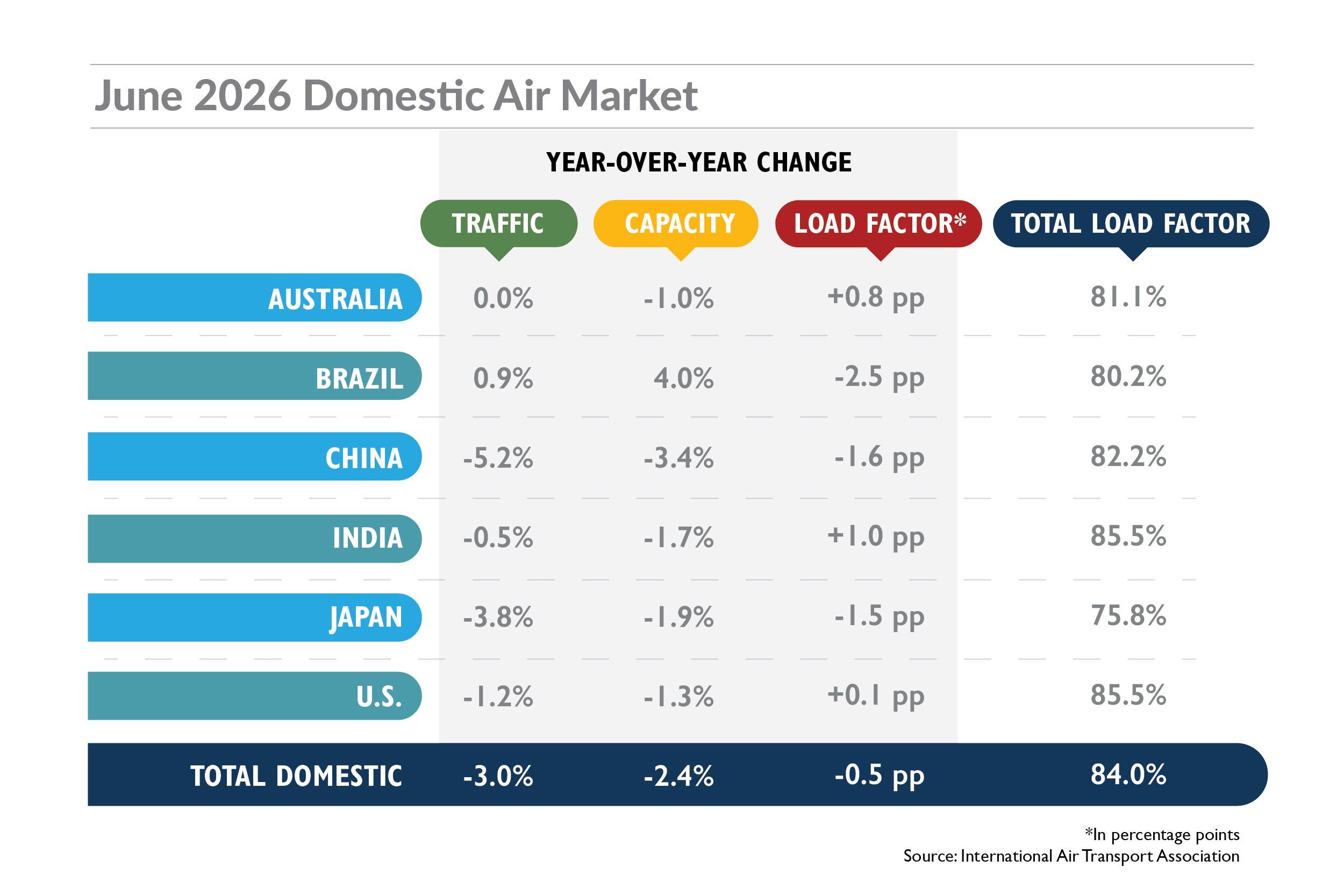
Data from the International Air Transport Association, however, told a bit of a different story. Per IATA, U.S. domestic air demand in June, as measured in revenue passenger kilometers, dropped 1.9 percent year over year, marking the third straight month of decline. Capacity, as measured in available seat kilometers, dropped too.
Domestic demand in other major markets like China and Japan dropped as well, leading to an overall June demand decline of 3 percent year over year. IATA pointed to high fuel costs as a drag on price-sensitive travel in both Asian countries.
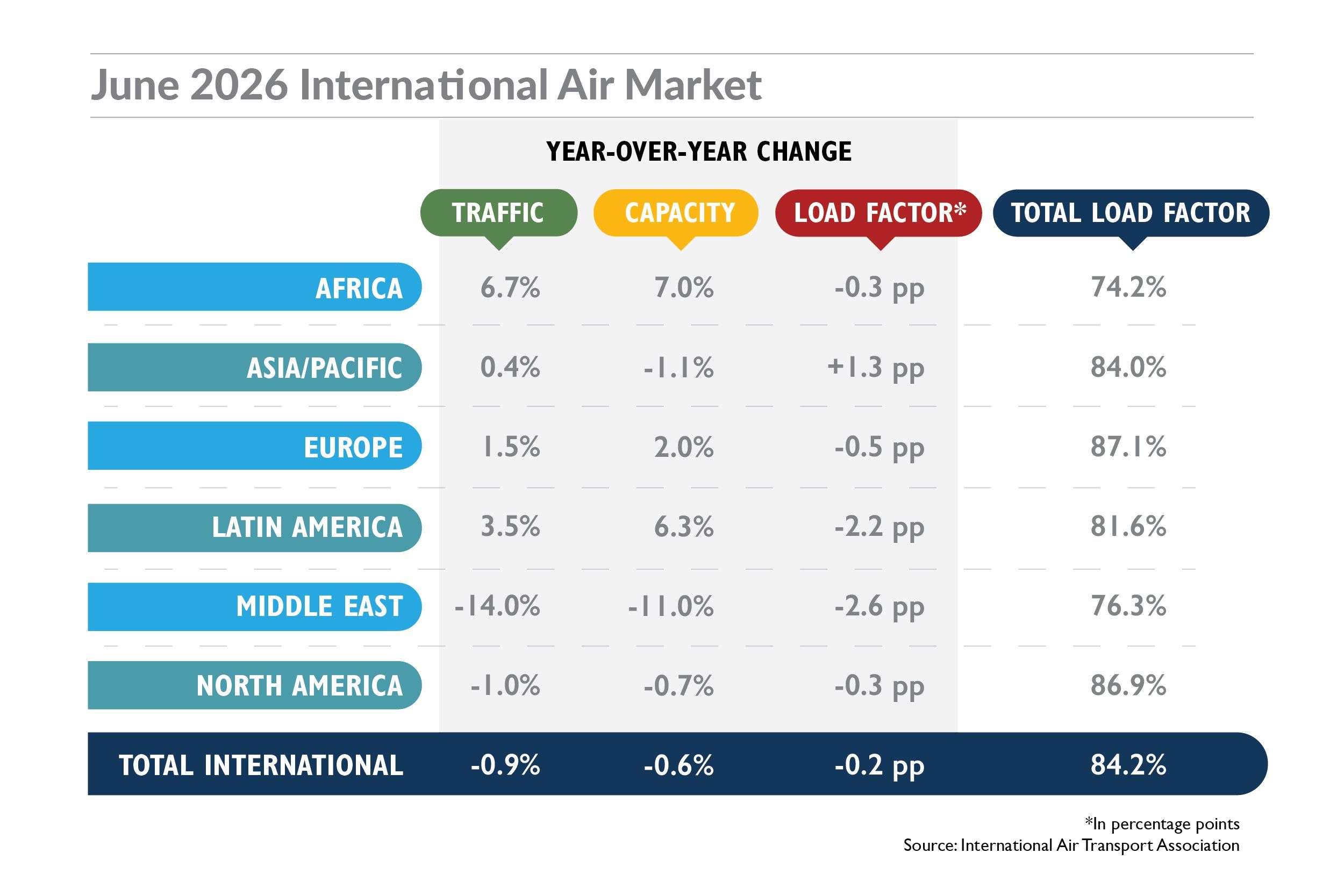
Overall international travel also slowed year over year in June, according to IATA, with a disproportionate impact among Middle Eastern carriers. Excluding the Middle East, demand declined by 0.6 percent.
IATA in a research note suggested "the drag from the region eased compared with May," and director general Willie Walsh in a statement said that "while Middle East performance improved, renewed tensions will not help the region's recovery, and the knock-on impact of rising fuel prices will continue to burden travelers with higher airfares."