What a company's travel policy is and what travelers think
the policy is are disconnected. That maxim is well accepted in the corporate
travel industry. A new report from the GBTA Foundation and HRS, though, quantifies
just how big the gap is.
 Source: GBTA & HRS: "Travel Policy Communication: Understanding Disconnects and Increasing Compliance"
According to the report, which compares traveler responses
from one survey with travel manager responses from previous research, 96
percent of North American business travelers say they are knowledgeable about
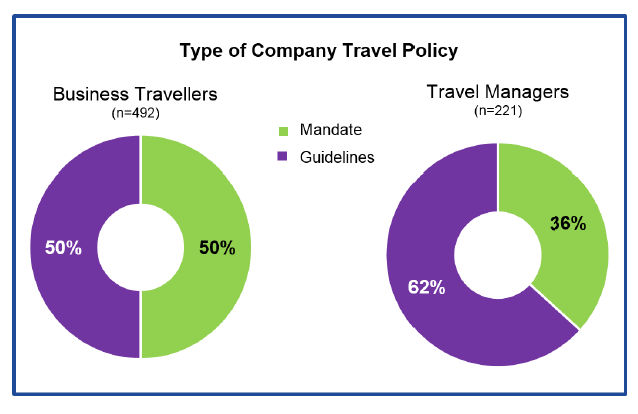
their company's travel policies, yet misperceptions prevail. Half say their policies
are mandated, while only a third of travel managers say that is true. Looking
at something like rideshare policies, 24 percent of North American travel
managers say it's prohibited versus half as many travelers.
"I'm not surprised at all," said HRS executive director
of industry relations Carole Poillerat. "We knew it was going to be
disconnected because when you look at the figures in terms of compliance and
attachment rate of TMCs, it's very low."
GBTA and HRS conducted an online survey of 492 North
American and European business travelers who have traveled at least four times
during the past year and whose companies have formal travel policies. The
survey was fielded from May 26 to June 14, 2016. GBTA and HRS compared these
traveler responses to travel manager research and reports released by GBTA in
2015 and earlier in 2016. The travelers and travel managers surveyed are not
from the same companies.
A major assertion of the report is that perception is more
important than reality. While a travel manager may say, for example, that he or
she emails important travel details to an employee pre-trip, that fact is
irrelevant if the traveler doesn't see the information, read it or recall it.
 Source: GBTA & HRS: "Travel Policy Communication: Understanding Disconnects and Increasing Compliance"
"One thing that was surprising is that Generation Y
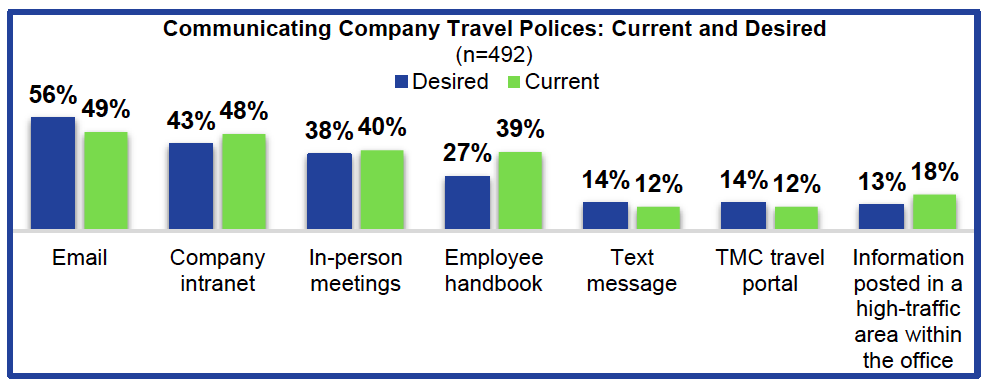
wanted to have in-person meetings," Poillerat said. Just over half of
travelers between the ages of 18 and 34 prefer to have someone explain the
travel policy in person, according to the report. "Maybe it's because they're
not used to travel policies and they want to make sure they understand,"
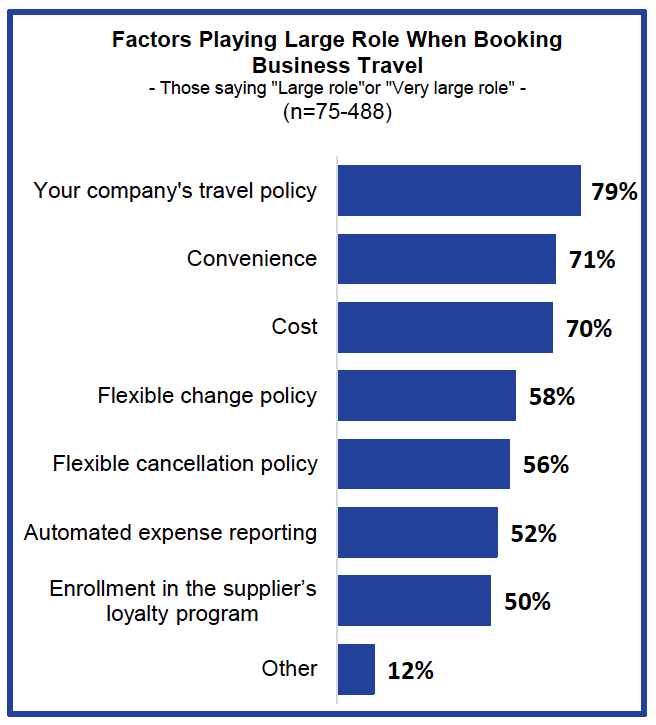
Poillerat said. Indeed, the research indicated travelers want to do the right
thing, as 79 percent report that company policy has the greatest impact on
their decision-making.
Beyond the obvious negative effects of policy noncompliance,
Poillerat pointed out that miscommunications cost a company in more subtle ways.
For example, 89 percent of travel managers negotiate free Wi-Fi in hotels, but 22
percent of business travelers are still expensing it. "It means they are
not aware," Poillerat said.
 Source: GBTA & HRS: "Travel Policy Communication: Understanding Disconnects and Increasing Compliance"
The report suggests some ways to bridge the gap between
traveler perception and travel policy reality, including collecting more
in-depth traveler data, alerting travelers to noncompliant behavior before they
book, keeping traveler preferences in mind and disseminating information
through effective channels.
Embracing technology players that incorporate
policy-compliant choices will help put travelers and travel managers on the
same page, Poillerat said. Tools like Roadmap
and Conichi
can draw in business travelers with the convenience of consumer apps, and when
travelers know travel managers have approved such apps and all activity that
occurs within them, compliance approves.
"When you're traveling for business,
whether you're going to meet a colleague or client or supplier, you don't have
time to review [the entire travel policy], so you should get the information
when you need it," Poillerat said. In addition to the more than
three-quarters of travelers who said policy plays the largest role in their
decision-making, 71 percent said convenience plays a large role, as well.
"If you match those two, you're done," Poillerat said. "If you
push the content in an easy way so that it's convenient and compliant, you've
solved the problem."