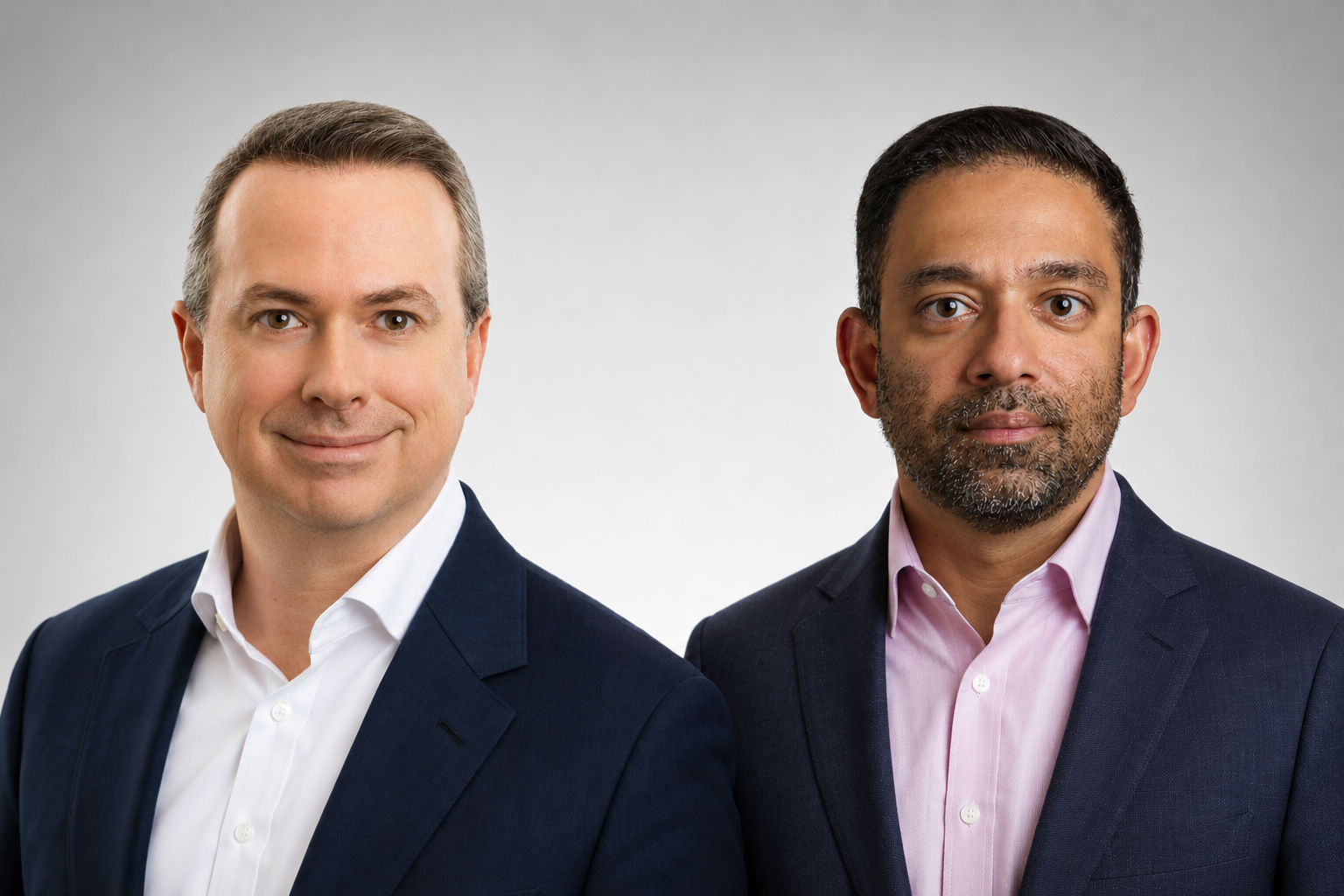
 PwC's Mike Ross (left) and Abhi Jain (right) discuss:
- The imbalance in hotel supply growth trends
- The importance of AI and personalization in M&
- What acquisition trends say about the importance to hotels of managed business travel
Professional services and consulting giant PwC this month released a report that showed overall merger and acquisition activity in the hospitality industry in the past six months has declined, even amid acquirer interest in high-end hotels and those with mature AI offerings. PwC US consumer markets deals leader Mike Ross and PwC partner and real estate and hospitality leader Abhi Jain recently spoke with BTN managing editor Chris Davis about hotel supply trends and the implications of M&A on the business travel market. Edited excerpts follow.
BTN: Hotel buyers are preparing to negotiate 2027 hotel programs. From a supply standpoint, what's your assessment of the U.S. hotel market?
Abhi Jain: The supply environment still continues to be relatively muted. If you look at overall lodging hotel supply growth over the long term, since STR started tracking data in 1980, the average supply growth is about 2.2 percent. Overall industry supply growth is still at that mark, and it's not tripping the 2.2 percent supply growth average.
Anytime there is momentum in supply growth … we start to have what I call fall trips: capital market conditions, inflation, the Gulf War, the Ukraine war. So there's a lot of moving pieces that are impacting the overall supply aspect for lodging.
We're starting to see more and more hotels, especially in the luxury and upper upscale segments … moving progressively from planning stages to final planning and even getting into some construction. We are not seeing that as much in the midscale and the lower end of the spectrum. It has huge implications from an M&A standpoint and from a deal standpoint.
BTN: What's driving that imbalance? Why is development stronger at the upper end of the market?
Jain: There are multiple factors, but two stand out. One is consumer interest. Given the K-shaped economy that we were seeing last year ... there is continued premiumization of travel. Consumers are focused on the higher end of the spectrum, premium experiences [and] wellness. So that's one consideration as to why there is more pipeline movement in the luxury and upper upscale segment.
On average there have been seven hotel brands launched annually between 1980 and 2025. A majority of those have been in the luxury and upper upscale. …Consumers tend to prefer that end of the spectrum because of the premiumization of travel.
The other aspect is that luxury and upper upscale supply tends to offer investors more risk cushion because of the diversity of revenues that a hotel at the luxury end of the spectrum tends to produce. At midprice and economy, it's only room revenue. Whereas in the luxury and upper upscale, you have a little bit of a cushion.
Mike Ross: The improving picture for hotel operators and improving demand often doesn't immediately translate into an M&A boom. Pipelines take time. When we looked at the trailing six periods, [M&A] activity is down.
We're seeing steady investment in the luxury segment … but we're not seeing an immediate boom, because there's a lingering question of recent performance: Do we see this continuing?
Then you layer in the other usual M&A factors of asset availability, capital costs … [and] exit visibility to these investments. There needs to be some level of certainty and conviction about where the trends are going and whether they're going to be durable and sustainable.
BTN: Are investors generally aligned in their view of the market, or are different buyer groups taking different approaches?
Ross: There's not a rush out to these assets. Investors are being very disciplined right now, and we're not seeing big multi-chain, multi-unit deals. It's a lot of individual properties.
There is a constant screening for those types of unique, differentiated properties. ... At the same time, you have investors that are constantly looking for assets that may be undervalued if they have a belief in the long-term durability of a particular segment and a consumer demographic. I think that explains why we see the investment flowing into the one-off luxury properties all over the world and in cities.
BTN: So, outside of the recent casino transactions, we're not really seeing ownership consolidation?
Jain: I wouldn't say we're seeing consolidation of ownership only because I think everyone's still looking for deals. Private equity is still looking for deals. Sovereign wealth funds are still looking for deals. Public REITs are still looking for deals.
There has not been any significant consolidation in the lodging REIT space…. Asset deals are happening across the board, and every buyer group is looking for asset deals.
Ross: I do wonder how long luxury investing goes on before investors start to look at the midscale and other aspects. I wouldn't say luxury investment goes on indefinitely.
BTN: Your report also highlights AI and personalization. How are those influencing hotel investment?
Ross: The simplest way to think about this is that it all comes down to data.
The tool sets are constantly evolving and changing, but the data and the loyalty data you have about your customer base [and] the digital assets you have about your properties … give you a lot more flexibility.
A lot of the players here need to be looking at in terms of: 'Am I AI-ready?' Number one, it has to come down to, how good is my data and how good are my digital assets.
Jain: If you think about corporate M&A and platform-level deals, the No. 1 question is around AI readiness and data readiness.
The common thread [in consumer surveys] is how consumer travel behavior and consumer trends are shifting. We are seeing that in terms of how corporate M&A is changing as well, which is: Are you ready for AI? Are you ready for how AI is going to disrupt travel discovery and travel planning?
The distribution landscape is going to be very different for travel. ... One of the things we're seeing is making sure that I own the data for the customer all the way from travel planning and booking to exit and checkout and beyond.
BTN: Should corporate travel buyers expect hotels to place greater emphasis on AI capabilities because of investor priorities?
Jain: The No. 1 thing that buyers of hotel assets are going to think about is, 'Is my hotel's demand pattern changing and how is the brand supporting the discoverability and the changing and evolution of the travel demand pattern?'
What is [a hotel brand] doing to make sure [its hotel] surfaces … when somebody goes and says to ChatGPT, 'Help me find a hotel within five blocks of Grand Central in New York City for the week of the U.N. General Assembly meeting in September?' That's the level of granularity of search that we need to get to.
Ross: Traditional search engines … the average consumer would use five words in their search. Agentic search … now offers 20 to 30 words. So it's a much more sophisticated question that consumers are putting out there that everybody needs to figure out: How am I showing up in that universe?
BTN: Does that shift toward AI-powered discovery and personalization reduce the importance of managed corporate travel to hotels?
Ross: If you're understanding the demographic of your traveler, and if it is a business traveler, do you understand what that traveler is doing when they're not traveling for business, and how do you think about that conversion? … If I'm going to New York City and staying in a property for a couple of days during the week, is the strategy to get me, when I'm coming back and bringing my family for a weekend visit, to come back to that same hotel?
Jain: The business side of it is managed by the corporate travel agencies and travel management companies. We are not seeing from a PwC standpoint too much impact yet from a business travel perspective. We are still going out and meeting clients. We are not less on the road. But the leisure side of it is where I think there'sgoing to be a significant impact from an AI standpoint. ... I might search differently for the second half of my trip versus the first half of my trip.