Paris - BTN named
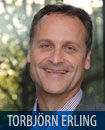
Ikea meeting and travel manager Torbjörn Erling the 2011 Multinational Travel
Manager of the Year. Presented here last month during an Association of
Corporate Travel Executives conference, the award recognized Erling's success
in fundamentally redefining the role of business travel, and consequently of
the travel manager, within his organization—with demand management, not supply
management, lying at the heart of the strategy.
Ikea during 2011 completed a three-year program entitled
Meeting the Ikea Way, which emphasized face-to-face meetings (for which travel
is an enabler) as only one option among several, such as videoconferencing or
webconferencing, for staging a meeting.
Operating with a slogan of "Meet More, Travel Less,"
the furniture giant for three years from 2008 held steady its annual travel
spend at €80 million—down from €106 million in 2007—even as it continued to
expand through the global recession. Travel spend as a percentage of sales
during the three-year plan fell to 0.35 percent from 0.54 percent, achieved by
a major increase in the use of virtual meeting alternatives.
 Other strategic goals of the program included reduced
travel-related carbon emissions and improved productivity and work/life balance
for Ikea employees.
Other strategic goals of the program included reduced
travel-related carbon emissions and improved productivity and work/life balance
for Ikea employees.
Meeting the Ikea Way was such a success that Helsingborg,
Sweden-based Erling and his four-person global meeting and travel services team
secured senior management approval to introduce an even more ambitious
three-year program. The new program aims to cut travel costs to 0.27 percent of
sales and hold them there amid major expansion outside Europe, to reduce
emissions per trip and to double the number of virtual meetings within the
company. All of this would be achieved by far-reaching behavior-change initiatives,
including coaching employees, making meetings management a mandatory aspect of
leadership roles and requiring a meetings plan to supplement yearly
departmental business plans.
Erling has been a travel manager since 2006, having spent
the previous 10 years in sales and marketing with Scandinavian Airlines System.
Three months after Ikea hired him as deputy global travel manager, Erling's
boss left the company. "That was a challenge, but management gave me full
support and told me to look at what we could do differently," he said. "A
core value at Ikea is to challenge and change the status quo. We did not have a
consolidated global travel program, so I prepared a draft of a global strategy,
but then I went to a Swedish Business Travel Association seminar on business
meetings management, and that proved to be the turning point.
"It made me wonder, what could make us change things in
a more radical way?" Erling continued. "One way of doing it was to
shift the focus from travel to meetings. Travel costs at Ikea had increased 20
percent for the previous 2.5 years, but the growth was not linked to any
logical change in the business. I concluded it must be a behavioral issue. I
decided that questioning the purpose of every meeting would be a starting
point, seeing travel not as an end in itself but as a means of getting to a
face-to-face meeting."
Erling was aware that challenging his co-workers to
reconsider how they met was only half the answer. Ikea needed to provide the
alternatives to travel. The company's IT department made an earlier attempt to
introduce videoconferencing and other virtual conferencing techniques, but "it
had been a complete failure because there was no ownership or support on the
business side," he said. "We concluded it would be logical for travel
to own videoconferencing, phone conferencing and webconferencing so we could
promote them as alternatives to face-to-face."
From this philosophical starting point, Ikea began to
communicate a more conscious and structured approach to selecting the most
appropriate meeting methods based on the purpose of the meeting, with the total
estimated cost of the meeting also made more transparent in the planning phase.
The push to use alternative methods has been successful. As one example, use of
web meetings in the financial year 2010 rocketed 58 percent from the prior
year.
There has been a major interdisciplinary focus on meetings
within the company. Erling worked closely with human resources, the department
to which he reports, as well as finance and internal communications. Two
procurement teams—one for travel, led by global travel purchaser Yves Galimidi,
and one for meetings technology—address supply-side issues.
In recent weeks, the disintegration of departmental
boundaries has gone even further. Erling has been invited to join the Digital
Workplace Council, a committee within Ikea that coordinates all aspects of
virtual working within the company, such as social enterprise and collaboration
solutions. Erling believes the travel department never could have made the
meetings program such a great success without cross-functional representation,
but the pervasiveness of the meetings program in different areas of company
life also arguably demonstrates how radically travel has been redefined and
elevated in importance.
The 2012-2015 plan is more evidence of this theory. The
executive board sanctioned meetings demand management as a duty for managers as
well as an essential element of yearly business plans and project plans.
Planning also will include an estimated number of virtual meetings and the
effect on travel budgets.
Erling and his team have been authorized to initiate
traveler training, including individual briefings, on virtual meetings tools
and behavior change so employees recognize travel within a wider meeting
context.
Ikea also is expanding its range of videoconferencing
options beyond its 41 dedicated suites. For meetings of less than 10
participants, employees can opt for laptop or high-definition desktop
videoconferencing.
Another crucial aspect of the new three-year plan is a
strong emphasis on helping employees make their meetings more productive. "Many
of our people spend a major part of their time in meetings, yet there is no
structured approach to them," Erling said. "We are working hard on
improving the meetings themselves to improve the business value and focus on
the reason for meeting."
Erling is preparing a draft policy for meetings of more than
50 participants that would require organizers to state and receive approval for
the purpose of the event, assess the return on objectives and create a
checklist of direct and indirect costs. Organizers also would have to define
what would be communicated before, during and after the meeting, and to whom.
Choice of meeting location will have to be justified to ensure it is a sound
decision in terms of cost and travel logistics.
The distance Ikea already has journeyed along the long road
to redefining travel and meetings may be daunting to other travel managers, but
Erling has encouraged his peers to take their first steps in the same
direction. "Torbjörn has shared Ikea's developments with the Swedish
Business Travel Association and internationally," said Cathrine Lundberg
of CMM Consulting, who led the 2006 SBTA seminar that inspired Erling to
reinvent his company's travel strategy. "I know that he has inspired many
travel managers to think outside the box."
Erling, who on Sept. 21 began a two-year term as chairman of
the Global Business Travel Association's European Advisory Board, encourages
other travel managers to make a start by placing demand management at the
center of strategy. "You might find some resistance when you start asking
people if they really have to travel to all those meetings," he said. "It
is not a smooth path, but I spent an hour with each member of our executive
management group and said I needed their support. Only one was a little
skeptical, but after a while he could see the point too."
Originally published
in the Nov. 7, 2011, issue of Business
Travel News.