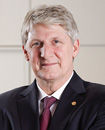
 Robert Warman
Langham Hospitality Group earlier this year hired as CEO former Ritz-Carlton executive Robert Warman, making him the first American chief executive for the Hong Kong-based company. Fittingly, Langham during the past few years has been bulking up its presence in North America, both with new properties and an increased sales presence. Warman recently spoke with Business Travel News senior editor Michael B. Baker about the company's goals for North America as well as its moves into the resort and lifestyle hotel space.
What are Langham's current development goals?
In the last year, we have purchased [a property in] New York and opened in Chicago to great reviews. That's the beginning of where Langham is going. New York and Chicago were really key assets for us, because it kind of pillared us in the major markets in the United States, being in Boston, New York, Chicago and Los Angeles. It gave our luxury hotel group a footprint to build on, and we're looking at a couple more strategic opportunities today in North America as well as acquisitions for our parent company and real estate holding group. [We're also considering] other management opportunities that will come our way based on having the available deployment of rooms in major markets and the recognition the group's receiving on the quality of its service and product.
Are those new properties making Langham better known in the corporate travel space?
We're slow to do that. If you look back at the history of hotel companies, most were able to grow in one region and have 20 to 30 luxury hotels in, say, North America or Asia, and once they were well-established, they moved to other parts of the world. Over the last 10 years, the customer has become so global that a luxury brand we don't feel any longer can grow in one region and move over. They have to grow worldwide, but that dilutes your concentration of brand awareness. Every day, people become more and more knowledgeable of Langham, but it's going to take longer because it'll take longer for us to have that concentrated name in one market area.
How has your sales force been growing?
We opened a full sales office here in North America, in New York. We have an office in London. We recently appointed someone in the Middle East. We have our Shanghai office within China that does intra-China as well as outbound China. Intra-China travel as well as China international travel is going to become extremely important. A real key to future Chinese travel is going to be corporate travel. Today it's mostly leisure that's leading China, but as China's companies begin doing business more around the world, you're going to see companies start traveling.
We have our office in Hong Kong and one in Singapore. As our amount of deployed capital has become more evenly distributed around the world, so has our customer base, so we've put a lot of emphasis on increasing our deployment of our key human capital into North America.
Where else are you growing, besides business centers?
One of the exciting approaches that's going to change Langham a little bit is that we've decided it's time to move into the resort business under the Langham name, which we haven't up until now. We just signed our first property, a resort property in Dubai on the Palm Jumeirah. Now we are actively searching opportunities more as management, because our brand lends a lot of pizzazz to resorts and lends distribution points.
Do you plan on targeting more group business by adding resorts?
Obviously in North America with luxury hotels, the group and incentive market is important, so our offerings will give the travel professionals—agents and consortiums and so forth—a product to more freely sell.
What about brands outside of Langham?
We're in the process of repositioning our Eaton Hotel brand. We're going to move that more into a lifestyle brand. Like many companies, we obviously see there's a trend of travelers that want good service and good food and beverage; they just want it in a different type of environment. We have one in Hong Kong and one in Toronto, so we'll begin repositioning that to focus its service delivery and look in a little different way than Langham. In October, we'll announce four or five, potentially. We'll potentially announce one in Bali, one in Berlin, one in Shanghai and a couple others that we're working on.
Hotel industry sentiment is positive right now regarding demand growth, but what about within the luxury segment?
The numbers are staggering. There are a tremendous amount of markets and countries that are going to continue to travel, if you look at India, Pakistan and China. People ask about luxury and whether it's overbuilt. I worked for Ritz-Carlton, and after we had six hotels, we were told to get out of luxury. Now, it's one of the fastest-growing segments, if you look at the major companies that are in luxury.
How is luxury adapting to travelers today?
The customer's so different today. I remember back 30 years ago, these markets didn't know what luxury was, and so companies came out and in a lot of the initial luxury, it was product: marble and crystal chandeliers, Oriental carpets, 300- thread-count sheets and so forth. Now the customer understands it, and luxury is about enabling you to feel good, not creating a surrounding, and having the ability to enable you to accomplish what you want to do, whether it's to feel good or do business. It's about helping you tailor your stay to your needs. If you go to a Langham, our idea is to be very friendly. We don't want to be stuffy. We're younger and less known. The beauty of that is we have a rich history in understanding what luxury is, but we haven't built expectations in, so you'll find a warm, caring desire to serve.