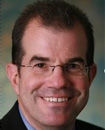
 Greeley Koch
Now
celebrating its 25th year, the Association of Corporate Travel Executives late
last year hired longtime ACTE volunteer Greeley Koch to serve as its executive
director. Shortly before the group's first major
conference under his direction, an April event in New York, Koch issued a
letter to members referencing financial "losses" incurred by ACTE and
other associations, as well as efforts to restructure some programs and cut
costs. U.S. tax-exempt professional organizations like ACTE are required to
file financial details with the Internal Revenue Service, albeit long after the
close of the year. For 2011, ACTE last year disclosed a loss of $536,000, its
third negative result in six years, driven by a 27 percent year-over-year
increase in expenses.
The
2011 document also showed ACTE's negative fund balance of $1.1 million. Though
opinions were mixed, most association experts who reviewed those results said
that a continuing negative trend would be a worry but insolvency should not be
a current concern. They said associations often operate in the red;
not-for-profits are not, after all, designed to make profits.
The
Global Business Travel Association in recent years has been dramatically more
successful than ACTE at growing revenues. According to IRS tax filings, GBTA in
2011 had $14.4 million in revenue, about 270 percent more than ACTE's $5.3
million. In 2006, GBTA (then called the National Business Travel Association)
was about 60 percent bigger. Each association grew revenues in 2011 and 2010
after dropping in 2009.
BTN
editorial director Jay Campbell and senior editor Holly Leber last week spoke
with Koch about these and other issues. An excerpt of their discussion follows.
On April 4, you sent a "personal message" to ACTE members about performance of various events and mentioned "strong registration" for your big New York event. You indicated ACTE was "holding its own in the current economic climate." Why did you make these comments?
My management style and my approach to business has always been very pragmatic. The way we approach business, the way we manage the business, the way we talk to our stakeholders ... I've done this in all the jobs that I've had. I make sure I'm having open dialogue. It had been about four months or so since I'd taken the executive director role, so I wanted to report out to the membership. The idea is to communicate out regularly, so we can say, "This is what we're seeing, what we're hearing," and then it just helps with the dialogue with the membership, because based upon things that I put out there, people come talk to me and give me feedback.
In your letter, you indicated that you "have been asked about some of our losses." You wrote: "Our losses stemmed from investments in new educational endeavors and other membership resources. As in any other business, some worked and some didn't. Some of those programs are gaining momentum. Others have been re-evaluated or restructured." Which ones? What was cut?
Like any other business, we have to continuously look at programs we have in place. That's really what I've been doing over the last six months: making sure we have the right resources in the right regions for the right reasons to make sure we have everything set up the way it should be. I think we're like every other business, and that [means] looking at our operations and adjusting accordingly.
Can you talk to us about any specific programs?
We modified the name of what used to be the ACTE Angel Investor Lounge; it's now called "ACTEcelerator." People thought it was just about funding startups, but instead we're providing operational assistance, resource planning, strategic support, all sorts of services, and we wanted to update the name to better reflect what we're doing in that arena. We're going to announce soon some new companies we're adding to the program—these are startup companies that will impact the corporate travel industry and the travel industry as a whole.
We're also looking at some of the educational offerings. We had Around the World in 80 Hours. That has really been a high-level education offering, a deep dive into specific cities and specific markets. We're looking at making modifications that I think will bring it closer to what it really could be.
Is it necessary to be in the location to provide education about the city or culture?
The way it's currently set up, it's focused on particular regions or cities, and within that, we engage with government officials, the supplier community and the buyer community. Going forward, we're going to make some modifications to that.
We're focused on making sure we're leading that trend into how corporate travel education will be offered. We've got some enhancements coming up for some of our regional global conferences. I think it will be pretty exciting once we get it out there.
Are these changes expected to reduce the costs or improve the revenue of the programs?
I'm always focused on both our costs and our revenue. It is my intent to figure out a way we can actually lower the cost of attending an ACTE event. There's no reason for us to continue to raise fees, charge more money, etc. I systematically don't think that's the right way to do business. You try to hold the line on costs and make it affordable. I want to make sure people coming to our events know that I'm focused on making sure it's as cost-effective as possible.
The priority of keeping costs low also was mentioned in your April letter. You wrote: "To this end, I re-evaluated the function of our professional staff, restructured our processes and streamlined our response to membership needs." Did you reduce staff salary expenses?
When I became executive director, I wasn't new to the association, so I had an understanding of what we'd been doing and what we are capable of doing. When I came in, I looked at managerial and operational redundancies. I wanted to make sure we had the right number of people in place around the world, in the right regions. In some cases we have scaled back our resources, and in other cases we have actually grown the resources. We have lowered our operational costs across the organization.
I noticed that [former director of global business development] Noel Lee is no longer with ACTE. She was one of the top staffers. Is her position one that was cut?
No. She [received a] great offer that she couldn't refuse. I really hated to see her go, because she had so much passion for ACTE, but I was happy for her personally, because she had such a tremendous opportunity.
Is that an opening you have now or has her function been blended into other positions?
We just brought somebody on board last week to fill that spot.
Increased travel and also spending on technology, which we gather was mainly done through consultants, helped drive up expenses in 2011. Are those areas you're focusing on?
I can't comment on what happened in 2011. It was before my time. I can just make a general statement that certain investments were made. When I came in as executive director, I looked at all our costs. I've been looking at travel, the cost of telephones, the cost of technology, food. We're a small organization with a global footprint, so I want to be sure we're as efficient as possible around the world. That's the one good thing about me being a [former] corporate travel buyer. I know how to do this stuff.
You wrote: "ACTE's future is brighter than ever, partly because we aren't distracted by the side issues." Which are the side issues?
Within the corporate travel industry, there's always talk, there's always gossip, there's always stuff that goes on. I'm not going to let that distract us. We're going to do what we have always done. That's why ACTE was started 25 years ago, and we're holding to those core principles.
Regarding the 2011 negative fund balance, we spoke to experts, and they were a bit mixed about whether that's a cause of concern. Some said that if it continued, it would be a cause of concern, others said that it's not unusual and some others said that they would be worried. Is the negative fund balance a concern of yours? Can you say anything about what happened in 2012?
2012 was better than 2011, though again that was sort of before my time since I came in in December. What I'm really focused on is the future. We're fully funded for this year and into next year. We have had discussions about multi-year agreements with sponsors. The future looks good.
I want to be able to look people in the face and say, "We are spending your money in support of what you want us to do, in order to meet your needs, and in order to accomplish that, I'll continuously look at our costs, I'll continuously look at our structure, and I will continuously make modifications as needed." With my background, most recently coming from Acquis on the consulting side, this is what I used to do. I advised companies on how to effectively run their organizations. I'm practicing what I used to preach in all my prior roles.
Looking more at the big picture of industry associations, GBTA's revenue in 2011 was well more than twice what ACTE's was, while about five years earlier, GBTA's revenue was only about 60 percent larger. Are comparisons between the two relevant? Do sponsors make those comparisons?
We're getting the support we need because we're meeting a need out there. Our growth comes in different forms. Membership is up this year compared to last year. Our attendance is up this year compared to last year's. We've had four sold-out forums in different parts of the world, just because we ran out of space in the rooms we were in.
I'm just focused on us, and the relationships that we have with associations around the world. We have always had a great relationship with other travel associations around the world. We work very closely with various associations, so that's what I'm focused on.
At the April conference in New York, you mentioned you had been on a "listening tour." How is what you are learning different from what you expected to learn?
The listening tour continues. What I'm finding is that the future of corporate travel is very strong. Even when there are discussions about open booking and all sorts of different ways to access inventory, it's an opportunity for corporations not only to have a stronger focus on their travelers, but also generate savings and cost reductions. The biggest surprise I've seen is that there's more focus on corporate travel now around the world than before, and some of these alternative methods in some areas are concerning to people, and in other areas they are viewed as opportunities to do even more for the company.
The second "a-ha" moment or takeaway was when I was in China, and I was asked to talk about the future of travel. I thought they meant from a technology perspective, but they meant, "When should a company have a managed travel program?" While that's the question in China, the answer is going to happen very quickly. Once they answer the question of should they have a managed travel program, they're then going to leapfrog all other parts of the world and go right to this technology that's supported on smartphones and tablets, because they're not burdened by legacy systems that are probably prevalent in the West. In one case, you can say they're behind, but in the next case, they're going to be far ahead of other people within Europe and North America.
What are your other goals as executive director?
Between myself and the board, we have a list of metrics. A lot of that is focused on member satisfaction. It's focused on the cost aspect, the nuts and bolts of the business, but also the needs of our membership, both from the buyer and from the sponsor communities. I have a full set of metrics that I wanted to be put in place because I wanted to be held accountable. It sounds maybe kind of novel, but I wanted to be held accountable to the board and to the membership to say, "This is what I'm going to do during my tenure as the executive director."